

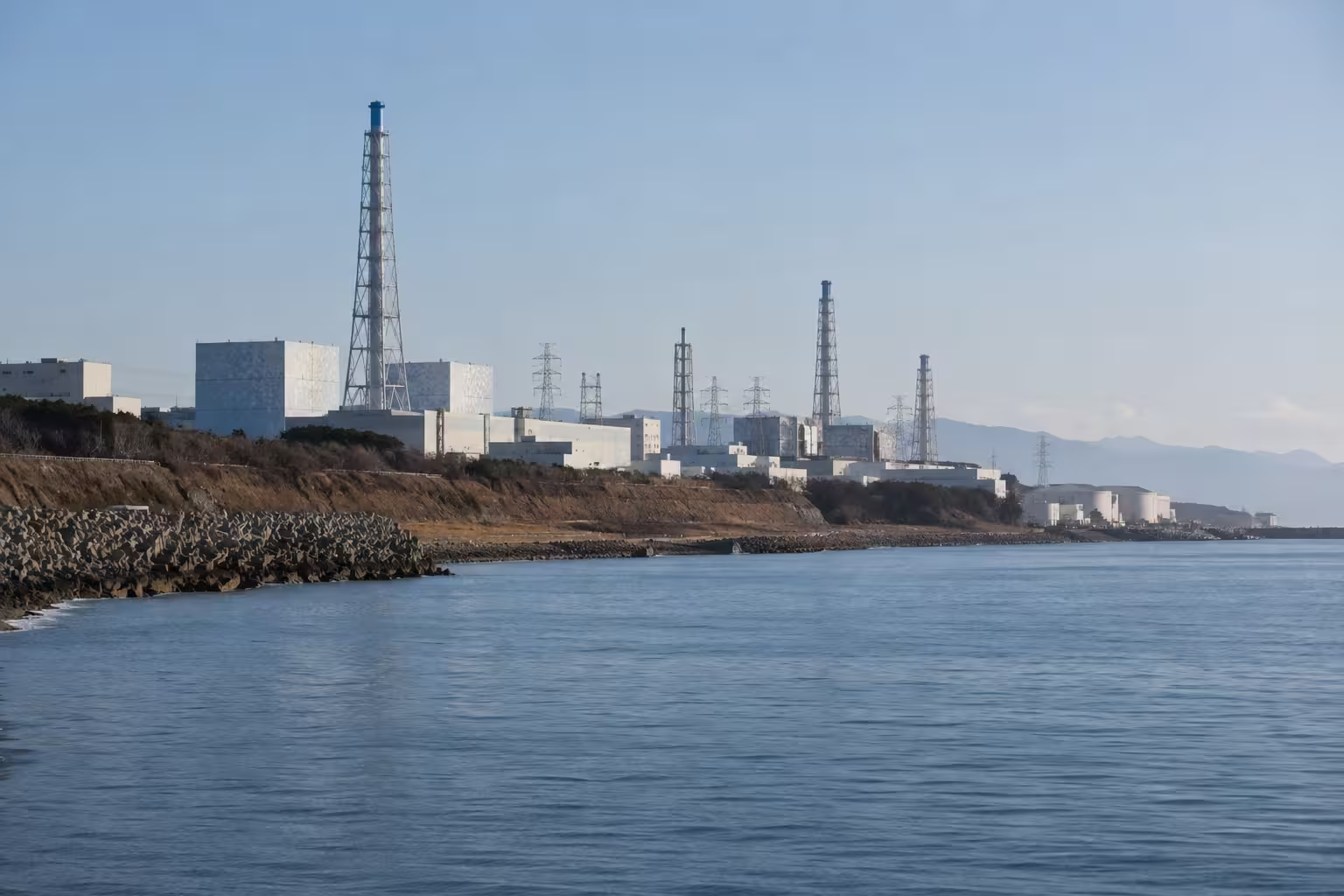
IAEA Confirms Latest Fukushima Water Release Meets International Safety Standards
August , 2026 : The International Atomic Energy Agency (IAEA) has confirmed that the latest release of Advanced Liquid Processing System (ALPS)-treated water from Japan’s Fukushima Daiichi Nuclear Power Station remains well within international safety standards after independent testing of the water before discharge.
According to the agency, the tritium concentration measured in the 22nd discharge batch was significantly below Japan’s operational limit of 1,500 becquerels per litre, supporting previous findings that the treated water continues to comply with internationally recognized safety requirements.
The latest verification forms part of the IAEA’s ongoing independent review of Japan’s controlled water discharge programme, which began in August 2023 and is operated by Tokyo Electric Power Company (TEPCO).
Latest Monitoring Results
Before the latest discharge commenced, IAEA specialists independently collected and analyzed water samples at the Fukushima site. The agency reported that the measured tritium concentration remained far below Japan’s operational threshold and was consistent with international safety standards.
Since the programme began nearly three years ago, Japan has released approximately 163,800 cubic metres of ALPS-treated water in controlled batches. The IAEA said every batch examined so far has remained below the established operational limit.
International Experts Continue Independent Verification
Alongside its routine monitoring programme, the IAEA has also expanded international participation through its Additional Measures initiative, designed to strengthen transparency and allow independent verification by laboratories from multiple countries.
During a recent monitoring mission, international experts worked alongside IAEA staff to collect samples of diluted ALPS-treated water before its release into the Pacific Ocean.
Experts participating in the mission represented:
- China
- Republic of Korea
- Russian Federation
- Switzerland
- Japan
- International Atomic Energy Agency
The collected samples are being independently analyzed by specialist laboratories within the IAEA’s Analytical Laboratories for the Measurement of Environmental Radioactivity (ALMERA) network.
The Additional Measures programme examines several stages of the discharge process, including treated water before dilution, diluted water immediately prior to discharge, and environmental samples such as nearby seawater and fish. According to the IAEA, the initiative is intended to improve transparency, broaden international scientific participation and provide additional confidence through independent verification.
Previous Monitoring Produced Similar Results
The agency noted that similar findings were recorded during the 21st discharge batch, when independently analyzed samples also showed tritium concentrations well below Japan’s operational limit before the water entered the sea.
At that stage, Japan had discharged more than 156,000 cubic metres of ALPS-treated water since August 2023, with every verified batch remaining within the country’s established operational standards.
Ongoing International Oversight
The IAEA continues to maintain a permanent technical presence at the Fukushima Daiichi Nuclear Power Station throughout the discharge programme.
In its comprehensive safety assessment published in July 2023, the agency concluded that Japan’s planned approach to releasing ALPS-treated water is consistent with relevant international safety standards and would have a negligible radiological impact on people and the environment, provided the discharge continues as assessed.
The agency says it will continue independent monitoring, scientific verification and international reporting as future batches are prepared for release.
- Why This Matters
The release of ALPS-treated water from the Fukushima Daiichi Nuclear Power Station has become an international issue because the treated water is discharged into the Pacific Ocean, which is shared by many countries. While Japan says the process follows international safety standards and is monitored by the IAEA, some neighboring countries, fishing communities and members of the public have raised concerns about potential environmental, marine and food safety impacts. Independent international monitoring is therefore intended to increase transparency and public confidence.
- Why Is the IAEA Involved?
The International Atomic Energy Agency is providing an independent technical review of Japan’s discharge programme rather than operating the release itself. Its role includes verifying sampling methods, analyzing water samples, reviewing scientific data and confirming whether the discharge remains consistent with international nuclear safety standards. The agency also coordinates participation by laboratories from several countries to allow independent verification of the results.
- What Is ALPS-Treated Water?
The Advanced Liquid Processing System (ALPS) is a treatment process used at the Fukushima Daiichi Nuclear Power Station to remove most radioactive substances from water used during the plant’s decommissioning. After treatment, the remaining water is diluted with seawater before controlled release. Tritium, a radioactive form of hydrogen that is difficult to remove from water, remains present but is measured to ensure its concentration stays below Japan’s operational limits and within internationally accepted safety standards before discharge.
- Why Are Neighbouring Countries Watching Closely?
Countries across the Asia-Pacific region, particularly those bordering the Pacific Ocean, have closely monitored the discharge programme because of concerns about marine ecosystems, seafood safety and potential cross-border environmental impacts. Some governments have requested greater transparency and independent scientific verification, while others have adjusted or reviewed import policies for Japanese seafood. The participation of experts from multiple countries in IAEA-led sampling missions is intended to strengthen confidence through internationally observed testing rather than relying solely on domestic monitoring.
- What Should Readers Know?
This issue combines science, environmental protection, international diplomacy and public trust. The key question is not simply whether water is being released, but whether independent scientific monitoring continues to confirm that the releases remain within internationally accepted safety standards over the long term. As additional batches are discharged in the coming years, the IAEA and participating international laboratories are expected to continue sampling, testing and publishing their findings, allowing governments, researchers and the public to follow the programme’s progress.
Key Points
-
IAEA confirmed the 22nd batch of Fukushima ALPS-treated water met international safety standards.
-
Tritium concentration remained well below Japan’s operational limit of 1,500 becquerels per litre.
-
Around 163,800 cubic metres of treated water have now been released since August 2023.
-
International experts from China, South Korea, Russia and Switzerland joined the IAEA in independent sampling activities.
-
Samples are being analysed by multiple accredited laboratories to strengthen transparency and independent verification.
-
The IAEA says it will continue monitoring and technical oversight throughout the discharge programme.
Editorial Note: This article is intended for informational and educational purposes only. It provides analytical insights based on publicly available information and does not constitute financial, legal, or political advice. Readers are encouraged to consult official sources and expert advisors for verified guidance.
What Is ALPS-Treated Water? Understanding Nuclear Wastewater Treatment and International Oversight