

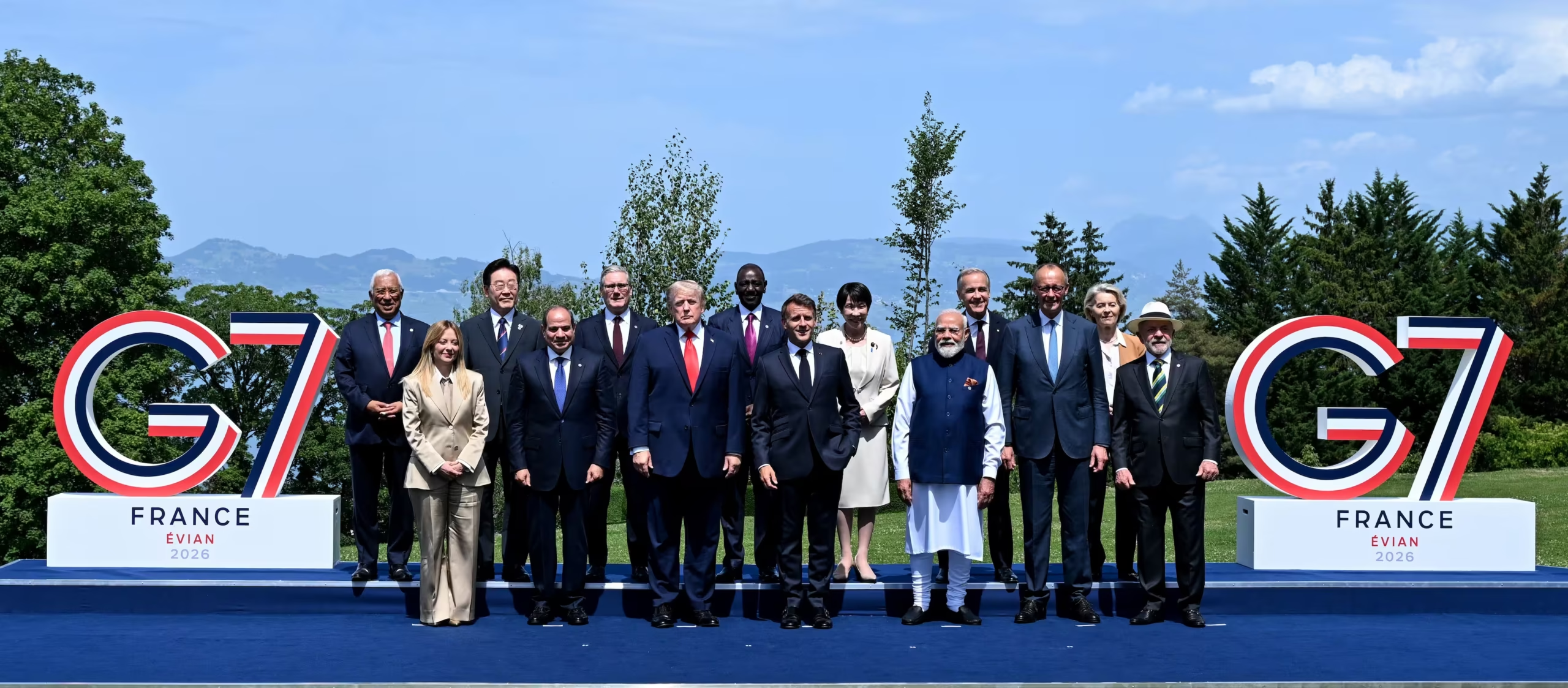
World Leaders Address Growth, Security and AI at 2026 G7 Summit
19th June,2026 : World leaders have concluded the 2026 G7 Summit in Évian-les-Bains, France, following three days of discussions on global economic stability, international security, artificial intelligence, development financing and critical supply chains.
French President Emmanuel Macron hosted the summit from 15 to 17 June under France’s 2026 G7 presidency.
The meeting brought together the leaders of Canada, France, Germany, Italy, Japan, the United Kingdom and the United States, alongside representatives of the European Union.
France also invited Brazil, India, Kenya and South Korea as partner countries, integrating them into preparations and selected summit discussions. Leaders and representatives from Ukraine, Egypt, Qatar and the United Arab Emirates participated in sessions concerning regional security and international cooperation.
France Places Global Economic Imbalances at Centre of Summit
As host, France placed the reduction of global economic imbalances among the summit’s central priorities. President Macron called for stronger cooperation between advanced and emerging economies to support more balanced, sustainable and inclusive growth. The French presidency highlighted concerns including industrial overcapacity, unsustainable debt, unequal access to investment, supply-chain vulnerability and weak financing for developing economies.
The summit followed France’s Global Convergence for Growth initiative, which brought together representatives from G7 members, partner countries, China and the International Monetary Fund ahead of the leaders’ meeting. Discussions in Évian examined how governments could reduce economic uncertainty while addressing policies and market practices that contribute to excessive production capacity and uneven trade relationships.
Leaders Discuss Ukraine and European Security
The war in Ukraine remained an important part of the G7 agenda. Ukrainian President Volodymyr Zelenskyy participated in a dedicated session on building peace and security for Ukraine and Europe.
G7 leaders reaffirmed their support for efforts to achieve a just and lasting peace while emphasizing the importance of respecting Ukraine’s sovereignty and the will of the Ukrainian people. The discussions also covered Russia’s military actions, cooperation between Russia and North Korea and broader concerns about attempts to change international borders through force.
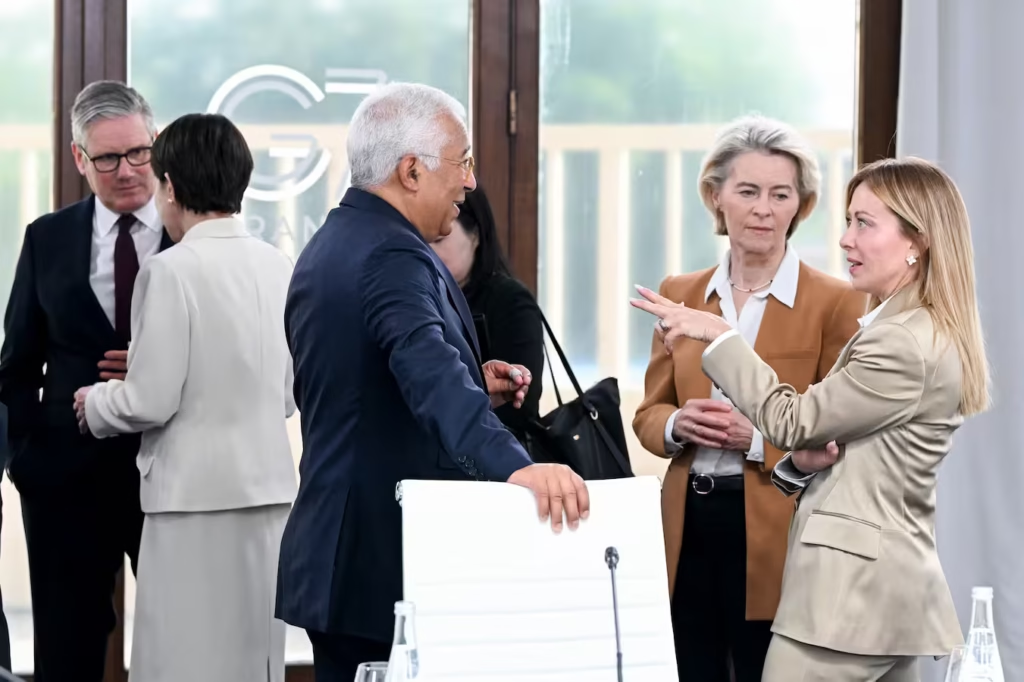
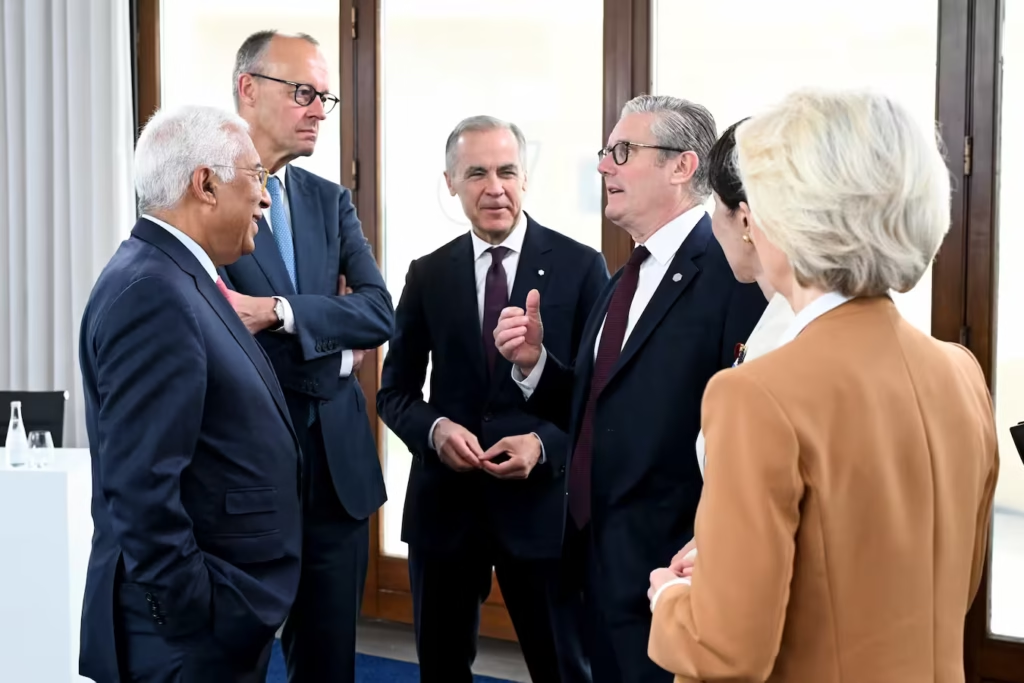
European leaders, including Macron, German Chancellor Friedrich Merz, Italian Prime Minister Giorgia Meloni and UK Prime Minister Keir Starmer, used the summit to continue consultations on European security and support for Ukraine.
Middle East Security Discussed with Regional Leaders
The situation in the Middle East was addressed during a working lunch involving G7 leaders and representatives from Egypt, Qatar and the United Arab Emirates. Discussions covered regional stability, nuclear proliferation risks, maritime security and safe navigation through important international shipping routes, including the Strait of Hormuz. Leaders considered diplomatic efforts to reduce tensions and prevent further disruption to international energy and commercial supply chains. The wider geopolitical discussions also examined security challenges in the Indo-Pacific and the need to strengthen cooperation between G7 members and international partners.
United States Engages on Security and the Global Economy
US President Donald Trump joined the G7 discussions as the United States prepared to host the G20 later in 2026.The United States participated in talks on international economic imbalances, trade, security, the Middle East and global supply chains.G7 discussions highlighted the importance of continued engagement among the United States, Europe and emerging economies in reducing uncertainty across the international economy.
The Évian summit also provided opportunities for bilateral meetings between the US delegation and other participating countries, including talks involving the United Arab Emirates.
Germany Calls for G7 Unity on Global Challenges
German Chancellor Friedrich Merz attended the summit with a focus on critical raw materials, global economic growth, Ukraine and international security. Germany emphasized the importance of coordinated action among the G7 countries at a time of geopolitical instability and growing pressure on global supply networks. Merz also met UK Prime Minister Keir Starmer on the sidelines of the summit as Germany and the United Kingdom continued discussions on European security and bilateral cooperation.
Critical minerals featured prominently because of their importance to energy systems, advanced manufacturing, defence, semiconductors and emerging technologies.
United Kingdom Announces Investment and Employment Measures
Prime Minister Keir Starmer used the summit to announce a package of international investments involving French and Indian companies. According to the UK government, the investments are expected to support clean energy, battery storage and artificial-intelligence projects in Britain while creating more than 1,400 jobs in Manchester, Leeds and Birmingham.
Starmer also met European Council President António Costa, European Commission President Ursula von der Leyen and German Chancellor Friedrich Merz during the summit.
The meetings addressed European cooperation, economic security, Ukraine and wider international developments.
Italy Participates in Economic and Security Discussions
Italian Prime Minister Giorgia Meloni represented Italy in the leaders’ discussions. Italy’s participation built on initiatives developed during its 2024 G7 presidency, including work on migration, international infrastructure, food systems and partnerships with African countries. During the Évian summit, leaders renewed their commitment to combating organized migrant-smuggling networks and human trafficking. They also agreed to strengthen cooperation against international drug-trafficking organizations and the infiltration of legitimate institutions by organized criminal groups.
Japan Promotes Trusted Artificial Intelligence
Japanese Prime Minister Sanae Takaichi participated in sessions covering Ukraine, the Middle East, economic growth, development cooperation and artificial intelligence. Japan promoted the development of safe, secure and trustworthy AI, building on the Hiroshima AI Process launched during its previous G7 presidency.
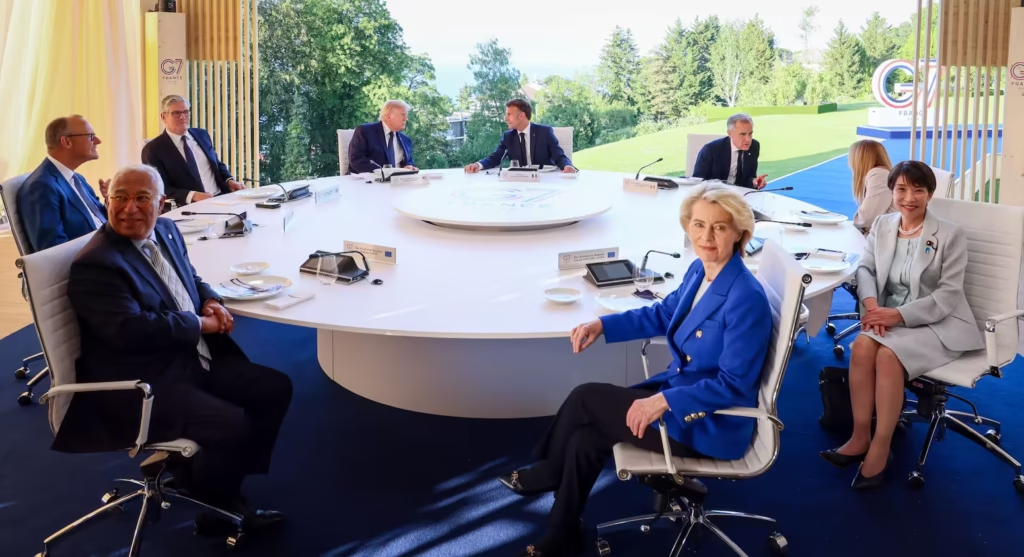
Takaichi emphasized that artificial intelligence and digital technologies could contribute to global growth but required credible governance, risk management and international cooperation. Japan also supported the principle of Data Free Flow with Trust and called for AI ecosystems adapted to the circumstances of different countries and regions.
Brazil Brings Global South and Health Priorities to G7
Brazilian President Luiz Inácio Lula da Silva attended as the leader of one of France’s principal partner countries.Brazil used its participation to promote a greater role for emerging economies in discussions concerning global governance, development, economic inequality and international cooperation.
Lula and World Health Organization Director-General Tedros Adhanom Ghebreyesus also called for stronger international preparedness for future pandemics.
Brazil’s involvement reflected France’s decision to expand G7 discussions beyond the traditional group of advanced industrial economies and incorporate perspectives from the Global South. Lula also held a bilateral meeting with Japanese Prime Minister Takaichi during the summit.
India Participates as an Invited Partner
Indian Prime Minister Narendra Modi attended the summit as an invited partner rather than as a member of the G7.India participated in discussions concerning global economic growth, technology, supply chains, development partnerships and cooperation with emerging economies.
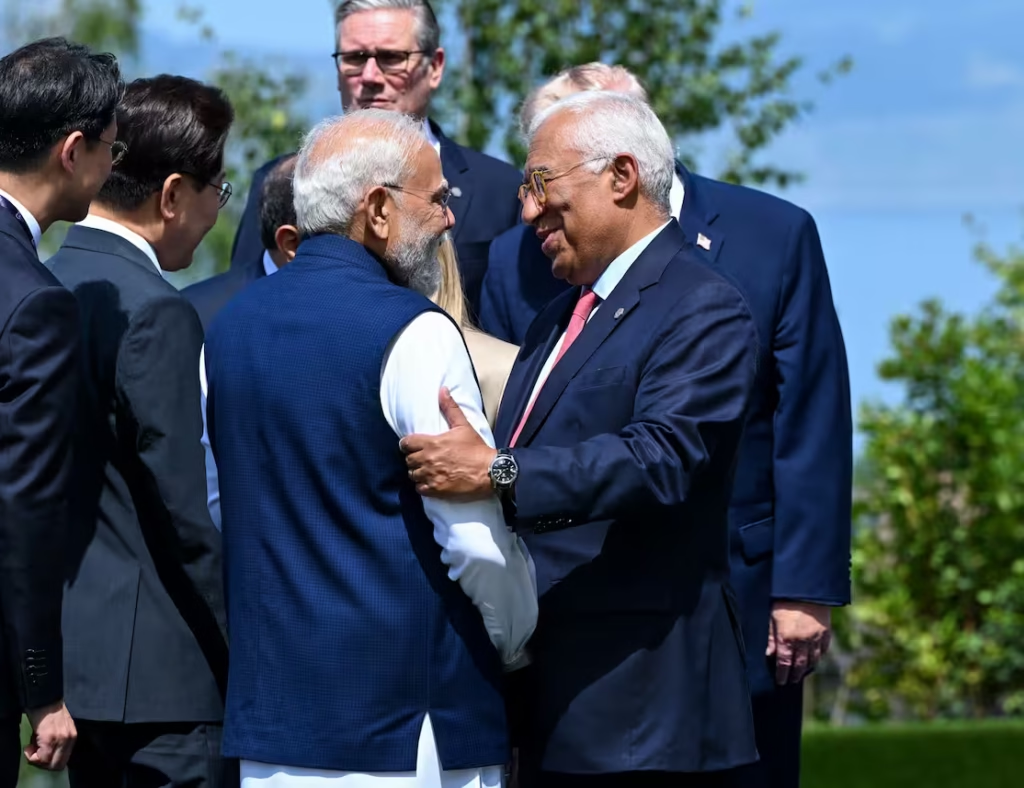
India’s involvement recognized its position as a major global economy and an influential representative of developing and emerging countries. The summit also provided opportunities for Narendra Modi to meet other participating leaders and discuss bilateral and international issues.
Kenya and South Korea Support International Partnerships
Kenya and South Korea were also included as principal partner countries during preparations for the Évian meeting.Their representatives contributed to discussions on development finance, infrastructure, economic corridors, health security and cooperation between advanced and emerging economies.
Kenya and South Korea supported the G7 statement on mutually beneficial international partnerships, which called for a combination of private investment, blended finance, transparent lending and development assistance.The statement recognised that sustainable development required investment models that responded to the priorities of partner countries rather than imposing one-sided arrangements.
How the G7 Presidency Works
The G7 does not have a permanent headquarters or secretariat. Instead, its presidency rotates annually among its seven members in a fixed order: France, the United States, the United Kingdom, Germany, Japan, Italy and Canada.
The country holding the presidency sets the year’s priorities, organises ministerial meetings and hosts the main leaders’ summit. The European Union participates in G7 meetings but does not hold the rotating presidency.
Recent & Upcoming G7 Hosts
2024 : Italy: The summit was held at Borgo Egnazia in Apulia from 13 to 15 June.
2025 : Canada: Leaders met in Kananaskis, Alberta, from 15 to 17 June.
2026 : France: France hosted the summit in Évian-les-Bains from 15 to 17 June.
2027 : United States: Under the established rotation, the United States is scheduled to hold the next G7 presidency. The final summit location and dates will be determined by the US presidency.
Why Were India, Brazil and Other Countries Invited?
India, Brazil, Kenya and South Korea attended the 2026 summit as invited partner countries, not as G7 members.
The host country may invite governments and international organisations whose participation is relevant to that year’s agenda. India and Brazil are major emerging economies and influential members of the G20, while Kenya brought an important African and developing-country perspective. South Korea is a major advanced economy with significant roles in technology, manufacturing and global supply chains.
Their participation allowed the G7 to discuss issues such as economic growth, artificial intelligence, development financing, health, energy and supply-chain security with countries beyond its traditional membership.
Invited countries may join selected sessions and hold bilateral meetings, but they do not become G7 members or take part in the annual presidency rotation.
What Is the IMF’s Role in the G7?
The International Monetary Fund is not a G7 member and does not control the summit.
The IMF may participate by invitation, particularly in discussions involving the world economic outlook, inflation, debt, financial stability, exchange rates and global economic imbalances.
It provides economic analysis and a wider international perspective covering its 191 member countries. G7 governments may use IMF research and recommendations when discussing coordinated economic policies, but political decisions and G7 declarations remain the responsibility of the participating governments.
Leaders Address AI, Digital Safety and Children Online
Artificial intelligence and digital governance formed another major area of discussion.G7 leaders examined how governments could encourage rapid AI adoption while establishing appropriate safeguards and building public trust.
France also promoted stronger protection for children in digital spaces. Its G7 programme called for coordinated action against harmful content, online exploitation and digital services that place minors at risk.The discussions reflected growing international concern about the social consequences of artificial intelligence, algorithmic systems and children’s use of online platforms.
Critical Minerals and Supply-Chain Resilience
The summit considered how G7 countries and their partners could strengthen access to critical minerals used in clean energy, electronics, defence and advanced manufacturing.Leaders discussed diversification, responsible investment and the development of more resilient mineral-processing and manufacturing networks.
The objective is to reduce excessive dependence on a limited number of suppliers while ensuring that resource-producing countries receive greater economic benefits from their minerals.Critical mineral cooperation was linked to broader discussions on industrial capacity, economic security and the clean-energy transition.
G7 Acts Against Migrant Smuggling and Drug Trafficking
Separate declarations adopted during the summit addressed organized crime.G7 leaders renewed commitments to prevent and dismantle criminal networks involved in migrant smuggling and human trafficking. They also called for a comprehensive action plan to address drug-trafficking organizations and their attempts to corrupt or infiltrate public and private institutions.
Relevant G7 ministers were tasked with developing the drug-trafficking action plan by November 2026.
Development Financing and International Solidarity
The leaders endorsed a renewed approach to international partnerships and development investment.The G7 statement recognized the importance of private capital, blended finance, fair lending and official development assistance in supporting vulnerable countries.
Rather than treating developing countries only as recipients of assistance, the approach promoted investment partnerships, economic corridors, stronger local value chains and greater national ownership of development projects.
India, Brazil, Kenya and South Korea helped broaden the summit’s discussions by bringing the perspectives of major emerging and developing economies into the process.
Health Cooperation Includes Cancer and Pandemic Preparedness
Health was also included in the summit outcomes.G7 leaders issued a call for stronger international action against cancer, including prevention, research, diagnosis and access to treatment.Brazil separately promoted global preparedness for future pandemics and encouraged continued international work on the global pandemic agreement.The discussions reflected the continuing economic and social consequences of major health emergencies and the need for stronger cooperation before another international crisis occurs.
Évian Summit Expands G7 Engagement
The Évian summit demonstrated an effort by the G7 to work more closely with countries outside its formal membership.
Although the group continues to consist of Canada, France, Germany, Italy, Japan, the United Kingdom and the United States, the inclusion of Brazil, India, Kenya and South Korea gave emerging economies a larger role in selected negotiations.
Other invited leaders contributed to discussions on Ukraine and the Middle East.
The summit concluded with commitments covering economic cooperation, security, development financing, artificial intelligence, critical minerals, organized crime, health and digital protection.
Attention will now turn to the implementation of the Évian commitments and to the 2026 G20 Summit, where many of the same economic and geopolitical issues are expected to continue.
Key Points
-
France hosted the G7 Leaders’ Summit in Évian-les-Bains from 15 to 17 June 2026.
-
The summit included the seven G7 members and representatives of the European Union.
-
Brazil, India, Kenya and South Korea participated as principal partner countries.
-
Ukraine joined discussions concerning peace and European security.
-
Egypt, Qatar and the UAE participated in a session on Middle East stability.
-
Leaders discussed global economic imbalances, development finance and international partnerships.
-
Artificial intelligence, online child safety and digital governance featured prominently.
-
The summit addressed critical-mineral supply chains and economic security.
-
G7 leaders adopted commitments against migrant smuggling and drug trafficking.
-
Health discussions covered cancer cooperation and future pandemic preparedness.
Editorial Note: This article is intended for informational and educational purposes only. It provides analytical insights based on publicly available information and does not constitute financial, legal, or political advice. Readers are encouraged to consult official sources and expert advisors for verified guidance.
OECD Ministers Conclude 2026 Meeting on Industrial Policies and Open Markets
G20 2026 Miami Summit: Members, U.S. Priorities and What to Expect
The Jakarta Blueprint: Business Leaders Launch “Openness, Connectivity, Synergy” Plan for 2026
