

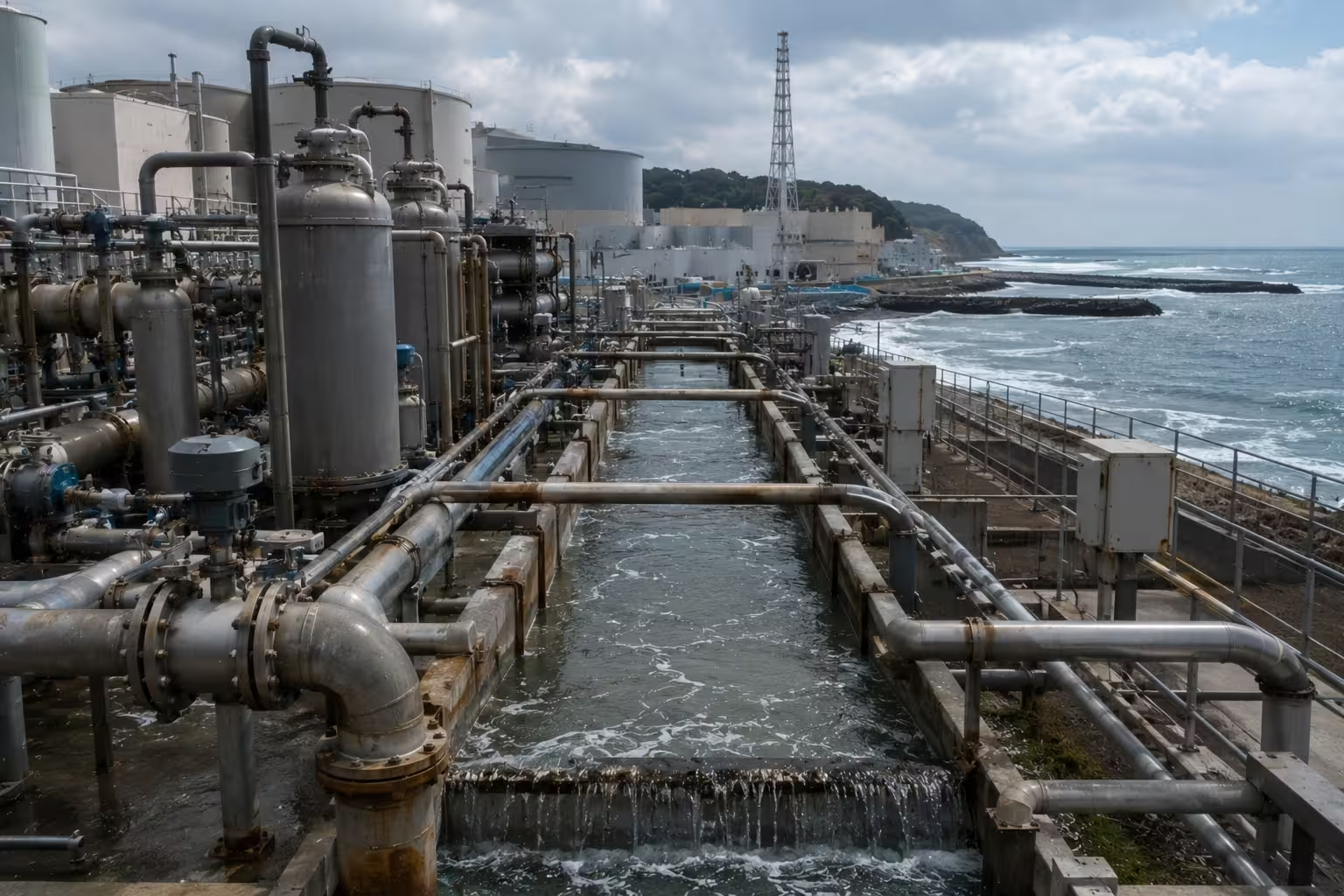
June , 2026 : The release of ALPS-treated water from Japan’s Fukushima Daiichi Nuclear Power Station has attracted worldwide attention, but many people are unfamiliar with what the treatment process actually involves.
Understanding how radioactive water is managed helps explain why international organizations such as the International Atomic Energy Agency (IAEA) are involved and why governments monitor these activities closely.
- What Is ALPS-Treated Water?
ALPS stands for Advanced Liquid Processing System.
It is a water treatment technology developed to remove most radioactive substances from contaminated water generated during nuclear plant operations and decommissioning activities.
At the Fukushima Daiichi Nuclear Power Station, groundwater, rainwater and cooling water become contaminated after coming into contact with damaged reactor buildings. Before this water can be considered for controlled release, it passes through the ALPS treatment system.
The system removes dozens of radioactive radionuclides to levels that meet Japan’s regulatory requirements before the water is stored, tested and later diluted with seawater prior to any approved discharge. One radioactive substance tritium cannot be removed efficiently using current large-scale treatment technologies because it becomes part of the water molecule itself.
- Why Is It Important to Remove Radioactive Substances?
Removing radioactive materials helps reduce potential exposure to people and the environment. Different radioactive elements behave differently in nature. Some can accumulate in living organisms or remain in the environment for long periods if not properly managed.
Treatment systems are designed to reduce radionuclides to levels that comply with national regulations and internationally recognized safety standards before any controlled release occurs. Monitoring continues even after treatment to verify that regulatory limits remain satisfied.
- Why Can’t Tritium Be Easily Removed?
Unlike many other radioactive elements, tritium combines chemically with hydrogen to form water molecules. Because tritiated water behaves almost identically to ordinary water, separating it requires specialized technologies that are technically difficult, energy-intensive and often impractical for processing very large volumes.
Instead, countries generally rely on dilution, controlled release and continuous environmental monitoring while keeping concentrations below regulatory limits.
- Which Countries Also Release Treated Nuclear Water?
Japan is not the only country that releases treated water from nuclear facilities. Many countries operating nuclear power plants routinely discharge treated water under strict regulatory controls and environmental monitoring.
Examples include:
- United States
- Canada
- France
- United Kingdom
- Sweden
- Finland
- Belgium
- Switzerland
- South Korea
- China
In each case, releases must comply with national regulations and environmental protection requirements, although treatment technologies, monitoring systems and regulatory frameworks may differ between countries.
Are There Alternatives to Releasing Treated Water?
Several alternatives have been discussed internationally, including:
Long-term storage
Water can remain stored in tanks for extended periods, although storage capacity eventually becomes limited.
Further treatment
Additional processing may further reduce certain radionuclides if required before discharge.
Evaporation
Some radioactive water can potentially be released through controlled evaporation under specific circumstances, although this is not suitable in every situation.
Underground disposal
Some disposal methods have been examined in research, but they present technical, environmental and regulatory challenges. Each option involves trade-offs relating to safety, cost, engineering feasibility, environmental impact and long-term management.
Does ALPS Treatment Require Government Approval?
Yes.
Operating nuclear facilities and releasing treated water are heavily regulated activities. Before any discharge occurs, plant operators must comply with national nuclear safety regulations, environmental protection laws and licence conditions established by the country’s independent nuclear regulator. Operators are generally required to demonstrate that releases remain below authorized limits and continue environmental monitoring throughout the process.
Why Is the IAEA Involved?
The International Atomic Energy Agency is the United Nations’ specialized agency for promoting the safe, secure and peaceful use of nuclear technology. For the Fukushima programme, Japan invited the IAEA to conduct an independent technical safety review.
The agency’s work includes:
- Reviewing Japan’s treatment and discharge plans
- Independently sampling treated water
- Verifying laboratory results
- Monitoring environmental data
- Publishing technical findings
- Coordinating participation by international experts
Its role is to provide independent scientific assessment and transparency rather than to operate the discharge programme.
Is IAEA Approval Mandatory?
No.
There is no universal international rule requiring every country to obtain IAEA approval before releasing treated water from a nuclear facility. Individual countries remain responsible for regulating their own nuclear activities through their national regulatory authorities. However, many countries work closely with the IAEA by:
- following IAEA Safety Standards,
- requesting technical reviews,
- participating in peer-review missions,
- receiving scientific assistance and training,
- using IAEA laboratories for international cooperation.
Japan voluntarily requested the IAEA’s independent review to strengthen international transparency and confidence because of the global attention surrounding Fukushima.
Why Does This Matter Globally?
The Fukushima water discharge has become an international issue because oceans connect many countries. Governments, scientists, fishing industries and coastal communities all have an interest in ensuring that any release remains within internationally accepted safety standards.Independent monitoring, international laboratory participation and transparent publication of scientific data help build confidence that environmental protection measures continue throughout the decades-long decommissioning of the Fukushima Daiichi Nuclear Power Station.
Frequently Asked Questions
- Is ALPS-treated water the same as untreated radioactive water?
No. ALPS-treated water has undergone processing to remove most radioactive substances before testing and any authorized discharge. - Does ALPS remove every radioactive substance?
It removes many radionuclides, but tritium cannot currently be removed efficiently at the required industrial scale using the ALPS process. - Is releasing treated water unique to Japan?
No. Many countries with nuclear power plants release treated water under national regulations and environmental monitoring programmes. - Does the IAEA regulate every country’s nuclear programme?
No. Countries regulate their own nuclear facilities. The IAEA develops international safety standards, provides technical expertise and conducts reviews when requested or under applicable international arrangements. - How long will Fukushima water releases continue?
Japan has indicated that treated water releases are expected to continue for many years as part of the long-term decommissioning of the Fukushima Daiichi Nuclear Power Station.
Editorial Note: This article is intended for informational and educational purposes only. It provides analytical insights based on publicly available information and does not constitute financial, legal, or political advice. Readers are encouraged to consult official sources and expert advisors for verified guidance.
IAEA Data: Majority of Radioactive Material Thefts Occur During Transport