

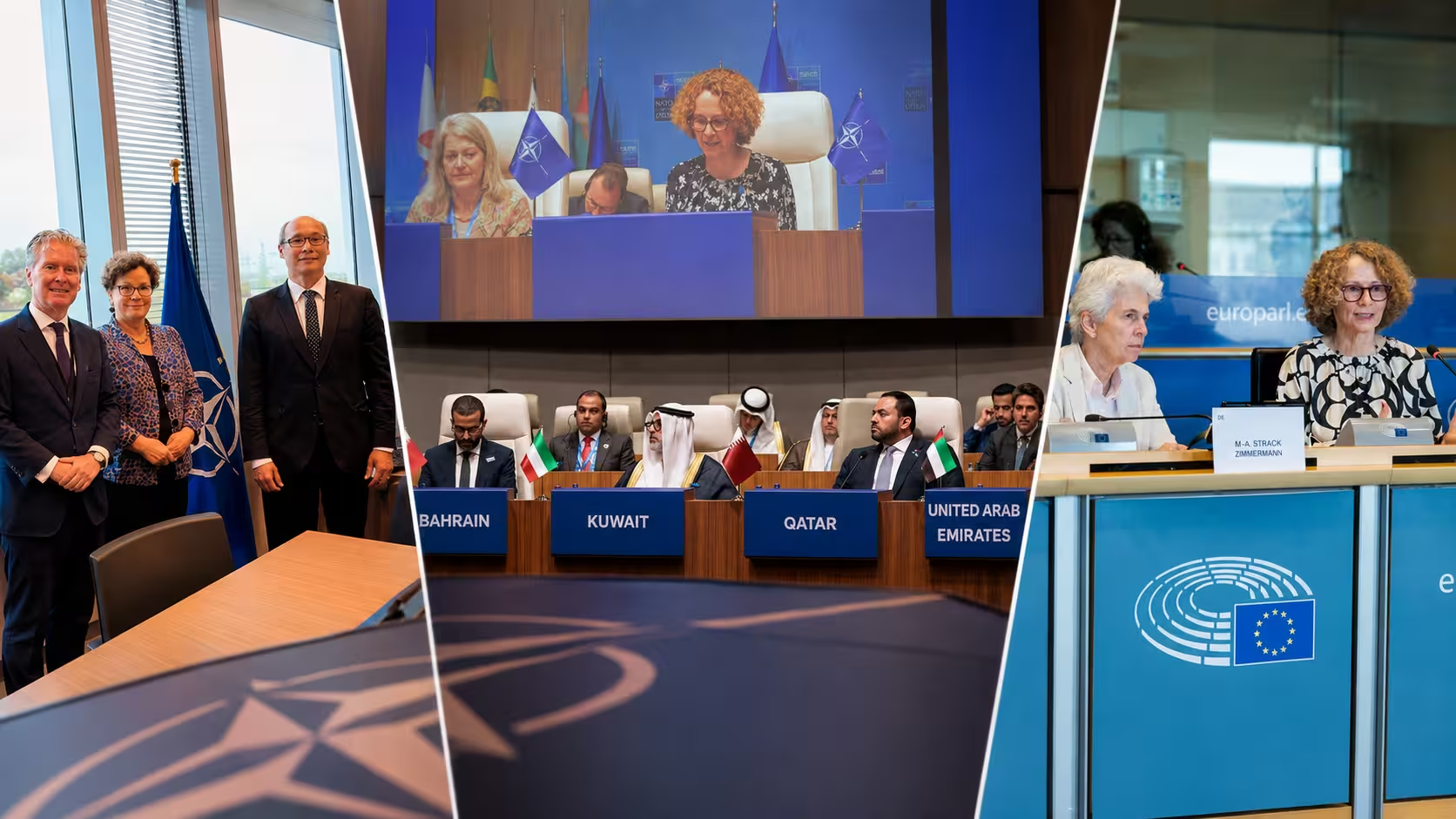
NATO’s July Agenda Covers Gulf Security, European Defence and Financial Accountability
July , 2026 : NATO advanced cooperation across several areas during July 2026, launching new security projects with Gulf partners, strengthening dialogue with the European Parliament and expanding collaboration between its independent audit body and national audit institutions.
Although the three developments cover different areas of NATO’s work, they reflect a wider effort by the Alliance to strengthen international partnerships, improve defence coordination and maintain accountability as member countries increase security spending.
NATO launches new security projects with Gulf partners
NATO announced a new group of flagship security projects with Bahrain, Kuwait, Qatar and the United Arab Emirates during the NATO Summit in Ankara.
Allied foreign ministers met representatives from the four Gulf countries to discuss regional security and other shared concerns. NATO said the talks also reaffirmed the Alliance’s solidarity with its Gulf partners amid continuing instability in the region.
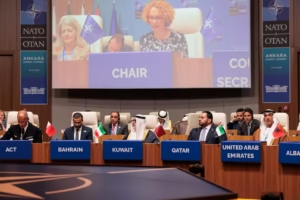
The newly launched projects will focus on maritime security, countering uncrewed aerial systems, protection against chemical, biological, radiological and nuclear threats, and counterterrorism.
The initiatives build on cooperation through the Istanbul Cooperation Initiative, which NATO established in 2004 to develop practical security partnerships with countries in the Gulf region.
NATO said the projects would be developed in consultation with participating Gulf countries so that cooperation could respond to changing security conditions and provide benefits to both NATO and its partners.
Deputy Secretary General briefs European Parliament
NATO Deputy Secretary General Radmila Shekerinska also addressed the European Parliament’s Committee on Security and Defence on 15 July.
She briefed members of the European Parliament on the outcomes of the Ankara Summit and discussed NATO’s defence investment plans, support for Ukraine and efforts to expand military production.
Shekerinska described the summit as transformational and highlighted the commitment by NATO Allies to work towards investing 5% of gross domestic product in defence and security by 2035.

According to NATO, European Allies and Canada were already investing approximately 4% of their combined GDP in defence and security during the first year of the ten-year programme.
Shekerinska also pointed to more than US$50 billion in new procurement commitments secured during the NATO Summit Defence Industry Forum, presenting the agreements as evidence that higher defence spending was being converted into military equipment and capabilities.
She further said Allies had pledged €70 billion in military equipment, training and other assistance for Ukraine during 2026, with at least the same level of support planned for 2027.
The meeting reflected the continuing importance of coordination between NATO and European Union institutions, particularly as European countries increase defence expenditure and expand their industrial capacity.
NATO audit body expands international cooperation
In a separate development, the International Board of Auditors for NATO expanded its cooperation with national audit institutions in Belgium, the Netherlands and Türkiye.
The organization, commonly known as IBAN, signed three memoranda of understanding designed to support the exchange of audit knowledge, professional experience and public-sector auditing practices.
The agreement with the Belgian Court of Audit was signed in Brussels on 10 June, followed by an agreement with the Netherlands Court of Audit on 2 July. A third partnership was concluded with the Turkish Court of Accounts in Ankara on 9 July during the week of the NATO Summit.
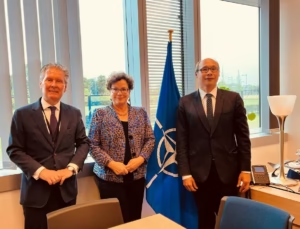
The agreements establish cooperation in areas including audit methodologies, professional development, financial management, governance, accountability and internationally recognized auditing standards.
IBAN is responsible for independently auditing NATO expenditure of more than €8 billion annually. Its work covers NATO bodies and reporting entities, performance audits and expenditure under the NATO Security Investment Programme.
The organization examines whether funds have been properly authorized and used, while also assessing the economy, efficiency and effectiveness of NATO programmes and activities.
IBAN Chair Sébastien Lepers said effective external auditing was becoming increasingly important as NATO countries committed greater resources to defence and collective security.
Cooperation accompanied by greater accountability
Taken together, the three July developments highlight the expanding scope of NATO’s activities.
The Gulf projects extend practical security cooperation beyond the Alliance’s traditional geographic area, while the European Parliament meeting reflects closer political coordination between NATO and European institutions.
At the same time, IBAN’s new agreements demonstrate an effort to strengthen oversight and public confidence as defence budgets and NATO-related investments continue to increase.
The developments suggest that NATO’s current priorities are not limited to military readiness. They also include international partnerships, defence-industrial capacity, institutional governance and greater scrutiny of how collective resources are managed.
Editorial Note: This article is intended for informational and educational purposes only. It provides analytical insights based on publicly available information and does not constitute financial, legal, or political advice. Readers are encouraged to consult official sources and expert advisors for verified guidance.
OPEC+ Countries Agree on July 2026 Production Increase to Support Oil Market Stability
APEC Ministers Back Wider AI Access, Digital Skills and Online Safety