

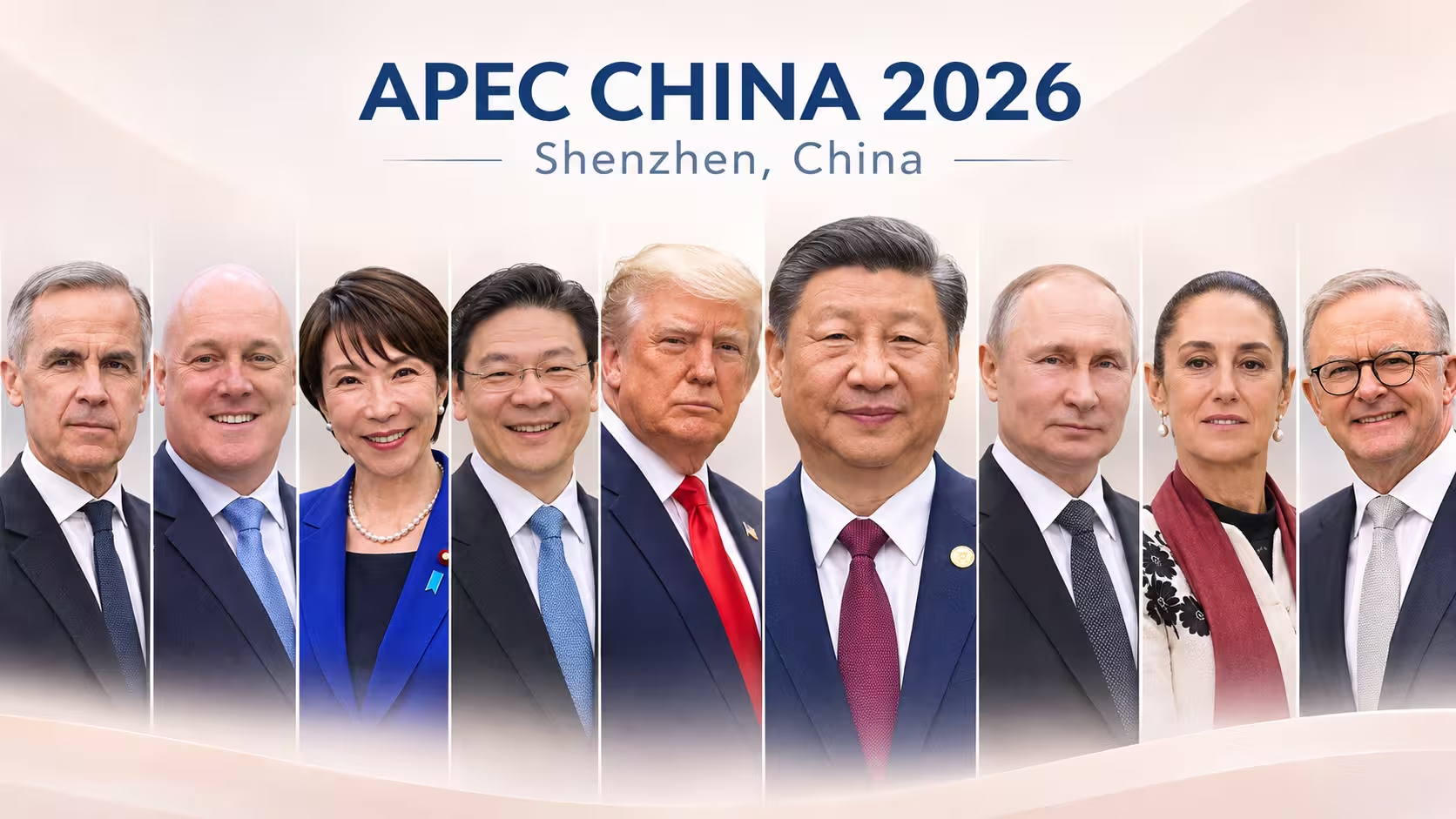
19th November 2026 : World leaders gathered in Shenzhen, China, on 18th-19th November 2026 for the 33rd Asia-Pacific Economic Cooperation (APEC) Economic Leaders’ Meeting, placing international trade, artificial intelligence, investment and major diplomatic relationships at the centre of discussions.
Chinese President Xi Jinping hosted the gathering, attended by US President Donald Trump, Russian President Vladimir Putin, Canadian Prime Minister Mark Carney, Australian Prime Minister Anthony Albanese and New Zealand Prime Minister Christopher Luxon, alongside leaders and representatives from other Asia-Pacific economies.
The summit came at a time when tariff disputes, shifting manufacturing supply chains, economic uncertainty and rapid advances in artificial intelligence are influencing international business decisions.
While APEC’s formal agenda concentrated on regional economic cooperation, the presence of several major political leaders also created opportunities for bilateral and wider diplomatic discussions.
For economies such as Australia and New Zealand, where international trade plays a major role in economic growth, the gathering provided another opportunity to engage with important trading partners and discuss the challenges facing regional businesses.
But what actually happened over these two days, what did the leaders say, and what could their discussions mean for the global economy?
Key Developments from 18th-19th November
- Chinese President Xi Jinping hosted the APEC leaders’ gathering in Shenzhen, with a welcome banquet on 18 November and the leaders’ meeting on 19 November.
- US President Donald Trump and Russian President Vladimir Putin attended the APEC Summit in Shenzhen, where their handshake drew international attention amid wider diplomatic discussions.
- China announced US$20 million in additional support for practical APEC cooperation.
- International trade, tariffs, digital transformation, artificial intelligence and supply-chain resilience featured prominently in the discussions.
- Canadian Prime Minister Mark Carney met President Trump on 18 November to discuss bilateral trade.
- Australian Prime Minister Anthony Albanese addressed business leaders about economic cooperation and responsible AI development.
- New Zealand Prime Minister Christopher Luxon attended alongside Trade and Investment Minister Todd McClay, with trade relationships remaining a major priority.
- Separate diplomatic discussions involving China, Russia and the United States attracted international attention beyond the formal APEC agenda.
18th November: World Leaders Gather in Shenzhen
The opening day brought together international leaders, business executives and senior government representatives in Shenzhen, one of China’s most prominent manufacturing and technology centres.
China used the occasion to highlight the city’s transformation into an international centre for innovation, investment, advanced manufacturing and digital technology.
President Xi Jinping addressed the APEC CEO Summit, calling for greater economic openness and international cooperation as the region faces rapid technological and commercial change.
Russian President Vladimir Putin also addressed business representatives, while Australian Prime Minister Anthony Albanese and Canadian Prime Minister Mark Carney delivered remarks focusing on regional economic opportunities and future growth.
The day included separate diplomatic meetings alongside the business summit.
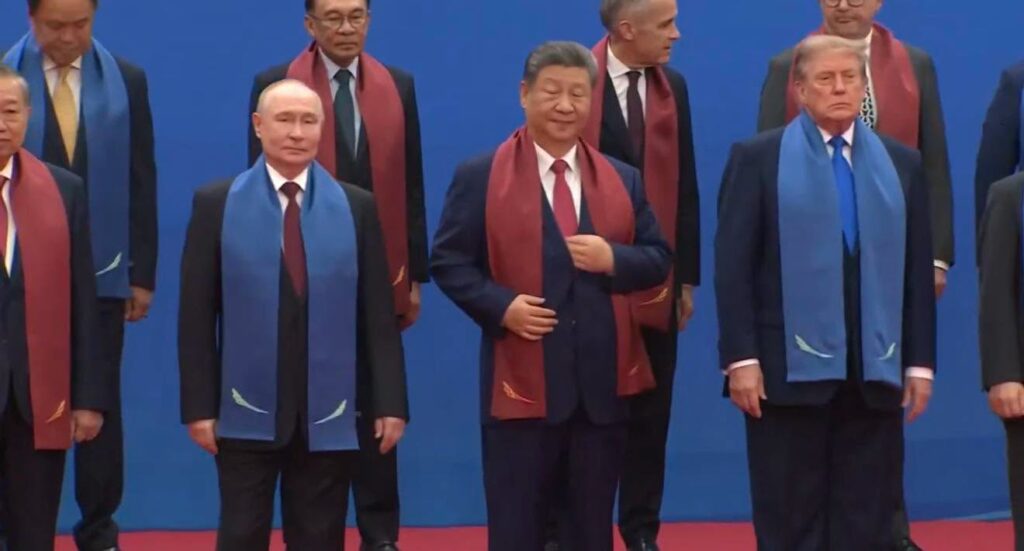
On 18th November, Xi Jinping and his wife, Peng Liyuan, welcomed international leaders to a formal reception in Shenzhen.
The attending leaders, including Trump, Putin, Carney, Albanese and Luxon, joined the traditional APEC family photograph alongside other representatives from participating economies.
The gathering reflected the importance of maintaining dialogue and economic relationships among countries with different priorities, particularly as global trade, technology and supply-chain challenges continue to affect the wider region.
The discussions continued on 19 November, when Xi chaired the formal APEC Economic Leaders’ Meeting.
19th November: China Calls for Stronger Economic Cooperation
President Xi Jinping opened the leaders’ meeting by emphasizing the importance of regional cooperation, economic openness, innovation and inclusive development.
Speaking under China’s 2026 APEC theme, “Building an Asia-Pacific Community to Prosper Together,” Xi called for stronger connections between regional economies.
His remarks focused on the importance of maintaining trade and investment relationships while encouraging economic development through innovation and technological progress.
Xi also argued that the benefits of development should be shared more widely, particularly as new technologies transform industries and employment.
Who Attended the APEC Summit 2026?
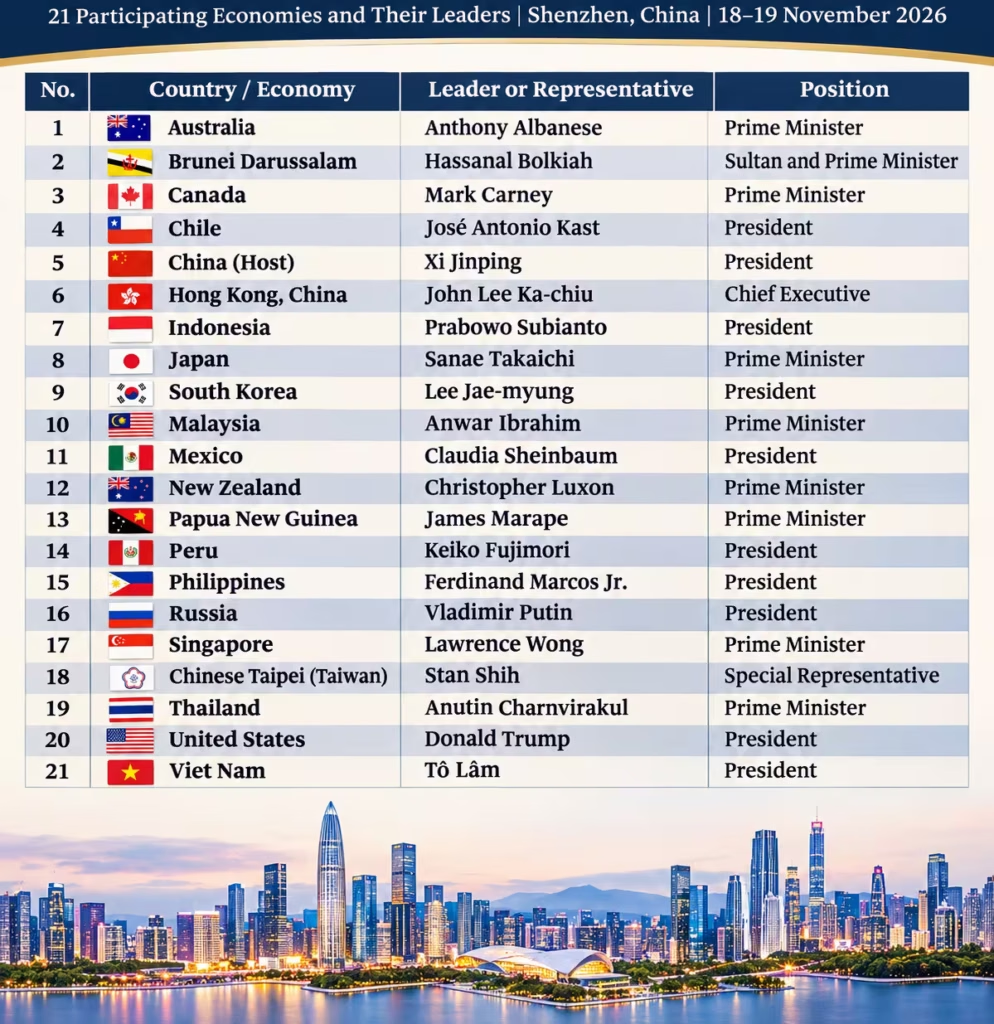
The 33rd APEC Economic Leaders’ Meeting brought together leaders and official representatives from 21 Asia-Pacific economies in Shenzhen, China, on 18–19 November 2026. Participants included presidents, prime ministers, senior government officials and designated representatives, reflecting the wide range of economies involved in regional trade and economic cooperation.
The chart below provides an overview of the participating economies, their leaders or representatives, and their official positions during the summit.
China Announces US$20 Million for APEC Cooperation
Among the day’s concrete announcements, China committed US$20 million to support practical APEC cooperation.
Xi also announced plans to establish a Center for Asia-Pacific Community Studies in Shenzhen to support policy research and international exchanges.
Further initiatives outlined by China involved digital technology, cross-border data flows, clean energy and small-business development.
These announcements demonstrated China’s intention to expand its contribution to regional economic cooperation beyond hosting the summit.
However, they are Chinese government initiatives and should not be confused with commitments collectively approved by every APEC economy.
United States: Trump Attends as Trade and Major-Power Relations Draw Attention
US President Donald Trump’s participation attracted considerable international interest, particularly because of continuing differences between Washington and Beijing over tariffs, technology restrictions and market access.
The United States and China remain deeply connected through trade, investment and manufacturing supply chains, even as their governments pursue different economic and security priorities.
APEC provided an opportunity for both countries to participate in wider discussions about regional economic growth and future cooperation.
Trump’s presence also generated attention around planned high-level diplomatic discussions involving Xi Jinping and Vladimir Putin.
Those discussions extended beyond the organisation’s usual economic agenda, with international security issues also expected to feature.
Trump Meets Canadian Prime Minister Mark Carney
One confirmed bilateral meeting took place on 18 November, when Trump met Canada’s Prime Minister Mark Carney.
According to the Canadian Prime Minister’s Office, the two leaders discussed efforts to reach a mutually beneficial trade agreement between their countries.
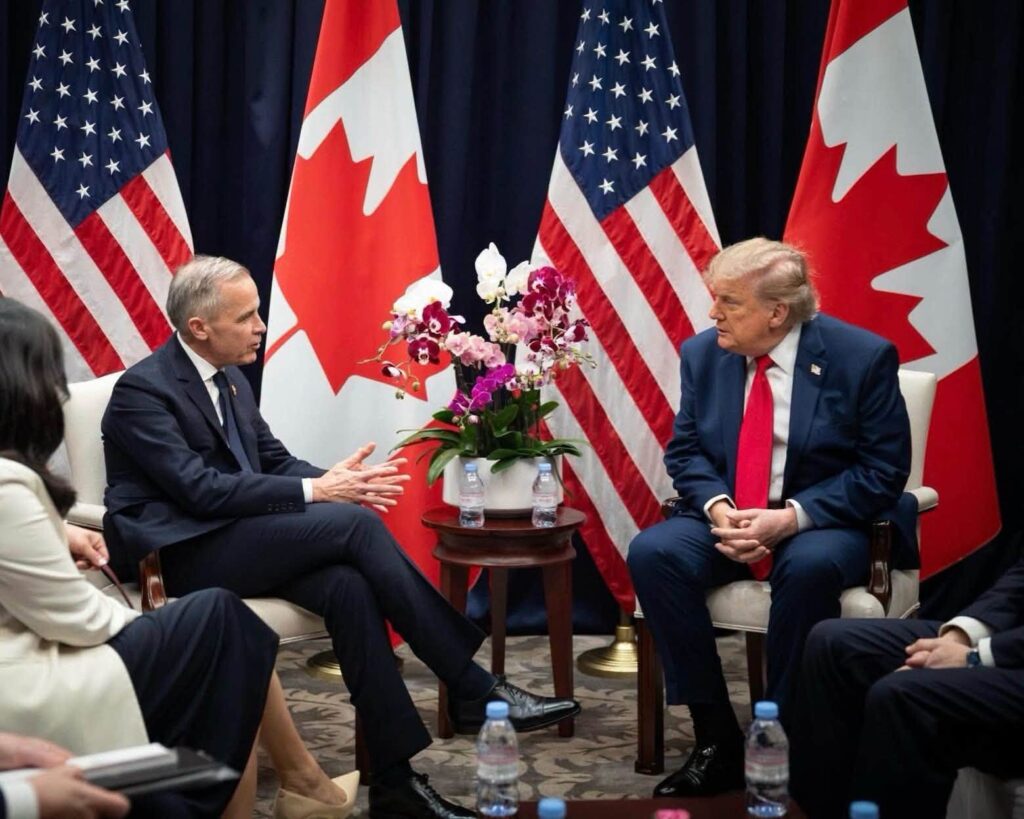
Their discussions included economic opportunities, jobs, affordability and the importance of respecting Canadian sovereignty.
The meeting showed how APEC can provide a setting for direct engagement between governments, even where the issues being discussed are bilateral rather than APEC-wide.
No completed new trade agreement was announced in the official Canadian account of that meeting.
Russia: Putin Addresses Business Leaders and Discusses Sanctions
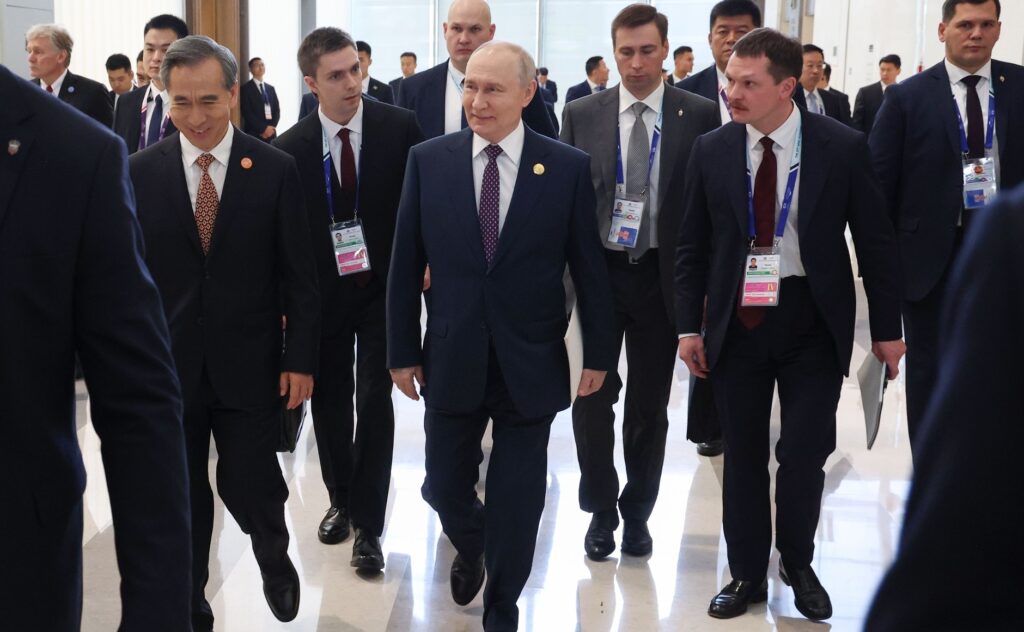
Russian President Vladimir Putin’s participation was another major development during the Shenzhen gathering.
Speaking at the APEC CEO Summit on 18 November, Putin criticised Western sanctions, tariffs and export restrictions.
He argued that such measures had not achieved their intended economic effects on Russia and presented his country’s economic adjustment as evidence of resilience.
These were the Russian president’s own assessments rather than conclusions established by APEC.
Sanctions remain an important subject of international disagreement following Russia’s invasion of Ukraine, with governments holding different views about their impact and justification.
Putin also discussed the potential economic opportunities available through closer cooperation with Asia-Pacific partners.
His presence added a wider diplomatic dimension to a summit otherwise focused on trade, investment and technology.
Canada: Carney Focuses on Trade Relationships and Economic Growth
Canadian Prime Minister Mark Carney used his visit to Shenzhen to pursue international economic engagement.
In his 18 November address to the APEC CEO Summit, Carney discussed changing global economic conditions and opportunities for greater cooperation.
He also emphasized Canada’s interest in developing stronger economic relationships with international partners.
The meeting with Trump was especially relevant because the United States remains central to Canada’s international trade.
Carney’s engagement in Shenzhen also reflected Canada’s interest in recalibrating its economic relationship with China.
For Canadian businesses, developments affecting tariffs, market access, investment and supply-chain stability remain important considerations.
The summit offered an opportunity for engagement, although the longer-term commercial benefits will depend on subsequent policy decisions.
Australia: Albanese Highlights Trade, Investment and Artificial Intelligence
Australian Prime Minister Anthony Albanese addressed the APEC CEO Summit on 18 November, emphasizing the importance of economic cooperation and the role of businesses in generating growth.
Albanese highlighted Australia’s economic relationships across the Asia-Pacific and the importance of international trade for Australian businesses.
China remains Australia’s largest trading partner, making the Shenzhen gathering particularly relevant to Australian exporters and investors.
Responsible AI Development
Artificial intelligence was a major feature of Albanese’s remarks.
He discussed the opportunities AI offers to improve productivity, support innovation and strengthen business competitiveness.
At the same time, he emphasised the importance of responsible technology development, including appropriate safeguards and public confidence.
Australia’s interest in AI reflects wider regional discussions about how governments can encourage innovation while responding to changes affecting workers, businesses and digital infrastructure.
Why the Summit Matters for Australian Businesses
Australian companies depend on international markets for agricultural products, minerals, energy resources and services.
Efforts to strengthen regional supply chains, simplify trade procedures and encourage investment could support future commercial opportunities.
However, the summit itself does not automatically remove existing trade restrictions.
Any direct benefits will depend on the decisions and agreements implemented by participating governments.
New Zealand: Luxon Attends with Trade Relationships in Focus
New Zealand Prime Minister Christopher Luxon and Trade and Investment Minister Todd McClay represented the country at the Shenzhen gathering.
Luxon attended the 18 November welcome reception, joining other Asia-Pacific leaders for the official diplomatic events.
The New Zealand Government has emphasized the importance of APEC for maintaining and strengthening international trade relationships.
According to its pre-summit statement, APEC economies purchase approximately 75% of New Zealand’s exports, making the forum highly relevant to the country’s economic interests.
What Could the Summit Mean for New Zealand?
For New Zealand exporters, discussions about international trade and market access are particularly important.
The country exports dairy products, meat, horticultural goods, forestry products and services to markets throughout the Asia-Pacific.
Changes to trade procedures, tariffs and import requirements can influence the competitiveness of these industries.
New Zealand businesses also depend on imported machinery, electronics, vehicles, industrial components and consumer goods.
Greater regional supply-chain efficiency could therefore benefit both exporters and importers.
APEC’s ongoing work on digital trade and technology may also create opportunities for small businesses seeking international customers.
Nevertheless, the economic effects will depend on specific measures adopted after the summit.
Luxon’s participation provided an opportunity to engage with important regional partners while maintaining New Zealand’s interests in trade, investment and economic cooperation.
Trade and Tariffs: Why Businesses Are Watching the Summit
Trade barriers remain a major concern for companies operating across international markets.
Tariffs and export restrictions can increase costs, complicate supply arrangements and influence investment decisions.
For example, an industrial manufacturer importing components from several economies may face additional expenses when tariff policies change.
Similarly, exporters can lose competitiveness when overseas buyers face higher import costs.
APEC officials have been working on improving trade facilitation, strengthening connectivity and reducing unnecessary administrative obstacles.
One area of progress involves digital trade documentation, which can reduce paperwork and improve the speed of international transactions.
However, APEC operates through consensus and voluntary cooperation.
The summit cannot independently compel participating economies to remove tariffs or change national trade laws.
The practical significance of the Shenzhen discussions will therefore depend on whether members translate their economic priorities into specific policies and programmes.
Artificial Intelligence: A New Focus for Regional Economic Cooperation
Artificial intelligence featured prominently in APEC’s 2026 programme, reflecting its growing influence on business productivity and international competitiveness.
Governments and businesses are examining how AI could improve manufacturing, logistics, financial services, agriculture and administrative operations.
APEC officials have also discussed data protection, digital infrastructure, technical standards and workforce development.
These issues are particularly important for smaller companies that may lack the resources needed to adopt advanced technologies.
What Could AI Cooperation Mean for Workers and Businesses?
Greater cooperation may help economies share technical expertise and support the adoption of digital technologies.
For workers, AI could change the skills required in many industries.
For businesses, it could create opportunities to improve efficiency, reduce operating costs and develop new services.
However, technological benefits are not guaranteed to be equally distributed.
Investment in education, infrastructure and skills development will be important in determining how widely those benefits are experienced.
What Does the Shenzhen Gathering Mean for the Global Economy?
The significance of the APEC summit extends beyond the economies directly represented.
Together, APEC members account for more than 60% of global economic output, giving their trade and investment decisions considerable international influence.
For businesses worldwide, three developments are especially relevant.
First, international trade relationships remain under pressure. Differences over tariffs, industrial policy and access to advanced technology can affect supply chains far beyond the Asia-Pacific.
Second, AI is becoming a central economic issue. Countries are increasingly examining how to encourage innovation while managing its effects on employment, competition and digital security.
Third, continued diplomatic engagement remains important. Meetings between governments provide opportunities to discuss commercial disagreements and identify areas of cooperation.
For countries outside APEC, including India and European economies, changes in Asia-Pacific trade and investment patterns can also affect market opportunities and the costs of imported goods.
The outcomes of the Shenzhen discussions may therefore influence international business decisions well beyond the immediate region.
What Happens After the 2026 APEC Summit?
The next important developments will be the publication and implementation of collective summit outcomes, along with any subsequent bilateral agreements announced by participating governments.
China’s US$20 million cooperation commitment and its proposed institutional initiatives will require practical implementation.
Trade digitalization, artificial intelligence, supply-chain resilience and investment cooperation are also expected to remain important areas of regional work.
The results of separate diplomatic discussions involving major powers may influence the wider international environment, but such negotiations should be distinguished from APEC’s collective economic commitments.
Viet Nam is scheduled to chair APEC in 2027, providing the next opportunity to continue work on regional economic priorities.
A Summit Focused on Cooperation in a Changing World
The APEC meetings in Shenzhen on 18th-19th November brought together major international leaders at a time of considerable economic and technological change.
China used its host role to promote closer regional cooperation and announce additional support for APEC initiatives.
The United States and Canada continued bilateral trade discussions, Russia addressed international economic restrictions, and Australia and New Zealand participated with their own economic priorities.
Trade, artificial intelligence, investment and the resilience of international supply chains remained central themes throughout the gathering.
The summit also demonstrated the importance of maintaining opportunities for communication between economies with different interests and policies.
For businesses, workers and consumers, the longer-term significance will depend on whether the initiatives discussed in Shenzhen lead to more efficient trade, reliable supply chains and broader economic opportunities.
As the leaders conclude their meetings, attention now turns from the announcements and diplomatic discussions to the practical results that follow.
Editorial Note
This article reports developments from the APEC meetings on 18th-19th November 2026, based on official government statements, APEC Secretariat releases and contemporary news coverage available as of 19th November.Statements by individual leaders are distinguished from collective APEC commitments. Proposed initiatives and future diplomatic discussions should not be interpreted as completed agreements unless subsequently confirmed.This article is intended for informational and educational purposes only. It provides analytical insights based on publicly available information and does not constitute financial, legal, or political advice. Readers are encouraged to consult official sources and expert advisors for verified guidance.
QUAD Leaders Meet After Two Years: What Did Trump, Modi, Takaichi and Albanese Agree On?
Who Really Runs the European Union? It’s More Complicated Than You Think
Trump and Putin Shake Hands at APEC 2026 as Xi Jinping Looks On