


New Zealand Election 2026: Results, Parties and Majority
11 November 2026 | New Zealand | New Zealand’s general election on 7 November 2026 produced an unusually complicated political picture. While the Labour Party narrowly secured the highest share of the nationwide party vote, the National Party emerged with the largest number of parliamentary seats.
The preliminary results also indicated a larger-than-usual Parliament, increased representation for several smaller parties, and the arrival of the Opportunity Party as a new parliamentary force.
Most importantly, the results raised an important question: Who will form New Zealand’s next government when the party with the most votes does not have the most seats?
The answer depends on New Zealand’s electoral system, the final vote count and the ability of political parties to command a parliamentary majority.
Who Won the 2026 New Zealand General Election?
According to the Electoral Commission’s preliminary results, Labour received 29.36% of the party vote, narrowly ahead of National on 29.21%.
However, National secured 42 electorate seats, compared with Labour’s 21 electorate seats. Once electorate and list seats were combined, National had 42 seats and Labour had 36.
This means that Labour led the nationwide party vote, while National held the largest parliamentary representation.
The National | ACT | New Zealand First grouping had a combined 67 seats, just above the 66 required for a majority in the provisionally expanded 131-seat Parliament.
These figures do not yet establish the final election outcome. Special votes, including overseas ballots, remain to be counted.
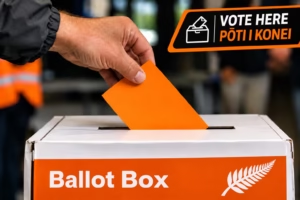
New Zealand Election 2026: Party Results and Seats
The preliminary results were as follows:
| Political party | Party vote | Seats |
| National Party | 29.21% | 42 |
| Labour Party | 29.36% | 36 |
| Green Party | 13.30% | 16 |
| ACT New Zealand | 10.92% | 13 |
| New Zealand First | 9.78% | 12 |
| Opportunity Party | 5.96% | 7 |
| Te Pāti Māori | 0.57% | 5 |
| Other parties combined | Approximately 0.90% | 0 |
| Total | 100% approximately | 131 |
Source: New Zealand Electoral Commission, preliminary results, 7 November 2026. Party vote figures are rounded. The final seat allocation may change.
Seven political parties secured parliamentary representation in the preliminary count.
No individual political party won a majority of seats, making cooperation between parties essential for forming a government.
Which Political Parties Contested the Election?
Seventeen registered political parties sought the nationwide party vote in 2026, with 530 candidates contesting electorate and list positions.
The participating parties were:
- ACT New Zealand
- Alliance Party
- Animal Justice Party Aotearoa New Zealand
- Aotearoa Legalise Cannabis Party
- Conservative Party NZ
- Free Palestine
- Green Party
- Labour Party
- National Party
- New Zealand First Party
- New Zealand Loyal
- NZ Outdoors & Freedom Party
- Opportunity Party
- Te Pāti Māori
- Te Tai Tokerau Party
- Vision New Zealand
- Women’s Rights Party
Although all 17 competed for parliamentary representation, only seven had seats allocated in the preliminary results.
What Made the 2026 Election Different?
-
Labour Received More Party Votes, but National Won More Seats
One of the most significant aspects of this election was the difference between the nationwide party vote and the parliamentary seat count.
Labour received 710,330 party votes, compared with National’s 706,680 a difference of just 3,650 votes.
Nevertheless, National held six more parliamentary seats.
This unusual result highlighted how electorate victories and overhang seats can affect parliamentary representation under New Zealand’s Mixed Member Proportional voting system.
-
Parliament Could Expand to 131 Seats
New Zealand’s Parliament normally has 120 seats, but the preliminary results indicate an 11-seat overhang, bringing the total to 131.
An overhang occurs when a political party wins more electorate seats than its nationwide party vote would ordinarily entitle it to receive.
Under the preliminary allocation, both National and Te Pāti Māori contributed to the overhang.
The larger Parliament also changes the number of seats needed for an outright majority.
In a 131-seat Parliament, 66 seats are required to control more than half of the House.
-
The Opportunity Party Entered Parliament
Another notable development was the parliamentary entry of the Opportunity Party, led by Qiulae Wong.
The party secured 5.96% of the party vote and seven seats in the preliminary count.
Its arrival introduced another potential participant in post-election government negotiations.
Although the existing National-led coalition had a narrow preliminary majority, even a small change following the special-vote count could increase the importance of negotiations involving the Opportunity Party.
-
Smaller Parties Secured a Larger Share of the Vote
The results demonstrated the influence of smaller parties in New Zealand’s political system.
The Greens received 13.30% of the vote and 16 seats. ACT secured 13 seats, while New Zealand First obtained 12.
Together, National and Labour received approximately 58.6% of the party vote, illustrating how a substantial proportion of voters supported parties outside the two largest political organisations.
-
Turnout Declined While Advance Voting Increased
The Electoral Commission estimated voter turnout at 74.6% of enrolled voters, compared with 78.2% in the 2023 general election.
At the same time, advance voting continued to grow in importance.
Approximately 67.3% of ordinary votes were cast before election day, compared with 61.4% in 2023.
These figures suggest that although overall participation declined, more voters chose to vote early rather than on election day.
How Does New Zealand’s Voting System Work?
New Zealand uses the Mixed Member Proportional (MMP) electoral system, which gives voters two votes.
Party vote: Determines the overall proportion of parliamentary seats each qualifying political party should receive.
Electorate vote: Selects the local Member of Parliament representing a particular geographic electorate.
Parties generally need at least 5% of the nationwide party vote or an electorate victory to qualify for parliamentary seat allocation.
Because the party vote and electorate vote serve different purposes, a party can win more local electorates than another party while receiving fewer votes nationwide.
This explains why the party receiving the most votes does not necessarily have the most MPs.
Who Could Form the Next New Zealand Government?
The preliminary parliamentary numbers create several possible political arrangements.
The existing National-led coalition parties – National, ACT and New Zealand First collectively secured 67 seats, based on the preliminary results.
Labour, the Green Party and Te Pāti Māori together held 57 seats.
Adding the Opportunity Party’s seven seats to those three parties would produce 64 seats, still below the provisional majority threshold of 66.
These are mathematical combinations rather than confirmed governing agreements.
New Zealand’s government formation process depends on whether political parties can demonstrate they have sufficient parliamentary support to command the confidence of the House.
The final count could alter the numbers, including the number of overhang seats and the majority threshold.
How Did the 2026 Election Compare With 2023?
The results indicate a substantial change in parliamentary representation compared with the previous general election.
| Party | 2023 seats | 2026 preliminary seats |
| National | 48 | 42 |
| Labour | 34 | 36 |
| Greens | 15 | 16 |
| ACT | 11 | 13 |
| NZ First | 8 | 12 |
| Te Pāti Māori | 6 | 5 |
| Opportunity | 0 | 7 |
The 2023 comparison uses the amended official results before the subsequent Port Waikato by-election; 2026 figures remain preliminary.
National’s seat count declined, while Labour, the Greens, ACT and New Zealand First recorded increases compared with the 2023 election result.
The entry of the Opportunity Party also changed the composition of Parliament.
However, the significance of these changes cannot be fully understood until the official result and government formation process are completed.
What Were the Major Issues for Voters?
The 2026 election took place against a backdrop of economic pressures and debate about New Zealand’s future policy direction.
The most prominent campaign issues included:
Cost of living and household expenses: Rising prices, grocery bills, electricity costs and household affordability remained important concerns.
Employment and economic growth: Parties proposed different approaches to taxation, business investment, government spending and job creation.
Housing affordability: The debate included housing supply, planning regulations, rental affordability and social housing.
Healthcare and public services: Access to medical treatment, public-service funding and waiting times featured in policy discussions.
Climate change and energy: Political parties differed over emissions reductions, energy security and the balance between environmental protection and economic costs.
Foreign policy and international trade: New Zealand’s relations with China, Australia, the United States and Pacific nations formed part of broader discussions on trade and international security.
Artificial intelligence and technology regulation: Emerging concerns included online safety, deepfakes, privacy and the regulation of rapidly developing digital technologies.
These issues are likely to remain relevant regardless of which parties ultimately form the government.
How Many People Voted?
According to the Electoral Commission, 3,796,891 people were enrolled to vote as of 1pm on election day, representing 93.7% of eligible electors.
The preliminary estimate of voter turnout was 74.6%.
The ordinary vote count recorded 2,432,403 votes, including informal votes. An estimated 399,365 special votes remained to be processed, including votes cast overseas and through other special voting arrangements.
The full participation figures will become clearer once the official count is completed.
When Will the Official Results Be Announced?
The Electoral Commission has scheduled the declaration of official results for Friday, 27 November 2026.
The official process includes reviewing the election-night count and determining the eligibility and allocation of special votes.
The final result could change individual electorate outcomes, parliamentary seat allocations and the overall size of Parliament.
Until that process is completed, preliminary figures should not be presented as final results.
What Happens Next for New Zealand?
The immediate focus will be on the special votes, the final seat allocation and the ability of political parties to establish parliamentary support for a government.
The election has also renewed public interest in how MMP operates, particularly when electorate victories produce a significant parliamentary overhang.
For voters, the central questions extend beyond which party received the highest share of the vote.
They include which parties will cooperate, what policies may be prioritised, and how the next government will respond to economic, social and international challenges.
The 2026 election has shown that winning the nationwide party vote, winning the most parliamentary seats and forming a government are three different political outcomes.
That distinction is at the centre of New Zealand’s post-election debate.
Editorial note: This article is based on preliminary results released by the New Zealand Electoral Commission on 7 November 2026 and information available as of 11 November 2026. The official results are scheduled for 27 November 2026. Parliamentary seat totals and government formation arrangements may change following the final count.
US Midterm Elections 2026 Explained: What They Are, Who Won and Why They Matter