

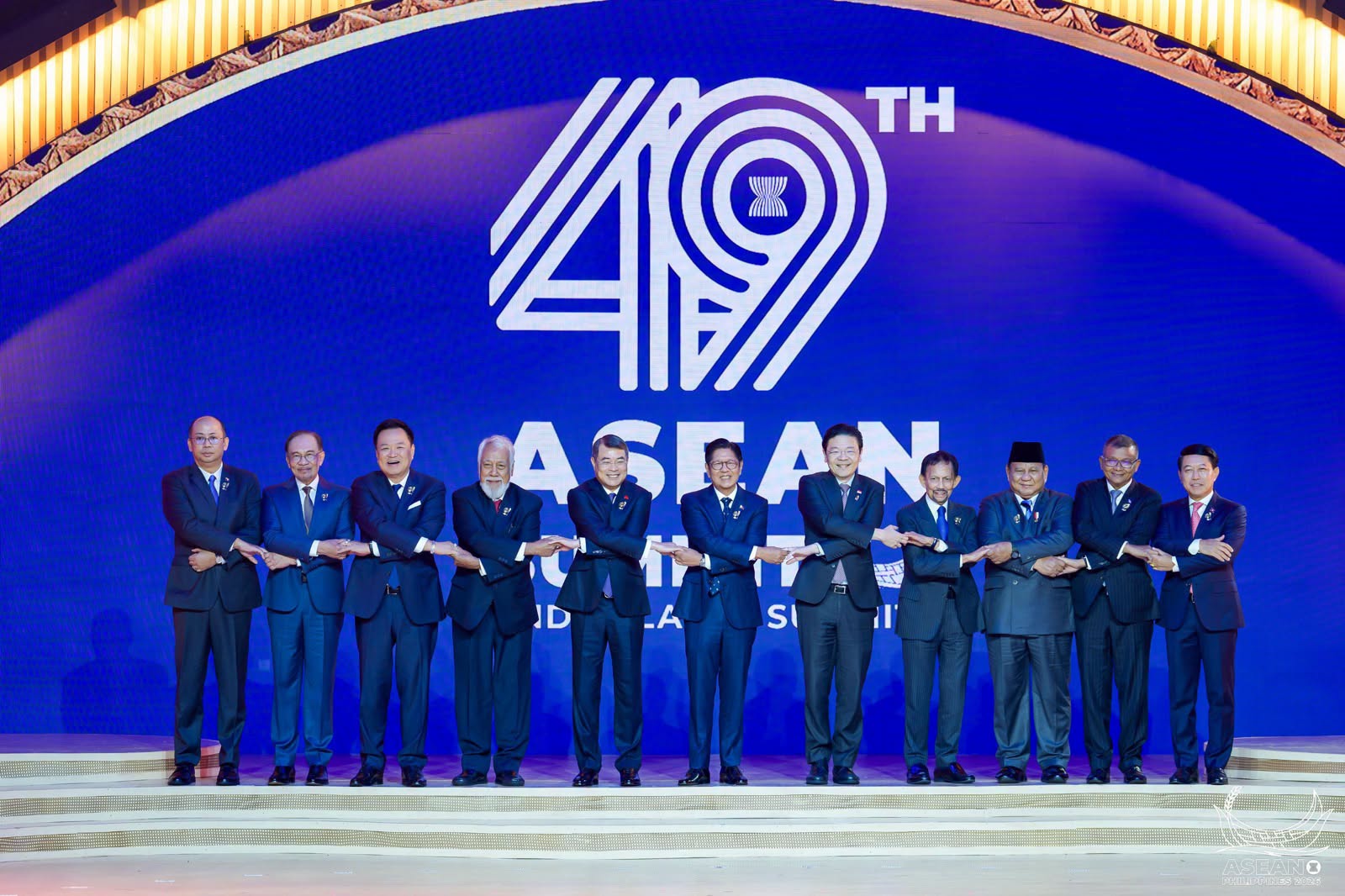
20th November 2026 : The 49th Association of Southeast Asian Nations (ASEAN) Summit and Related Summits concluded in Manila, Philippines, on 17th November 2026, following three days of high-level discussions on regional trade, artificial intelligence, maritime security, energy cooperation and international partnerships.
Hosted by Philippine President Ferdinand Marcos Jr. under the theme “Navigating Our Future, Together,” the gathering brought Southeast Asian leaders together with representatives of major international partners, including the United States, China, India, Japan, South Korea and Australia.
The meetings produced a wide range of agreements, declarations and cooperation initiatives intended to strengthen economic integration, improve digital connectivity and respond to emerging regional challenges.
Among the notable developments were the signing of the ASEAN Digital Economy Framework Agreement, commitments concerning artificial intelligence and small businesses, progress on regional trade arrangements, and new cooperation measures involving maritime security and energy.
However, the summit also highlighted challenges that remain unresolved, particularly the South China Sea disputes and Myanmar’s continuing political and humanitarian crisis.
The gathering concluded with the Philippines handing over the ASEAN chairmanship to Singapore, which will lead the organization in 2027 as ASEAN marks its 60th anniversary.
What exactly did the leaders agree on, which issues remain outstanding, and what could the outcomes mean for Southeast Asia and its international partners?
Key Highlights of the 49th ASEAN Summit
- The summit and related leaders’ meetings took place in Manila from 15th to 17th November 2026.
- Philippine President Ferdinand Marcos Jr. chaired the main summit and hosted visiting leaders and representatives.
- More than 100 outcome documents were advanced during the Philippine chairmanship, covering economic, security and social cooperation.
- The ASEAN Digital Economy Framework Agreement was signed, marking an important step in regional digital economic integration.
- Leaders adopted declarations concerning artificial intelligence, small-business development, digital talent, maritime cooperation and strategic trade management.
- ASEAN and China made progress on the proposed South China Sea Code of Conduct, but negotiations remained unfinished.
- Leaders reviewed the implementation of ASEAN’s Five-Point Consensus concerning Myanmar.
- ASEAN held separate meetings with major international partners, including the United States, China, Japan, India, South Korea and Australia.
- The Philippines handed the ASEAN chairmanship to Singapore, which will take over on 1st January 2027.
Three Days of Meetings in Manila: What Happened?
15th November: ASEAN Leaders Focus on Regional Priorities
The summit formally opened on 15 November at the Philippine International Convention Center in Metro Manila.
President Marcos welcomed ASEAN leaders, senior officials and invited representatives, emphasizing the need for greater regional cooperation during a period of economic uncertainty and geopolitical change.
The opening programme included ASEAN leaders’ plenary and retreat discussions, providing opportunities to review progress on economic integration, political cooperation and regional security.
The main agenda covered trade and investment, digital transformation, artificial intelligence, maritime cooperation, disaster preparedness and sustainable development.
Marcos highlighted the extensive negotiations conducted during the Philippine chairmanship, which had brought forward more than 100 outcome documents for consideration across ASEAN and its related meetings.
16th November: ASEAN Strengthens Relationships with International Partners
The second day featured a series of meetings between ASEAN and its dialogue partners.
These included the ASEAN-China, ASEAN-Japan, ASEAN-South Korea and ASEAN-Australia summits.
Each meeting focused on different aspects of international cooperation, including trade, investment, emerging technologies, infrastructure and regional security.
The discussions provided opportunities for ASEAN economies to strengthen relationships with some of the region’s most important trading and investment partners.
They also highlighted ASEAN’s diplomatic role in maintaining constructive engagement among countries with different economic and political priorities.
17th November: Further Partner Meetings and Closing Ceremony
The final day included additional ASEAN-related meetings, including the ASEAN-India Summit, ASEAN Plus Three Summit and the East Asia Summit.
The broader programme also included special engagement with the United States.
These meetings addressed economic cooperation, regional stability and wider international challenges.
The summit concluded with a formal closing ceremony and the handover of the ASEAN chairmanship from the Philippines to Singapore.
Singapore Prime Minister Lawrence Wong accepted the chairmanship on behalf of his country, outlining priorities for 2027.
What Were the Major Agreements and Announcements?
1. ASEAN Digital Economy Framework Agreement
One of the significant economic developments was the signing of the ASEAN Digital Economy Framework Agreement, commonly referred to as DEFA.
The agreement is intended to support stronger digital economic integration across Southeast Asia.
Its scope includes areas associated with digital trade, electronic transactions, cross-border economic activities and greater regulatory cooperation.
For businesses, improved digital integration could eventually make it easier to sell goods and services across national borders.
Small and medium-sized enterprises may particularly benefit from more efficient digital trade systems and reduced administrative barriers.
However, the practical results will depend on implementation by ASEAN member states and the development of supporting regulations and infrastructure.
2. Artificial Intelligence and Small-Business Growth
ASEAN leaders also adopted a declaration on AI-powered growth for micro, small and medium enterprises.
The declaration reflects the increasing role of artificial intelligence in manufacturing, logistics, services, retail and administrative operations.
Small businesses often face challenges accessing advanced technologies because of limited financial resources, technical expertise and digital infrastructure.
Regional cooperation could support training, knowledge-sharing and the adoption of AI tools that help businesses improve productivity.
At the same time, governments will need to consider cybersecurity, data protection and workforce development.
The declaration provides a framework for further cooperation rather than an assurance that every business will immediately receive access to new AI technologies.
3. Stronger Regional Trade Cooperation
ASEAN leaders advanced commitments on strategic trade management and economic integration.
Regional trade cooperation remains important because many businesses operate supply chains that extend across multiple Southeast Asian countries.
Improved customs procedures, more consistent regulations and better logistics can help companies reduce costs and strengthen competitiveness.
Singapore’s Prime Minister Lawrence Wong also highlighted progress on the upgraded ASEAN Trade in Goods Agreement and ASEAN-China Free Trade Agreement 3.0.
These developments reflect ASEAN’s intention to maintain economic connections despite increasing international trade tensions.
4. Digital Talent and Workforce Mobility
A declaration on the cross-border movement of digital talent was another outcome of the summit.
The initiative recognizes that technology companies and other businesses increasingly require specialized skills that may not be available in every domestic labour market.
Closer cooperation could support the exchange of expertise and help ASEAN economies develop stronger digital industries.
For workers, future arrangements may create opportunities involving technology, digital services, training and professional development.
However, the declaration should not be interpreted as immediately granting unrestricted employment rights across ASEAN.
Any changes affecting employment, visas or professional recognition would require appropriate national measures.
5. Maritime Cooperation and Regional Security
Maritime cooperation remained a major issue during the Manila gathering.
Southeast Asia contains some of the world’s most important international shipping routes.
Maintaining safe and reliable maritime connections is essential for trade, energy supplies and regional economic stability.
The summit advanced cooperation on maritime-related priorities, including discussion of an ASEAN Maritime Center intended to support policy research, information-sharing and regional initiatives.
Such cooperation could help member states improve their ability to address maritime challenges while maintaining dialogue on regional security.
6. Energy, Sustainability and Emerging Industries
Energy security and sustainable economic development were also important topics.
ASEAN and its partners discussed measures intended to support more reliable energy supplies, cleaner technologies and regional connectivity.
The summit documentation also included declarations concerning critical minerals, space science and technology, creative industries and environmental cooperation.
These initiatives demonstrate the breadth of ASEAN’s current economic priorities.
However, their impact will depend on funding, implementation and cooperation between governments and businesses.
South China Sea: Progress Made, but No Final Agreement
One of the most closely watched security issues was the proposed Code of Conduct between ASEAN and China concerning the South China Sea.
The negotiations are intended to establish agreed principles for managing behavior and reducing the risk of incidents in disputed maritime areas.
During the summit, Philippine Foreign Affairs Secretary Maria Theresa Lazaro reported that approximately 80% of the draft text had received provisional agreement.
However, important issues remained unresolved, including questions concerning the legal status and effectiveness of the proposed code.
As a result, the negotiations were not completed during the Philippines’ chairmanship.
The South China Sea remains strategically important because of its international shipping routes, fisheries, natural resources and competing maritime claims.
China and several Southeast Asian countries maintain differing positions regarding sovereignty and maritime rights.
The continuation of negotiations into 2027 means the issue will remain an important part of ASEAN’s regional security agenda.
Myanmar: ASEAN Continues Efforts to Address the Crisis
Myanmar’s political and humanitarian situation remained another major challenge.
ASEAN leaders reviewed the implementation of the Five-Point Consensus, the framework adopted in 2021 to address the crisis.
The framework includes commitments relating to ending violence, encouraging dialogue, delivering humanitarian assistance and supporting diplomatic engagement.
Progress has remained limited, with continuing conflict and humanitarian needs affecting communities across Myanmar.
During the Manila summit, ASEAN leaders adopted a further review and decision concerning implementation of the framework.
The discussions demonstrated continued attention to the situation, although the summit did not establish a comprehensive political settlement.
Myanmar remains a difficult issue for ASEAN because the organization must balance its principles of consensus and non-interference with concerns about regional stability and humanitarian conditions.
World Leaders and ASEAN’s International Partnerships
Alongside the main summit, ASEAN held a series of separate meetings with its dialogue partners.
These meetings were significant because Southeast Asia has extensive economic and diplomatic relationships with major powers and neighbouring regions.
ASEAN and the United States
US President Donald Trump participated in ASEAN-related meetings during his visit to the Philippines.
Discussions focused on strengthening the US relationship with Southeast Asia, including economic cooperation, technology, investment and security.
The visit also included a special ASEAN–United States summit.
The United States remains an important trading and investment partner for ASEAN, while both sides have interests in maintaining stable regional economic relationships.
ASEAN and China
The ASEAN-China Summit focused on economic cooperation, trade integration and regional security.
China is one of ASEAN’s largest trading partners, with major commercial relationships extending across manufacturing, infrastructure, technology and consumer markets.
The upgraded ASEAN-China Free Trade Agreement 3.0 was among the significant economic developments highlighted during the summit period.
The South China Sea remained a separate and more challenging issue.
ASEAN and India
The ASEAN-India Summit provided another opportunity to strengthen relationships between India and Southeast Asian economies.
Discussions included disaster management, connectivity and wider economic cooperation.
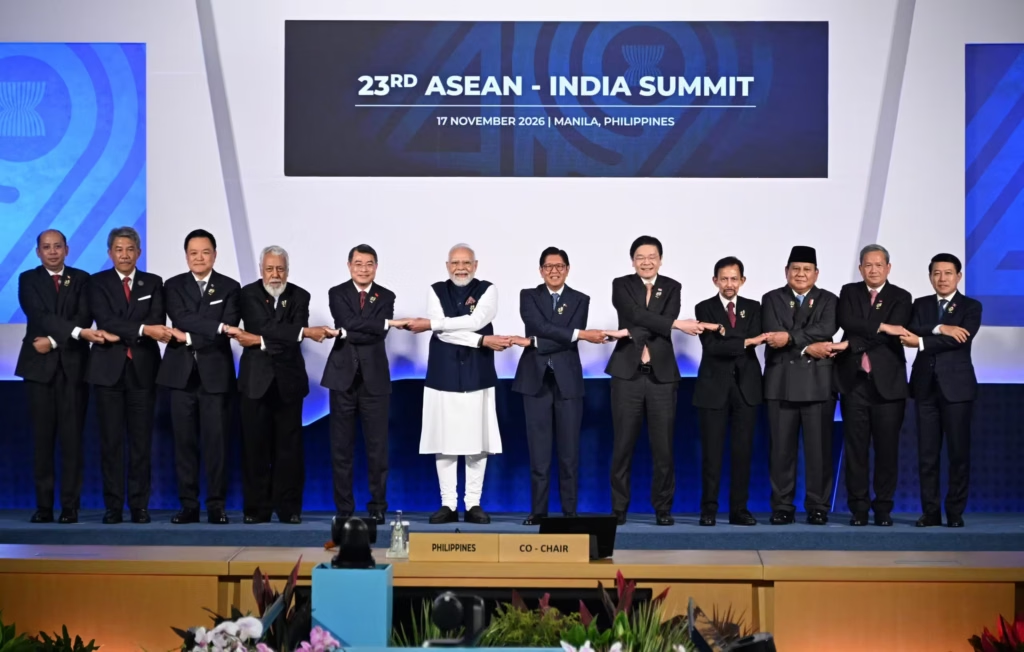
A joint statement concerning disaster management was among the reported outcomes.
India’s relationship with ASEAN is increasingly relevant to trade routes, manufacturing supply chains and regional connectivity.
ASEAN and Japan
ASEAN and Japan discussed economic resilience, regional cooperation and shared development priorities.
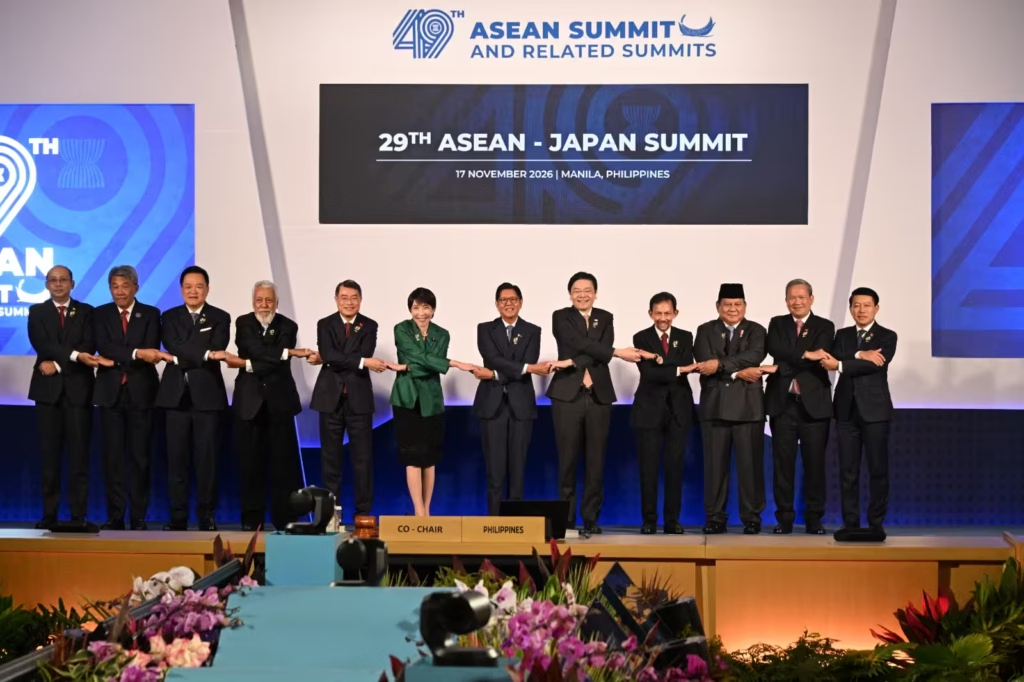
Japan remains an important source of investment, technology and manufacturing partnerships for Southeast Asian economies.
The summit included a joint statement addressing economic resilience.
ASEAN and South Korea
The ASEAN-Republic of Korea Summit focused on strengthening cooperation across economic and strategic areas.
South Korea maintains extensive business relationships with Southeast Asia, particularly in electronics, manufacturing, investment and technology.
The discussions reflected both sides’ interest in maintaining stable regional partnerships.
ASEAN and Australia
Australian Prime Minister Anthony Albanese participated in the ASEAN-Australia Summit.
The meeting marked five years of the ASEAN-Australia Comprehensive Strategic Partnership.
Leaders issued a joint statement covering the development of the relationship and areas for future cooperation.
Australia’s economic and security relationships with Southeast Asia remain important because of shared regional interests, trade and investment connections.
ASEAN and New Zealand
New Zealand Foreign Minister Winston Peters represented New Zealand at the East Asia Summit and engaged with ASEAN representatives during the Manila meetings.
He also met ASEAN Secretary-General Kao Kim Hourn.
New Zealand maintains extensive economic and diplomatic relationships with Southeast Asian countries, including through trade arrangements, educational connections and regional cooperation.
The meetings provided opportunities to reinforce these relationships and discuss shared regional priorities.
These partner-country meetings will be covered in separate Poligen360 articles examining their individual announcements and implications.
What Did President Ferdinand Marcos Jr. Say About the Summit?
As the Philippines concluded its 2026 ASEAN chairmanship, President Marcos described the year’s work as a significant period of regional cooperation.
At the closing ceremony and subsequent press conference, he highlighted the extensive outcome documents produced under the Philippine chairmanship.
He emphasized the importance of translating commitments into practical benefits, including stronger economic opportunities, protection for migrant workers and improved disaster preparedness.
Marcos also identified digital economic integration as an important achievement.
However, he acknowledged that some regional challenges, particularly the South China Sea negotiations, would require further work.
His remarks reflected both the progress made during the Philippine chairmanship and the need for continued cooperation after the handover.
Singapore Takes Over ASEAN Chairmanship for 2027
The summit concluded with the formal handover of the ASEAN chairmanship to Singapore.
Singapore will assume the chairmanship on 1 January 2027, coinciding with ASEAN’s 60th anniversary.
Prime Minister Lawrence Wong announced the theme:
“Deeper Integration, Wider Partnerships.”
The theme reflects two priorities.
The first is to strengthen economic integration within Southeast Asia, including cooperation on finance, digital technologies and energy.
The second is to expand ASEAN’s international relationships and maintain constructive engagement with partners beyond the region.
Wong also highlighted the importance of ASEAN remaining united amid increasing geopolitical competition and global economic uncertainty.
Singapore’s chairmanship will therefore focus on carrying forward existing initiatives while responding to new regional challenges.
What Does the Summit Mean for Southeast Asia and the World?
The 49th ASEAN Summit produced several developments that could influence the region’s economic and diplomatic direction.
For Southeast Asian businesses, digital economic integration and trade cooperation may create opportunities to operate more efficiently across borders.
For workers, initiatives involving digital skills and technological development could support future employment opportunities.
For investors, progress on economic integration may improve the attractiveness of regional markets.
For international partners, the summit reinforced ASEAN’s importance as a platform for economic and diplomatic engagement.
However, the summit also demonstrated that cooperation on economic issues does not automatically resolve disagreements concerning territorial disputes, political crises or international security.
ASEAN’s effectiveness will depend on its ability to implement economic initiatives while maintaining constructive dialogue on unresolved issues.
What Happens Next?
Several priorities will continue beyond the Manila summit.
The implementation of the ASEAN Digital Economy Framework Agreement and other economic measures will require attention from member governments and regional institutions.
Negotiations on the South China Sea Code of Conduct will continue, with unresolved questions requiring further discussion.
Myanmar’s humanitarian and political crisis will remain on ASEAN’s agenda.
Singapore’s 2027 chairmanship will also provide opportunities to advance digital integration, energy cooperation and wider international partnerships.
The 60th anniversary of ASEAN will give member states another occasion to review the organization’s progress and future priorities.
Conclusion: Agreements Reached, Challenges Remain
The 49th ASEAN Summit in Manila concluded with substantial economic and diplomatic activity.
Under the Philippines’ chairmanship, ASEAN advanced more than 100 outcome documents, signed an important digital economic agreement and strengthened cooperation concerning trade, technology and regional development.
The summit also brought together international partners for discussions extending beyond Southeast Asia.
At the same time, the unfinished South China Sea Code of Conduct negotiations and the continuing Myanmar crisis demonstrated the limitations of diplomatic progress.
As Singapore prepares to assume the chairmanship in 2027, ASEAN’s next challenge will be turning the commitments made in Manila into measurable results.
For the wider world, the summit reinforced Southeast Asia’s importance as a region connecting major economies, international markets and diplomatic relationships.
Editorial Note
This article is based on official ASEAN Summit documents, statements from the Philippine Government and Singapore’s Prime Minister’s Office, and contemporary reporting available as of 20th November 2026.It covers the 49th ASEAN Summit and related meetings held from 15th to 17th November 2026. Agreements, declarations and proposed initiatives are distinguished from completed implementation. The individual ASEAN dialogue-partner meetings are summarized here and may be covered in greater detail in separate reports.This article is intended for informational and educational purposes only. It provides analytical insights based on publicly available information and does not constitute financial, legal, or political advice. Readers are encouraged to consult official sources and expert advisors for verified guidance.
QUAD Leaders Meet After Two Years: What Did Trump, Modi, Takaichi and Albanese Agree On?
ASEAN Intensifies Diplomatic Engagement Ahead of 49th Summit in the Philippines