

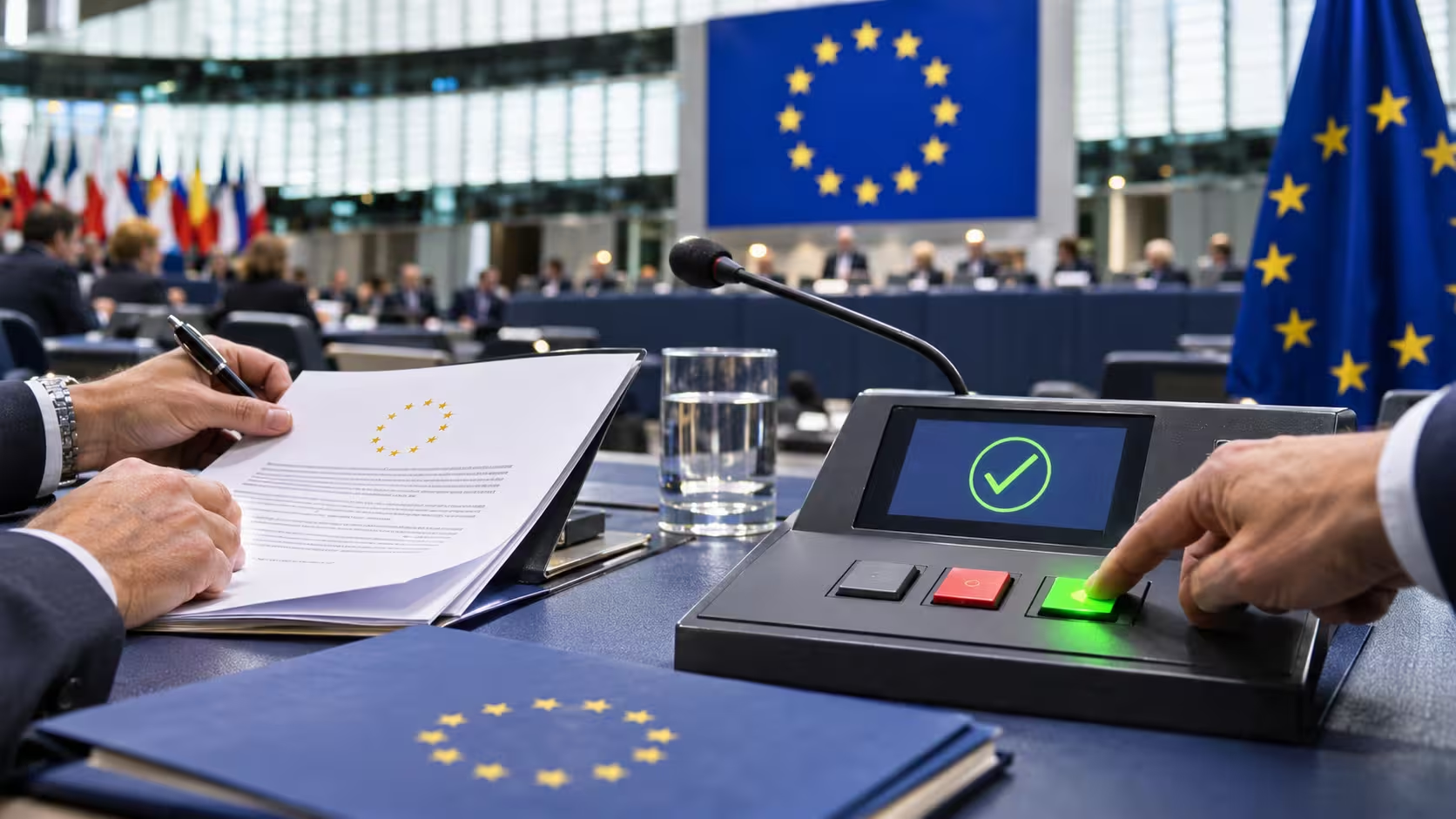
10th November 2026 : The European Union frequently announces major decisions on trade, technology, international sanctions, defence, immigration and public spending. But who actually approves these decisions? Can the European Commission introduce a law without agreement from member countries? Can one country block a proposal supported by the other 26? And what happens when EU institutions disagree?
The answers reveal why decision-making in the European Union is different from that of an individual country.The EU has 27 member states, several major political institutions and a complex system of shared responsibilities.
A proposal supported by European Commission President Ursula von der Leyen does not automatically become law. A political agreement reached by national leaders in the European Council does not necessarily mean legislation has been approved.
Even an announcement describing a major international agreement may represent only one stage of a longer process.This raises an important question for anyone following European and international affairs: when the EU announces a decision, who has the authority to make it legally binding?
The answer depends on the subject, the powers granted by EU treaties and the decision-making procedure that applies.
Key Points at a Glance
-
Most EU laws are proposed by the European Commission and jointly adopted by the European Parliament and the Council of the European Union.
-
The European Council, where national leaders meet, sets broad political priorities but does not ordinarily make EU laws.
-
The Council of the European Union uses different voting systems, including qualified majority and unanimity.
-
In certain sensitive areas, a single member country can block decisions requiring unanimous approval.
-
International trade agreements involve negotiations, institutional approval and sometimes ratification by national governments.
-
The European Parliament and the Council jointly decide the EU’s annual budget, while different rules apply to its long-term financial framework.
-
The Court of Justice of the European Union can review the legality of EU acts and interpret EU law.
-
Who Actually Makes Laws in the European Union?
For most EU legislation, three institutions perform central roles.
-The European Commission normally prepares and proposes legislation.
-The European Parliament represents EU citizens through directly elected members.
-The Council of the European Union represents member governments through their national ministers.
In the EU’s most common legislative procedure, the Parliament and Council must agree on the final legislative text before a law can be adopted. The Commission therefore has significant influence over what legislation is proposed, but it is not generally the final decision-maker. Similarly, the European Parliament cannot independently enact most EU laws without the Council’s agreement. This system is known as the ordinary legislative procedure.
It provides a way for European citizens’ representatives and national governments to participate in shaping common legislation.
-
How Does a Proposal Become an EU Law?
Consider a hypothetical situation. Suppose the European Union decides that new safety requirements are needed for certain artificial intelligence systems.
How would such legislation progress?
-Identifying the Problem
The European Commission may identify a regulatory issue through consultations, research, public concerns, developments in technology or political priorities.
For example, concerns could arise about the use of AI systems in recruitment, healthcare or other areas where automated decisions may significantly affect people.
The Commission may examine the issue, consult relevant organizations and assess the potential consequences of regulation.
-Preparing a Legislative Proposal
The Commission develops a proposed law.
This document may establish requirements for businesses, authorities and other organizations operating within the EU.
However, the proposal itself is not automatically binding legislation.
It must follow the applicable legislative procedure.
-The European Parliament Examines the Proposal
Members of the European Parliament review the legislation through parliamentary committees and debates.
They may propose amendments, raise concerns or seek stronger safeguards.
Political groups within Parliament may disagree about the appropriate balance between regulation, innovation, costs and consumer protection.
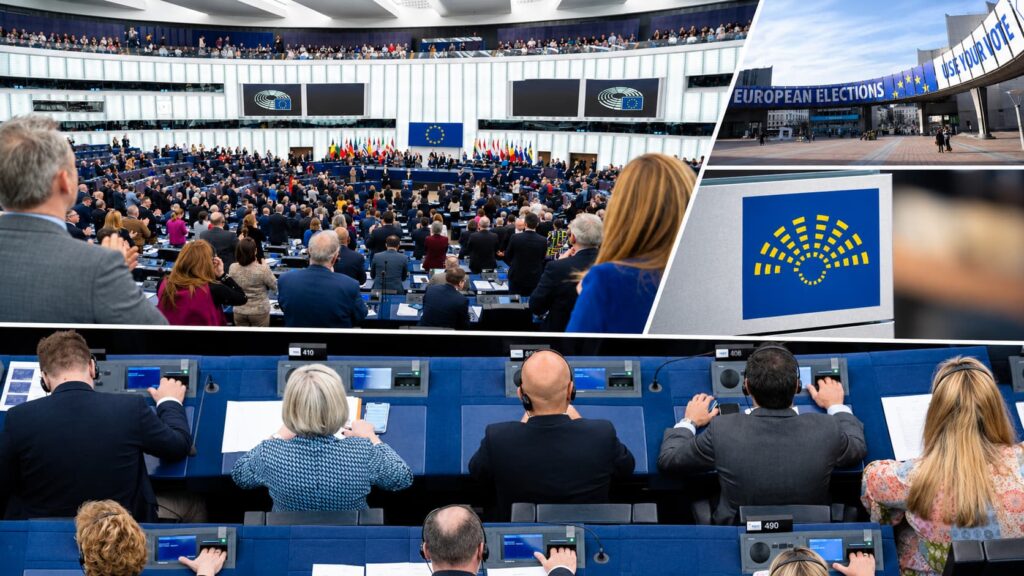
-National Governments Consider the Proposal
At the same time, ministers representing EU member countries examine the proposal through the Council of the European Union.
Their discussions may involve national economic interests, administrative costs, business competitiveness or other concerns.
The Council develops its own position on the legislation.
-Negotiations Between Institutions
The Parliament and Council must resolve differences in their positions.
Representatives may negotiate amendments, with the Commission participating in discussions.
If the institutions reach agreement, the legislation can proceed towards formal adoption.
If they cannot agree, further readings or conciliation may be required.
-Adoption and Publication
Under the ordinary legislative procedure, a law is adopted when Parliament and Council agree on the required final text and complete the formal approval process.
The legislation is then published in the Official Journal of the European Union.
Its entry into force and application dates depend on the provisions of that legal act.
-Who has the final say in this example?
Neither the Commission nor one president acting alone.
The European Parliament and Council must both approve the legislation under the ordinary legislative procedure.
-
Can One EU Country Block a Decision Supported by the Other 26?
Yes, but only under certain voting rules. This is one of the most important distinctions in EU decision-making. The Council of the European Union uses three principal voting methods:
Qualified majority: Decisions can be approved when the required number of countries and population threshold support them.
Unanimity: All participating member states must agree, although abstentions do not prevent adoption.
Simple majority: Used mainly for certain procedural decisions.
These rules help explain why some EU decisions can proceed despite objections from individual countries, while others require broader agreement.
What Is Qualified Majority Voting?
Under the standard qualified majority rule, approval generally requires both:
- At least 55% of EU member states – currently 15 of 27 countries.
- Those countries must represent at least 65% of the EU’s population.
Both conditions must be satisfied. This is sometimes called the double-majority system.
For example, imagine 20 countries support a proposal while seven oppose it. The proposal would not automatically pass simply because most countries voted in favour. The supporting countries must also represent the required share of the EU population.
Conversely, several large countries cannot necessarily approve legislation without support from a sufficient number of member states. Certain decisions use different thresholds, including reinforced qualified majority rules.
-
When Can a Single Country Use a Veto?
A veto becomes particularly relevant when EU rules require unanimity. Certain politically sensitive matters remain subject to unanimous approval in the Council.
These include many common foreign and security policy decisions, aspects of taxation, the EU’s long-term financial framework and certain membership-related decisions.
For example, if a proposal requires unanimity and one member state votes against it, that decision cannot be adopted through that procedure. However, this does not mean every EU decision can be blocked by one country. Most ordinary legislative decisions use qualified majority voting in the Council, while the European Parliament must also agree.
It is therefore inaccurate to say either that every country always has a veto or that a majority can always override objections. The decisive question is which voting rule applies to the particular decision.
-
Who Decides When the EU Imposes International Sanctions?
International sanctions provide a different example of EU decision-making. The European Union can adopt restrictive measures involving financial assets, travel, trade and other activities. Such measures may target individuals, organizations, businesses or particular sectors.
However, sanctions do not follow the same procedure as ordinary EU legislation. Under the common foreign and security policy framework, sanctions decisions are adopted by the Council of the European Union, normally requiring unanimity.
The EU’s High Representative for Foreign Affairs and Security Policy plays an important role in preparing the relevant proposals. Where financial or economic restrictions require a regulation, the High Representative and European Commission make a joint proposal for a Council regulation.
The Council then adopts the applicable legal measures. National authorities are responsible for implementing and enforcing relevant requirements, while the Commission monitors the application of EU regulations.
This means that even when EU leaders publicly express support for sanctions, a formal legal process is necessary before the measures become binding.
Can One Country Prevent New Sanctions?
Where unanimity applies, a member state voting against the proposed sanctions decision can prevent its adoption. Negotiations may continue, and proposals may be revised to address disagreements. This explains why some foreign policy decisions require extensive diplomatic discussions before agreement is announced.
-
Who Has the Final Say on EU Trade Agreements?
Trade agreements are especially relevant to countries outside Europe. The EU negotiates international agreements concerning matters such as market access, tariffs, products, services and investment-related provisions. But can the European Commission simply sign a trade agreement with another country and make it legally binding?
Generally, no.
The process normally involves several stages.
First: Authorizing Negotiations
The Council of the European Union authorizes negotiations and establishes the negotiating directives. These define the framework within which negotiations are conducted.
Second: Negotiating the Agreement
The European Commission usually negotiates on behalf of the EU. It consults the Council and keeps the European Parliament informed.
Third: Reaching a Negotiated Text
The EU and its negotiating partner may reach agreement on a draft or negotiated text. However, this does not automatically mean the agreement has completed all legal approval requirements.
Fourth: Institutional Approval
The Council decides on signature and, where appropriate, provisional application. The European Parliament’s consent is required for many major international agreements, including modern trade agreements. The Council subsequently adopts the formal decision concluding the agreement.
Fifth: National Ratification Where Required
Some agreements cover subjects that fall partly within the powers of individual EU member states. These are commonly referred to as mixed agreements. Such agreements may require ratification by member countries according to their constitutional procedures. Therefore, a trade agreement announced at a summit may still require further approvals before it can fully enter into force.
Who has the final say?
It depends on the agreement’s legal scope. For many trade agreements, the Council and European Parliament have essential approval responsibilities. For mixed agreements, national ratification may also be necessary.
-
Who Controls the European Union’s Budget?
The EU budget is another important example of shared decision-making. It finances programmes and activities covering areas such as agriculture, research, infrastructure, economic development and international cooperation.
However, the European Commission cannot simply determine the EU’s entire budget independently. The Commission prepares the draft annual budget. The Council of the European Union and the European Parliament then consider and negotiate the proposed expenditure. Both institutions participate in the annual budgetary process.
The Parliament has particular powers at the final stages of this procedure. Once the budget is adopted, the Commission is largely responsible for implementing it, subject to applicable rules and oversight.
What About the Long-Term EU Budget?
The EU also operates within a multiannual financial framework, usually covering seven years. This establishes spending ceilings for different budget categories.
Its adoption requires unanimous approval in the Council, following the consent of the European Parliament. Consequently, the rules for adopting the long-term financial framework differ from those governing the annual budget.
The key distinction: EU spending involves shared budgetary authority, while certain long-term financial decisions require agreement from every member state.
-
If an EU Law Is Approved, Can a Country Refuse to Follow It?
Once legally binding EU legislation is adopted and becomes applicable, member countries must comply with the relevant obligations.
However, different types of EU legal acts operate differently.
Regulations
EU regulations are binding in their entirety and directly applicable across member states.
For example, common product or market rules established through a regulation can create obligations across the EU without requiring each country to reproduce the regulation as a separate national law.
Directives
EU directives establish objectives that member countries must achieve.
National governments generally have responsibility for introducing or adapting domestic legislation to meet those objectives within the relevant deadlines.
Decisions
EU decisions are binding according to their terms. Where they specify particular addressees, they bind those addressees. These distinctions matter because the adoption of an EU law and its practical implementation are not always the same event.
-
What Happens If a Country Does Not Follow EU Law?
The European Commission has responsibilities for monitoring the application of EU law. Where it believes a member country has failed to fulfil its obligations, it may begin an infringement procedure. This can involve requesting information, issuing a formal notice and giving the country an opportunity to address the problem. If the matter remains unresolved, the Commission may refer the case to the Court of Justice of the European Union.
Depending on the circumstances and legal procedure, financial penalties may eventually be imposed. The Court of Justice also interprets EU law and examines the legality of EU acts within its jurisdiction. Therefore, agreement among politicians is not the final word on every legal question.EU institutions and member states remain subject to the legal framework established by the EU treaties.
-
EU Decisions: Who Has the Final Say in Different Situations?
The simplest way to understand the system is to compare different types of decisions.
| Type of decision | Main institutions involved | Who approves or decides? |
| Most EU legislation | Commission, Parliament, Council of the EU | Parliament and Council jointly |
| Broad political priorities | European Council | National leaders collectively |
| Common foreign policy sanctions | Council of the EU, High Representative, Commission | Council under applicable unanimity rules |
| Major EU trade agreements | Commission, Council, Parliament | Council and Parliament, with national ratification where required |
| Annual EU budget | Commission, Parliament, Council | Parliament and Council through the budgetary procedure |
| Long-term EU budget framework | Commission, Council, Parliament | Unanimous Council approval with Parliament’s consent |
| Interpretation of EU law | Court of Justice of the EU and national courts | Judicial decisions under EU legal procedures |
Note: This table summarizes the normal institutional arrangements. Specific decisions may be subject to exceptions or additional procedures under EU treaties.
-
Why Does EU Decision-Making Sometimes Take So Long?
Major decisions may require negotiations among several institutions and 27 national governments. Each member country has its own political priorities, economic interests and domestic circumstances. A policy that benefits one industry or region may create costs or concerns elsewhere.
For example, common environmental requirements may be supported by countries seeking stronger protections but questioned by governments concerned about particular industries or implementation costs.
Similarly, negotiations over the EU budget may involve disagreements about contributions, funding priorities and the distribution of financial resources. The requirement to reach agreement across institutions can therefore lengthen the decision-making process.
However, the EU’s structure also creates opportunities for proposals to be examined from different perspectives. The practical outcome depends on the particular issue, the legal procedure and the willingness of participating institutions to reach agreement.
-
Why Should Countries Outside Europe Understand These Rules?
EU decisions can have effects beyond its borders. For example, companies in India, China, Australia or New Zealand exporting to the EU may need to comply with applicable European product standards and market regulations. International technology businesses may need to account for EU digital legislation.
Changes to trade agreements may affect the conditions under which goods and services enter European markets. Sanctions can also affect cross-border commercial activities, financial transactions and supply chains where EU jurisdiction applies.
For outside observers, understanding the decision-making process helps distinguish between several important stages:
- A political statement expressing an intention.
- A proposal prepared by the European Commission.
- A negotiated agreement between EU institutions.
- A formally adopted legal act.
- A measure that has entered into force and become applicable.
These stages are not interchangeable. An announcement by a prominent EU leader may indicate political momentum, but it does not necessarily mean that a legal measure has already been approved. For businesses, policymakers and ordinary readers, recognizing that distinction can prevent misunderstandings about when EU rules actually change.
Frequently Asked Questions
-
Can Ursula von der Leyen introduce laws without asking EU countries?
The European Commission can generally initiate legislative proposals within its powers, but most proposed laws require approval from the European Parliament and Council of the European Union.
Can António Costa order all 27 countries to follow a policy?
No. The President of the European Council chairs and coordinates the work of national leaders but does not independently exercise general executive authority over member governments.
-
Can the European Parliament reject an EU law?
Yes. Under the ordinary legislative procedure, Parliament can reject proposed legislation and prevent its adoption.
Does every EU country need to agree before a law is approved?
No. Many laws are approved using qualified majority voting in the Council, alongside the necessary parliamentary approval. Unanimity applies to certain sensitive matters.
-
Can one country stop an EU trade agreement?
In some circumstances, yes. The applicable Council voting rules and any required national ratification determine whether individual countries can prevent approval.
Are EU announcements automatically legally binding?
No. Political statements, legislative proposals and adopted legal acts have different legal significance.
-
Who decides whether an EU law is legal?
The Court of Justice of the European Union has authority to review the legality of EU acts within its jurisdiction and to interpret EU law.
Can EU laws affect businesses outside Europe?
Yes. Businesses operating in the EU market or carrying out activities covered by applicable EU rules can be affected, even when headquartered outside the Union.
In the EU, the Final Say Depends on the Decision
The European Union operates through a system of shared political, legislative, executive and judicial responsibilities. For most EU laws, the European Commission proposes legislation while the European Parliament and Council of the European Union negotiate and adopt it.
In areas such as foreign policy, taxation and long-term financial planning, different voting arrangements may apply, sometimes allowing an individual member state to block a decision. International trade agreements may require multiple stages of approval, while EU spending decisions involve separate budgetary procedures.
The Court of Justice provides legal oversight within its jurisdiction, ensuring that EU institutions and member states act within the applicable legal framework. This explains why there is no universal answer to the question of who has the final say in Europe. The answer changes depending on whether the EU is proposing a law, negotiating an agreement, adopting sanctions, approving spending or interpreting existing legislation.
Editorial Note: This Poligen360 article is written to help readers better understand how the European Union works. It is based on publicly available information and official EU sources as of 10 November 2026. Some examples and explanations have been simplified to make complex topics easier to understand. As EU rules and procedures may vary or change over time, readers are encouraged to check official sources for the latest information. This article is for general information and educational purposes only and should not be considered legal, financial or political advice.
Who Really Runs the European Union? It’s More Complicated Than You Think
Why Some Countries Have Chancellors, Prime Ministers, or Presidents