

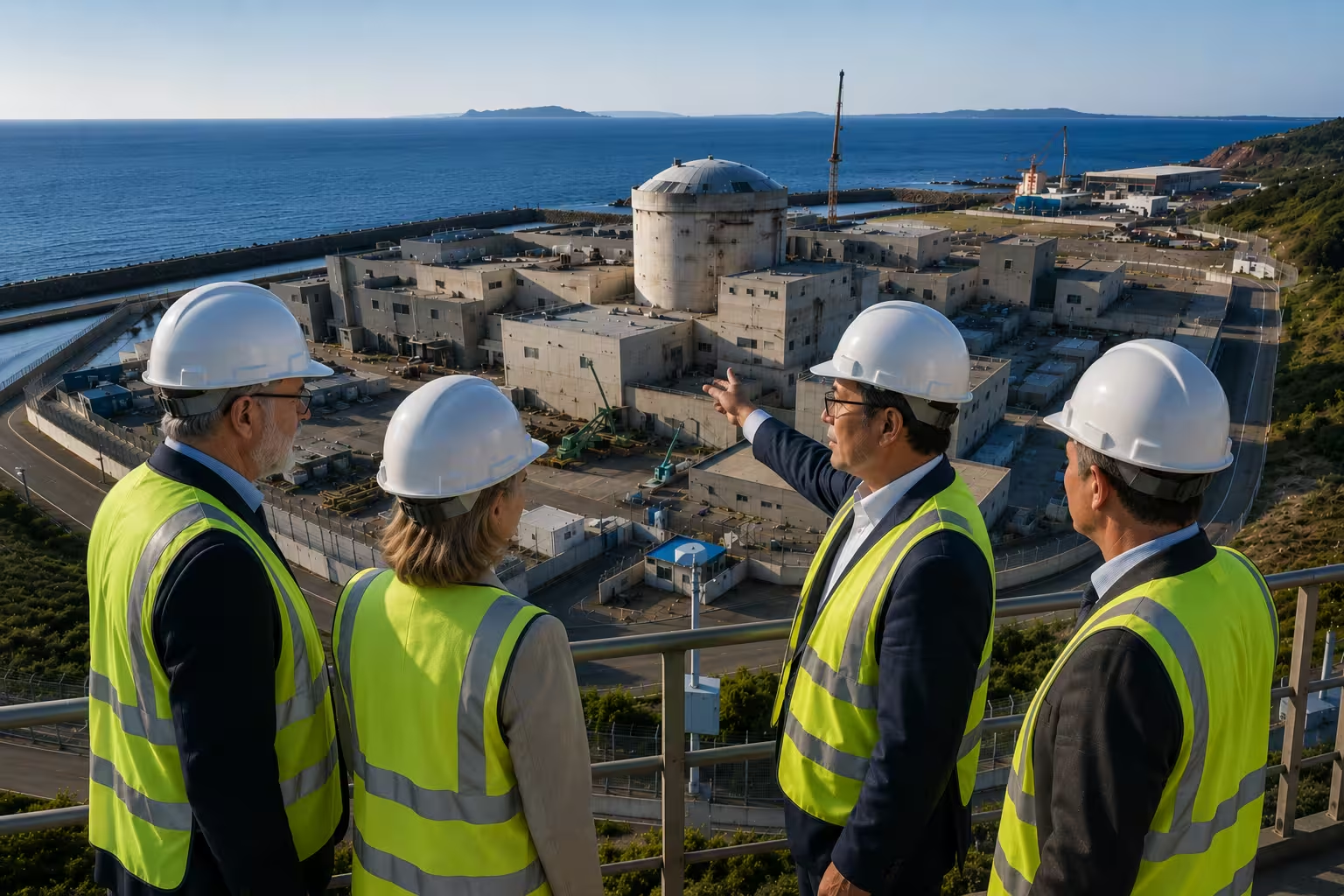
July , 2026 : The International Atomic Energy Agency (IAEA) has completed a 12-day International Physical Protection Advisory Service (IPPAS) follow-up mission in China, marking the first time an IPPAS review has included the physical protection of a small modular reactor (SMR).
The mission took place from 29 June to 10 July at the request of the Government of China and was hosted by the China Atomic Energy Authority (CAEA) together with its technical support organization, the State Nuclear Security Technology Center (SNSTC).
The review followed China’s first IPPAS mission conducted in 2017 and examined progress made in strengthening the country’s nuclear security framework.
Review Covered Nuclear Security Framework and Facilities
The IAEA team assessed several areas of China’s nuclear security regime, including:
- National legislative and regulatory framework for nuclear security
- Physical protection of nuclear material
- Security arrangements at nuclear facilities
- Progress made on recommendations from the 2017 IPPAS mission
As part of the review, the experts visited the Hainan Changjiang Linglong One small modular reactor (SMR), described as the world’s first commercial land-based SMR, along with the Fangjiashan Nuclear Power Plant at the Qinshan Nuclear Power Base.
According to the IAEA, the team found that China had made significant progress since the previous review and observed improvements in physical protection measures at the Qinshan nuclear power plant. The mission also concluded that the physical protection arrangements at the Linglong One SMR followed relevant IAEA nuclear security guidance.
First Physical Protection Review of an SMR
The mission represents a milestone for the IPPAS programme because it was the first review to evaluate the physical protection systems and security measures at an operational small modular reactor site.
Small modular reactors are attracting increasing international interest as countries explore new nuclear technologies capable of producing low-carbon electricity with smaller reactor designs than conventional nuclear power plants.As more SMRs are planned globally, ensuring robust physical protection measures is expected to become an increasingly important part of nuclear security oversight.
International Team of Experts
The eight-member review team was led by Khammar Mrabit, former Director General of the Moroccan Agency for Nuclear and Radiological Safety and Security.
Experts participating in the mission came from:
- Finland
- France
- Netherlands
- Pakistan
- Russian Federation
- United Kingdom
- International Atomic Energy Agency
During the mission, the team met representatives from several Chinese organizations responsible for nuclear security, including the China Atomic Energy Authority, Ministry of Foreign Affairs, Ministry of Public Security, National Nuclear Safety Administration and China National Nuclear Corporation.
IAEA Highlights Progress
IAEA Deputy Director General and Head of the Department of Nuclear Safety and Security Karine Herviou said the mission confirmed China’s continued efforts to strengthen nuclear security while also marking an important development for the IPPAS programme.The IAEA noted that the country’s expanding nuclear energy programme would require continued attention to human resource capacity for nuclear security within the China Atomic Energy Authority and the State Nuclear Security Technology Center.
China Reaffirms Nuclear Security Commitment
Li Ziping, Director-General of the Department of System Engineering at the China Atomic Energy Authority, said China would carefully consider the mission’s recommendations and implement them where appropriate to further strengthen governmental oversight of nuclear security. He also reaffirmed China’s commitment to international cooperation on nuclear security and participation in global nuclear security governance while supporting the peaceful use of nuclear energy.
What Is an IPPAS Mission?
The International Physical Protection Advisory Service (IPPAS) is an IAEA peer-review programme that assists countries in strengthening national nuclear security systems.
IPPAS missions evaluate how effectively countries protect nuclear and other radioactive materials, nuclear facilities and related infrastructure against security threats. International experts compare national arrangements with internationally recognised IAEA guidance and provide recommendations and examples of good practice for further improvement. Since the programme began in 1995, the China mission became the 111th IPPAS mission conducted by the IAEA and the first to include a review of physical protection arrangements for a small modular reactor.
Key Takeaways
-
The IAEA completed a 12-day IPPAS follow-up mission in China.
-
The review was the first ever to assess physical protection at a small modular reactor.
-
Experts found significant progress since China’s 2017 mission.
-
The Linglong One SMR’s physical protection arrangements were found to follow IAEA nuclear security guidance.
-
The IAEA noted China’s expanding nuclear programme will require continued investment in nuclear security expertise and personnel.
Editorial Note: This article is intended for informational and educational purposes only. It provides analytical insights based on publicly available information and does not constitute financial, legal, or political advice. Readers are encouraged to consult official sources and expert advisors for verified guidance.
What Is an IPPAS Mission? Understanding the IAEA’s Nuclear Security Review Programme