

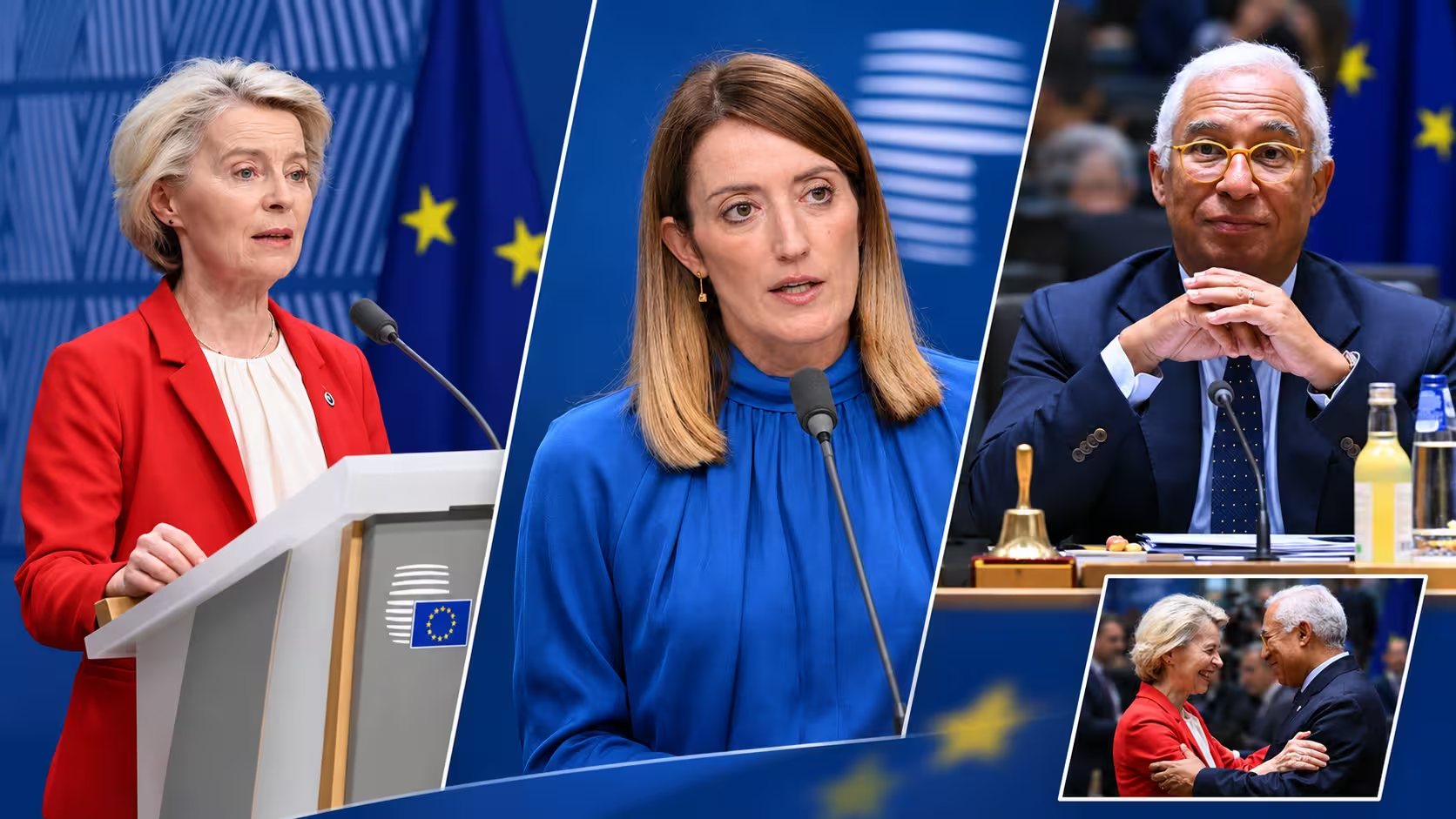
10th November 2026 : Who really runs the European Union? Is it António Costa, Ursula von der Leyen or Roberta Metsola? All three hold presidential positions within major EU institutions, yet none independently governs the entire Union. Understanding why reveals a political system quite different from the governments of individual countries.
When international news reports on the European Union, several political leaders frequently appear representing Europe. António Costa, Ursula von der Leyen and Roberta Metsola each hold the title of President, yet they lead different institutions. Why does the European Union need several presidents, who actually leads it, and how does this unusual political system work?
At major international summits, European Council President António Costa and European Commission President Ursula von der Leyen are often seen meeting foreign leaders, delivering statements and discussing international affairs.
Meanwhile, European Parliament President Roberta Metsola represents another important dimension of the EU’s political leadership.To someone unfamiliar with European institutions, this arrangement can appear confusing.
Does the European Union have three presidents? Is one more powerful than the others? Can they make decisions independently? And why does the EU not simply have one president, as many countries do?
The answer lies in the European Union’s distinctive political structure.
Unlike a country with a single national government, the EU is a union of 27 sovereign member states that have agreed to exercise certain powers jointly through common institutions.
Understanding how these institutions operate helps explain not only European politics but also the EU’s growing involvement in international trade, economic policy, technology, environmental regulation and global diplomacy.
Key Points at a Glance
-
The European Union has three principal institutional presidents: António Costa, Ursula von der Leyen and Roberta Metsola.
-
António Costa leads the European Council, where the EU’s national leaders determine broad political priorities.
-
Ursula von der Leyen leads the European Commission, responsible for proposing legislation, implementing policies and overseeing the application of EU law.
-
Roberta Metsola leads the European Parliament, the directly elected institution representing EU citizens.
-
No single president controls the entire European Union. Authority is distributed among institutions and member governments.
-
The EU also has a Council of the European Union, whose presidency generally rotates between member countries every six months.
Why Does the European Union Have More Than One President?
The European Union is neither a conventional country nor simply an international organization.
It combines elements of economic integration, shared governance, political cooperation and national sovereignty.
Its member countries maintain their own governments, parliaments, legal systems and national interests. At the same time, they have agreed to make certain decisions collectively at EU level.This creates an important political question: how should authority be shared between national governments and the wider European population?
The EU’s institutional structure seeks to address this through several decision-making bodies.
Three institutions are particularly important:
- The European Council, representing the political leadership of EU member countries.
- The European Commission, promoting the EU’s common interests and carrying out executive responsibilities.
- The European Parliament, representing citizens through directly elected members.
Each institution has its own president, with responsibilities established under EU treaties.
A fourth major decision-making institution, the Council of the European Union, represents national governments through their ministers and operates under a rotating presidency.
This structure ensures that major EU decisions generally involve more than one institution rather than depending entirely on a single political leader.
-
António Costa: President of the European Council
António Costa is a Portuguese politician who became President of the European Council on 1 December 2024.
Before assuming this position, he served as Portugal’s Prime Minister between 2015 and 2024. He also previously served as Mayor of Lisbon and held several ministerial responsibilities.
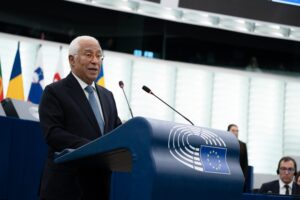
What Is the European Council?
The European Council brings together the heads of state or government of the EU’s 27 member countries.
For example, when the leaders of France, Germany, Italy, Spain, Poland and other member states gather to discuss the EU’s future, these meetings form part of the European Council’s work.
The President of the European Commission also participates.The European Council’s main responsibility is to determine the EU’s general political direction and priorities.
It considers major issues such as:
- Relations with other international powers.
- European security and defence cooperation.
- Migration and border-related political priorities.
- Long-term economic competitiveness.
- EU enlargement and membership questions.
- Major international crises affecting European countries.
What Does António Costa Actually Do?
Costa chairs European Council meetings, prepares discussions, promotes cooperation and helps national leaders find common ground.He does not function as the prime minister of all 27 EU countries.Instead, his responsibilities largely involve political coordination, leadership of Council meetings and building consensus among national governments.
For example, imagine EU leaders disagree about how much emphasis should be placed on defence investment compared with other spending priorities.
Costa’s role would include guiding discussions and helping leaders establish a common political position.
However, the European Council does not ordinarily adopt EU legislation.In simple terms: António Costa helps EU national leaders agree on the political direction the European Union should take.
His current mandate runs until May 2027, and the European Council presidency can be renewed once for another two-and-a-half-year term.
-
Ursula von der Leyen: President of the European Commission
Ursula von der Leyen is a German politician who became President of the European Commission in December 2019.She was the first woman to hold the position and began a second five-year mandate in December 2024.
Before joining the Commission, she served in the German government, including as Federal Minister of Defence from 2013 to 2019.
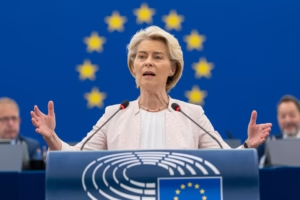
What Is the European Commission?
The European Commission is the EU’s principal executive institution.
It is responsible for promoting the common interests of the European Union, preparing most legislative proposals, managing important programmes and monitoring whether EU laws are correctly applied.
The Commission operates through a College of 27 Commissioners, including its President, with one Commissioner from each member country.Commissioners are expected to act in the general European interest rather than as representatives taking instructions from their national governments.
The Commission’s responsibilities extend across numerous areas, including:
- European economic and industrial policy.
- Digital markets and technology regulation.
- Climate and environmental initiatives.
- Competition and single-market rules.
- International trade negotiations.
- EU funding programmes and budget implementation.
What Does Ursula von der Leyen Actually Do?
As President, von der Leyen determines the Commission’s organization, allocates responsibilities among Commissioners and establishes its political agenda.She also represents the Commission in international discussions, including G7 and G20 meetings.
Suppose the EU wants to introduce common regulations affecting digital platforms operating across Europe.The Commission could develop and submit a legislative proposal, which would then normally be considered by the European Parliament and the Council of the European Union.
Ursula Von der Leyen’s position gives her substantial influence over the Commission’s priorities, but she cannot independently turn every proposal into EU law.
In simple terms: Ursula von der Leyen leads the institution that develops many of the EU’s policies and carries out its executive responsibilities.Her present mandate runs until November 2029.
-
Roberta Metsola: President of the European Parliament
Roberta Metsola is a Maltese politician who became President of the European Parliament in January 2022.She was re-elected in July 2024 for a second two-and-a-half-year term, scheduled to end in January 2027.Her position differs significantly from those held by António Costa and Ursula von der Leyen.
What Is the European Parliament?
The European Parliament is the EU institution directly elected by citizens of member countries. Its 720 Members of the European Parliament, commonly known as MEPs, were elected for the 2024-2029 parliamentary term.
The Parliament plays an important role in representing citizens and providing democratic oversight of the EU’s institutions.
Its responsibilities include considering and adopting legislation together with the Council of the European Union, approving the EU budget and scrutinizing the European Commission.
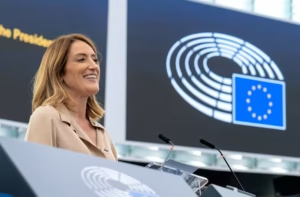
What Does Roberta Metsola Actually Do?
As Parliament President, Metsola oversees parliamentary proceedings, ensures institutional procedures are respected and represents the Parliament in its relations with other EU institutions and international partners. She also performs formal duties in the legislative process and the adoption of the EU budget.
An important distinction is that the Parliament President does not personally control how MEPs vote. Political groups and individual members participate in parliamentary debates and decisions according to their respective positions and the applicable procedures.
Metsola’s role is therefore primarily institutional and parliamentary, rather than equivalent to that of a national executive leader. In simple terms: Roberta Metsola presides over the European Union’s directly elected parliamentary institution.
The Three EU Presidents Compared
Although all three leaders hold the same presidential title, the nature of their authority differs.
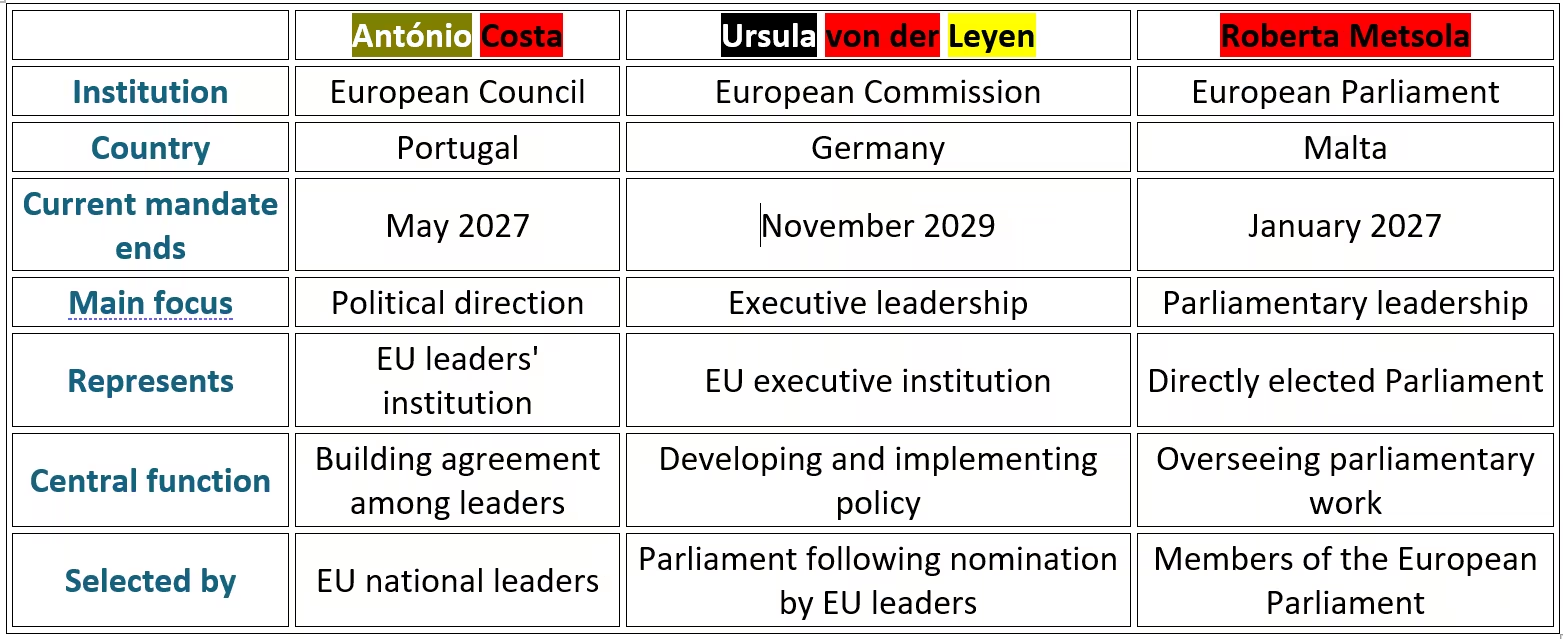
The three roles are connected, but they are not interchangeable.
Their institutions must cooperate, particularly when European decisions require political direction, legislative approval, budgetary support or executive action.
Who Actually Leads the European Union?
Perhaps the most important distinction is that the European Union does not have a single political leader who exercises all the powers normally associated with a national president or prime minister.
Instead, leadership is distributed.
The European Council determines broad political direction.
- The European Commission leads much of the EU’s executive and policy-proposal work.
The European Parliament participates in legislation, budgetary decisions and democratic scrutiny.
- The Council of the European Union, representing member governments through national ministers, also participates in legislation and policy coordination.
Consequently, the answer to the question “Who leads the EU?” often depends on what kind of decision is being discussed.
If the issue concerns agreement among national leaders, the European Council is particularly important.If it concerns Commission policy development or executive responsibilities, the European Commission takes a central role.If it concerns parliamentary debate, scrutiny or legislative approval, the European Parliament is a key institution.
No single one of these institutions holds unlimited authority over the others.
Why Do António Costa and Ursula von der Leyen Often Appear Together?
International summits frequently feature both António Costa and Ursula von der Leyen.
This is because representing the European Union internationally involves several different institutional responsibilities.
Costa represents the EU at the level of heads of state or government on matters concerning the Union’s common foreign and security policy, within the limits established by EU treaties.
Von der Leyen represents the Commission and participates in international discussions concerning areas within its responsibilities, including economic cooperation, trade and other policy matters.
Many international subjects overlap these areas.For example, a meeting with a major economic partner might involve trade relations, investment, geopolitical tensions, climate cooperation and security concerns.Some of these issues fall primarily within the Commission’s responsibilities, while others require coordination among EU national leaders.
Both presidents may therefore participate in the same summit without performing identical functions.
Their joint appearances reflect the EU’s shared institutional representation rather than the existence of two competing governments.
Is the European Union Similar to the United States?
The United States and the European Union both include political institutions that exercise authority across multiple territories. However, their constitutional structures are fundamentally different.
The United States is a sovereign federal country with a national president, Congress and federal judiciary.
The European Union is a treaty-based union of sovereign member states that have transferred or shared specified powers through common institutions. Its member states retain their own national governments and substantial independent responsibilities.
For example, France continues to have its own president, Germany its own chancellor and Italy its own prime minister. These national leaders participate in European Council discussions while remaining responsible for their respective countries.
The EU also does not have a single general-purpose executive president equivalent to the President of the United States.
This difference helps explain why the European Union requires coordination between several institutions rather than relying on one elected national-style leader.
Understanding the EU’s structure also requires understanding the different political roles used across Europe and around the world. While some countries are led by presidents, others are headed by prime ministers or chancellors, each with distinct constitutional responsibilities and levels of authority. To better understand these leadership positions and how they compare, read our detailed guide on Chancellor vs Prime Minister vs President.
Recognizing these distinctions makes it easier to understand why the European Union does not operate under a single president in the same way as the United States, and why several key figures share leadership responsibilities within the EU’s institutional framework.
What About the Council of the European Union?
The similar names of the European Council and the Council of the European Union create additional confusion.
Despite their names, they are separate institutions.The European Council is where national heads of state or government meet to establish broad political priorities.
The Council of the European Union brings together national government ministers to discuss legislation and coordinate policies.For instance, EU finance ministers meet to address economic and financial issues, while agriculture ministers participate when agricultural matters are discussed.Unlike the European Council, the Council of the European Union does not have a single permanent individual president.
Instead, most Council meetings are chaired by representatives of the EU member country holding the rotating six-month presidency.The Foreign Affairs Council is an exception, being chaired by the EU’s High Representative for Foreign Affairs and Security Policy.
This distinction illustrates how the EU’s leadership responsibilities extend beyond its three most visible institutional presidents.
Why Does the EU’s Leadership Structure Matter Outside Europe?
The European Union’s institutional arrangements are not relevant only to European citizens. The EU is a major participant in international trade, technology regulation, economic cooperation and global diplomacy. Its decisions can affect companies, governments and consumers in countries far beyond Europe.
For instance, businesses exporting products to EU markets may need to comply with European technical, environmental or safety requirements.
Technology companies operating in the EU may be affected by its digital regulations. International trade negotiations may influence commercial relationships between the EU and countries such as India, China, Australia and New Zealand.
Understanding which European institution is involved can help readers distinguish between political announcements, policy proposals and binding decisions.
For international observers, knowing whether a statement comes from António Costa, Ursula von der Leyen or Roberta Metsola also provides useful context about the authority and responsibilities behind that statement.
Frequently Asked Questions
Does the European Union have three presidents?
Three of its principal institutions have presidents: the European Council, European Commission and European Parliament. Other EU institutions also have their own leadership structures.
Is António Costa the President of Europe?
No. António Costa is President of the European Council, not the head of state of Europe or the entire European Union.
Is Ursula von der Leyen the Prime Minister of the EU?
No. Although she leads the EU’s principal executive institution, the European Commission President is not the prime minister of a single European government.
Does Roberta Metsola make EU laws?
Metsola presides over the European Parliament. The Parliament collectively makes legislative decisions, generally alongside the Council of the European Union. The Parliament President does not independently make laws.
Who chooses the three presidents?
EU national leaders elect the European Council President. The European Parliament elects its own President and also elects the European Commission President following a nomination from the European Council.
Can one president overrule the other two?
There is no general presidential hierarchy allowing one leader to overrule the other institutions. Their powers are defined separately under EU treaties.
Why does the EU not elect one president to govern everything?
The European Union was developed through agreements among sovereign countries. Its current structure reflects an institutional division of responsibilities between national governments and common European bodies. Changing that structure substantially would require the applicable treaty procedures and political agreement.
One European Union, Several Centres of Leadership
- The European Union’s political structure can initially seem complicated because several leaders carry presidential titles without performing the same responsibilities.
- António Costa coordinates the work of national leaders in the European Council.
- Ursula von der Leyen leads the European Commission and its executive and policy-related responsibilities.
- Roberta Metsola presides over the European Parliament, where directly elected representatives participate in legislation, oversight and budgetary decisions.
- Together with the Council of the European Union and other institutions, these bodies form a system in which political authority is shared.
The EU’s structure does not eliminate disagreements or guarantee that its institutions will always reach agreement quickly. Instead, it provides established procedures through which the interests of national governments and European citizens are represented.
For anyone following European politics or international affairs, recognizing the difference between these presidents offers an important starting point for understanding how the European Union works.
And while identifying the people who lead the EU is one part of the picture, another question naturally follows:
When Europe announces a major decision, who actually has the authority to turn that announcement into law?
Editorial note: This article explains the European Union’s institutional structure using official EU information verified in November 2026. It is intended as a factual explainer rather than commentary on the political performance of individual leaders. This article is intended for informational and educational purposes only. It provides analytical insights based on publicly available information and does not constitute financial, legal, or political advice. Readers are encouraged to consult official sources and expert advisors for verified guidance.
When the European Union Makes a Decision, Who Actually Has the Final Say?
From 2005 to Present: A Look at Germany and Austria’s Chancellors
Understanding the Role of a Chancellor: Government, Education, and Finance