


Mental Health and Addiction Challenges Explained: Why They Happen, Who Is Affected and When to Seek Help
Health & Society | New Zealand | 30 October 2026 : Mental health challenges and addiction-related distress affect individuals, families and communities across the world. While these experiences differ considerably from person to person, they can influence emotional wellbeing, relationships, physical health, employment and everyday life.
According to the World Health Organization (WHO), approximately 1.2 billion people worldwide were living with a mental disorder in 2023, equivalent to nearly one in seven people.
In New Zealand, the 2024/25 New Zealand Health Survey found that 14.3% of adults experienced high or very high levels of psychological distress during the preceding four weeks.
These findings highlight the importance of understanding mental health, recognizing when additional support may be needed and improving access to appropriate services.
But what exactly are mental health challenges? Why do they develop? Who is more vulnerable? And how can individuals recognize when ordinary stress has become a more serious concern?
What Are Mental Health Challenges?
Mental health refers to a person’s emotional, psychological and social wellbeing. It affects how people think, feel, cope with difficulties, maintain relationships and function in daily life.
Everyone experiences changes in mental wellbeing. Feelings of sadness, anxiety, frustration or emotional exhaustion can occur in response to challenging circumstances.
However, mental health difficulties may require professional attention when symptoms become persistent, particularly intense or begin interfering with normal activities.
Mental health conditions include several different categories, such as:
- Anxiety disorders: Persistent or excessive fear and worry that significantly affect daily life.
- Depressive disorders: Conditions involving prolonged low mood, loss of interest or other symptoms that affect functioning.
- Bipolar disorder: A condition involving episodes of depression and elevated or unusually irritable mood, sometimes accompanied by major changes in energy and activity.
- Post-traumatic stress disorder (PTSD): A condition that can develop following exposure to traumatic events.
- Psychotic disorders: Conditions that can involve disturbances in perception, beliefs, thinking or behaviour.
- Eating disorders: Conditions involving serious disturbances in eating behaviours and related thoughts or emotions.
An important distinction is that experiencing stress or emotional distress does not automatically mean someone has a diagnosed mental disorder.
Clinical diagnosis requires an appropriate assessment that considers the nature, severity, duration and impact of symptoms.
Evidence source: World Health Organization, Mental Disorders, updated September 2026.
Why Do Mental Health Challenges Develop?
Mental health conditions rarely arise from a single cause.
Research identifies a combination of biological, psychological, social and environmental influences that can affect a person’s vulnerability.
Biological and genetic influences
Genetic predisposition, certain medical conditions and aspects of brain development or functioning may contribute to the risk of developing some mental health disorders.
However, having a family history of mental illness does not mean an individual will necessarily develop the same condition.
Stressful experiences and trauma
Experiences involving abuse, violence, bereavement, major relationship difficulties or other traumatic events can affect psychological wellbeing.
The effects vary, depending on the individual, the circumstances and access to protective relationships and support.
Financial and employment pressures
Financial insecurity, unemployment, unsuitable housing and difficult working conditions can contribute to sustained stress.
These circumstances may also make it harder to obtain treatment or maintain wellbeing.
Social isolation and discrimination
People experiencing loneliness, exclusion, discrimination or limited social support may face increased mental health risks.
Conversely, supportive relationships and safe communities can provide important protection.
Physical health and lifestyle factors
Chronic medical conditions, insufficient sleep and alcohol or drug use can interact with mental health.
These relationships can work in both directions: mental health difficulties may affect physical wellbeing, while physical illness can increase psychological distress.
The WHO emphasises that mental wellbeing is influenced by interacting individual, family, community and structural factors.
What Is Addiction-Related Distress?
Addiction-related distress can involve emotional, psychological, behavioural or physical difficulties associated with substance use or another addictive behaviour.
Substance use disorders may involve alcohol, prescription medicines or other drugs.
A person experiencing a substance use disorder may have difficulty controlling their use, continue despite harmful consequences or experience powerful urges to use a substance.
Some people develop tolerance or experience withdrawal symptoms. However, these features alone do not establish an addiction diagnosis.
It is also important to distinguish between substance use, hazardous or risky use, dependence and a diagnosed substance use disorder.
New Zealand’s Ministry of Health research on mental health and problematic substance use provides further evidence on anxiety, depression, substance-use risks and access to support services.
Important: This Ministry report primarily analyses 2021/2023 survey data, not 2024/25 data. It is suitable for the addiction section, but should not be presented as the source of your newer psychological distress percentages.
Not everyone who consumes alcohol or uses a drug develops an addiction.
Why Can Addiction Develop?
Addiction is not adequately explained as a simple lack of willpower.
Research shows that substance use disorders involve interactions between the brain, behaviour, genetic vulnerability, environmental influences and repeated exposure to substances.
Some substances affect neural systems involved in reward, motivation, memory and self-control.
With repeated exposure, changes can occur that make controlling substance use increasingly difficult.
Risk factors can include early exposure to substances, family history, trauma, mental health difficulties and environments where substance use is common.
Importantly, risk factors are not certainties. Many people exposed to these circumstances never develop a substance use disorder.
Addiction is treatable, although recovery experiences and treatment needs differ between individuals.
How Are Mental Health and Addiction Connected?
Mental health conditions and substance use disorders can occur together.
For example, a person experiencing severe anxiety or emotional distress may use alcohol or another substance in an attempt to relieve uncomfortable feelings.
In other situations, substance use may contribute to anxiety, depressive symptoms or other psychological difficulties.
Both conditions may also be influenced by shared underlying factors, such as trauma, genetics or stressful environments.
The relationship is therefore complex and does not always follow a single direction.
When mental health and substance use disorders occur together, assessment and treatment should consider both rather than assuming one problem fully explains the other.
Support may involve psychological therapies, appropriate medication, addiction treatment, family assistance and community services.
Who Is Most Affected?
Mental health difficulties can affect people of every age, gender, occupation and socioeconomic background.
However, population research shows that some groups experience greater levels of psychological distress or face additional barriers to obtaining support.
What Does New Zealand’s Latest Health Survey Show?
The 2024/25 New Zealand Health Survey provides useful evidence about psychological distress across different population groups.
Psychological Distress in New Zealand by Population Group (2024/25)
| Population group | High or very high psychological distress |
|---|---|
| All adults aged 15 years and over | 14.3% |
| Young people aged 15–24 | 22.9% |
| Disabled adults | 35.5% |
| Māori adults | 22.5% |
| Pacific adults | 23.8% |
| European/Other adults | 14.2% |
| Asian adults | 10.7% |
| Women | 16.6% |
| Men | 11.4% |
| Adults in most deprived neighbourhoods | 21.4% |
Source: New Zealand Ministry of Health, 2024/25 New Zealand Health Survey.
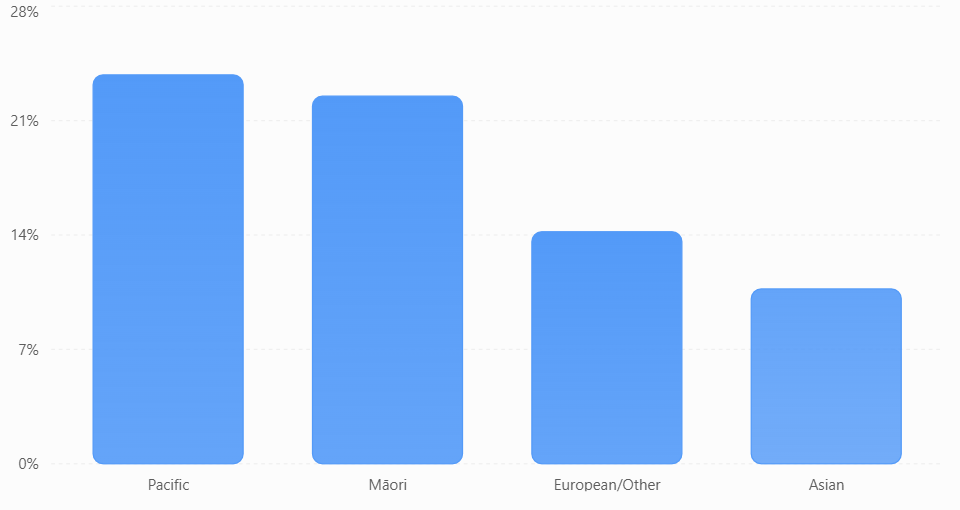
These statistics measure psychological distress experienced during the previous four weeks, not diagnosed mental illness or addiction. Ethnicity is measured using total response, meaning people identifying with more than one ethnic group can be counted in multiple groups.
The 2024/25 New Zealand Health Survey also identified differences in psychological distress across ethnic populations. Pacific adults reported the highest rate of high or very high psychological distress at 23.8%, followed by Māori adults at 22.5%. The corresponding rates were 14.2% among European/Other adults and 10.7% among Asian adults.
These findings highlight differences in reported psychological distress across population groups. However, the figures should be interpreted alongside socioeconomic circumstances, demographic characteristics, cultural factors and access to healthcare services. They do not establish that ethnicity itself causes psychological distress.
Differences between population groups may reflect overlapping influences, including socioeconomic circumstances, discrimination, exposure to adversity, disability-related barriers and differences in access to support.
The statistics should not be interpreted as suggesting that membership of a particular population group causes mental illness.
When Should Someone Seek Mental Health Support?
Emotional difficulties become more concerning when they persist, intensify or interfere with everyday functioning.
Warning signs may include:
- Persistent sadness, hopelessness or excessive worry.
- Significant changes in sleep, appetite or energy.
- Withdrawal from family, friends or usual activities.
- Difficulty concentrating or completing normal responsibilities.
- Increasing alcohol or drug use to cope with distress.
- Difficulty managing emotions or relationships.
- Thoughts of self-harm or suicide.
These signs do not automatically establish a diagnosis, and some can also have physical health explanations.
However, they may indicate that speaking with a qualified healthcare professional would be beneficial.
A person does not need to wait until symptoms become severe before asking for help.
Urgent attention is needed when someone may be in immediate danger, has serious thoughts of suicide with an immediate risk of acting on them, is experiencing a severe medical reaction or is otherwise unable to remain safe.
Which Treatments and Support Options Are Available?
Mental health and addiction support can take several forms depending on the person’s symptoms, needs and circumstances.
Psychological therapies
Approaches such as cognitive behavioural therapy and other evidence-based psychological treatments can help people manage certain mental health conditions.
Medication
Medication may be recommended for specific conditions when clinically appropriate. Treatment decisions should consider potential benefits, risks and individual needs.
Addiction treatment services
Support may include counselling, medically supervised withdrawal, relapse-prevention strategies, medicines where indicated and longer-term recovery services.
Certain forms of substance withdrawal, particularly alcohol or sedative withdrawal in dependent individuals, can be medically dangerous and may require supervised care.
Peer support
Peer support workers draw upon their personal lived experience to help others navigate mental health or recovery challenges.
Such support can provide understanding, connection and guidance alongside clinical services.
Community and family support
Trusted relationships, community organisations, culturally appropriate care and practical assistance with housing, employment or financial difficulties may contribute to recovery and wellbeing.
No single approach is suitable for everyone. Treatment should reflect individual needs, preferences and clinical assessment.
Where Can People Seek Help in New Zealand?
New Zealand offers several pathways for people seeking mental health or addiction support.
General practitioners and healthcare providers can assess symptoms, discuss treatment options and arrange specialist referrals where appropriate.
Community mental health and addiction services may provide assessment, counselling, ongoing treatment and recovery support.
Crisis assessment teams and emergency departments provide assistance where urgent assessment or intervention is required.
Telephone and text support services offer another way to contact trained support personnel.
Health New Zealand advises that people experiencing an immediate mental health emergency should call 111, attend the nearest emergency department or contact their local mental health crisis assessment team.
For confidential emotional support, people in New Zealand can call or text 1737, free of charge, at any time.
For alcohol and drug-related concerns, the Alcohol Drug Helpline is available on 0800 787 797.
Why Are Community Crisis Recovery Cafés Being Introduced?
Community-based mental health services are intended to expand the options available to people experiencing distress.
In October 2026, New Zealand announced the opening of Te Kāhua Ora, a new Crisis Recovery Café in Lower Hutt, providing a place for people to seek peer-led support without requiring a referral.
The initiative recognises that a busy emergency department may not always be the most suitable environment for someone who needs support but does not require urgent medical treatment.
Such services may provide supportive conversations, advocacy and connections to other providers.
However, Crisis Recovery Cafés are not replacements for emergency departments, specialist mental health care or medically supervised addiction treatment.
Their effectiveness should be assessed using evidence about service access, visitor experiences, safety, outcomes and connections to ongoing care.
What Can Families and Friends Do?
Family members, friends and colleagues can play an important role in recognising changes in someone’s wellbeing.
Supportive responses can include listening without judgement, taking concerns seriously, encouraging professional help and assisting someone to access services.
It is generally more helpful to ask open questions and offer practical support than to make assumptions about why a person is struggling.
Respecting privacy, personal dignity and individual preferences is also important.
Where there is an immediate safety concern, obtaining urgent professional assistance takes priority.
Why Does Mental Health Matter for Governments and Communities?
Mental health is not only an individual healthcare issue. It is also connected to public policy, education, employment, housing and social development.
Untreated mental health conditions can affect quality of life, participation in education, workforce involvement and relationships.
The WHO’s World Mental Health Today: Latest Data, published in September 2025, highlights substantial gaps between the global need for mental healthcare and the availability of effective services.
In New Zealand, the 2024/25 Health Survey found that 10.5% of adults reported needing professional assistance for emotions, stress, mental health or substance use during the previous year but not receiving it.
This indicates that service availability, affordability, accessibility and public awareness remain important concerns.
Expanding treatment options is one part of the response. Prevention, early intervention, reducing stigma and addressing social conditions that contribute to poor mental health are also important.
Understanding Distress Is the First Step Towards Better Support
Mental health and addiction challenges cannot be reduced to a single cause or addressed through a single solution.
They involve complex interactions between individual circumstances, biology, social environments and access to support.
Evidence from international health organizations and New Zealand population surveys shows that psychological distress affects substantial numbers of people, while some individuals continue to experience difficulties obtaining professional assistance.
Understanding the difference between ordinary stress, persistent mental health symptoms and substance use disorders can help individuals recognise when support may be beneficial.
Community initiatives, healthcare professionals, peer support services and public education all have roles to play.
Ultimately, improving mental health outcomes requires not only responding to crises but also making appropriate support accessible before difficulties escalate.
Mental Health Around the World: Why Do Treatment Gaps Persist?
- Although awareness of mental health has increased internationally, access to appropriate care remains uneven. Countries differ significantly in their ability to provide affordable treatment, trained professionals and long-term support, creating challenges for people seeking assistance.
- The availability of mental healthcare is influenced by national health policies, public investment, healthcare infrastructure and the distribution of specialist services. These differences are particularly evident when comparing countries with varying levels of economic development.
How Does Mental Health Spending Differ Between Countries?
- The World Health Organization’s (WHO) Mental Health Atlas 2024, released in September 2025, highlights considerable differences in the financial resources countries allocate to mental healthcare.
- According to the report, the median government allocation to mental health services remained at approximately 2% of overall health expenditure.
- The financial gap is particularly significant when measured on a per-person basis. WHO findings indicate that expenditure can reach approximately US$65 per person in high-income countries, while some low-income countries spend as little as US$0.04.
- These differences influence the capacity of healthcare systems to develop treatment facilities, maintain essential services and improve access to specialist care.
- However, expenditure alone does not determine the quality of mental healthcare. Service organisation, effective policy implementation and equitable distribution of resources also play important roles.
Why Is There a Shortage of Mental Health Professionals?
- Another major challenge is the uneven distribution of qualified mental health workers.
- WHO findings indicate a global median of approximately 13 mental health workers per 100,000 people, with substantial differences between countries and regions.
- The availability of psychiatrists, psychologists, psychiatric nurses and other trained professionals is generally more limited in lower-income settings, where healthcare systems may already face competing demands.
- Even within countries with established healthcare infrastructure, specialist services may be concentrated in major cities, leaving rural and remote populations with fewer treatment options.
- Workforce shortages can contribute to delayed assessments, longer waiting periods and difficulties maintaining continuous care.
Addressing these challenges requires investment in professional training, workforce retention and stronger integration between primary healthcare and specialist mental health services.
How Do Mental Health Conditions Affect the Global Economy?
- The consequences of inadequate mental healthcare extend beyond individual wellbeing and healthcare expenditure.
- The WHO estimates that depression and anxiety contribute to approximately US$1 trillion in lost productivity globally each year.
- These economic effects can arise through reduced workforce participation, sickness-related absence, difficulties maintaining employment and reduced productivity while working.
- Families may also experience financial pressure when individuals require prolonged treatment or when relatives must reduce their working hours to provide care.
For governments, these challenges demonstrate that mental health policies are connected not only to public healthcare but also to employment, education, economic resilience and long-term development.
Improving prevention and access to effective treatment may therefore deliver wider social and economic benefits.
What Role Do the WHO and United Nations Play?
- International organisations contribute to global mental health policy through research, technical guidance, international cooperation and the development of public-health objectives.
- The WHO assists countries in strengthening mental healthcare systems, improving information collection and developing policies that promote accessible and appropriate treatment.
- Its Mental Health Atlas provides comparative information about national policies, healthcare spending, workforce capacity and service availability, helping governments identify gaps and monitor progress.
- Mental health also forms part of the United Nations’ 2030 Agenda for Sustainable Development.
- Under Sustainable Development Goal 3, the international community has committed to promoting health and wellbeing, including mental health and the prevention and treatment of substance abuse.
- Target 3.4 specifically addresses the promotion of mental health and wellbeing, while Target 3.5 focuses on strengthening prevention and treatment of substance abuse.
- These commitments recognise mental health as part of broader international development and public-health efforts.
What Needs to Improve Globally?
- The international evidence points to several priorities for strengthening mental healthcare systems.
- These include more effective allocation of public resources, expanding the healthcare workforce, reducing geographical inequalities and improving access to affordable, evidence-based treatment.
- Countries also face the challenge of making mental health services accessible to people who encounter financial, cultural, social or practical barriers.
- Reliable national data, transparent reporting and regular evaluation are important for understanding whether policies lead to measurable improvements.
- While countries operate under different economic and healthcare conditions, the broader objective remains consistent: ensuring that people can obtain appropriate mental health assistance without unnecessary delays or barriers.
Closing these gaps will require sustained national investment, effective healthcare planning and international cooperation supported by reliable public-health evidence.
Editorial Note
This article is intended for public education and general health awareness. It draws upon information from the World Health Organization, New Zealand Ministry of Health and Health New Zealand. It does not provide medical diagnosis, individual treatment recommendations or a substitute for professional healthcare advice.
If someone in New Zealand is in immediate danger, call 111. For free confidential support, call or text 1737.
New Crisis Recovery Café in Lower Hutt NZ to Expand Mental Health and Addiction Support