

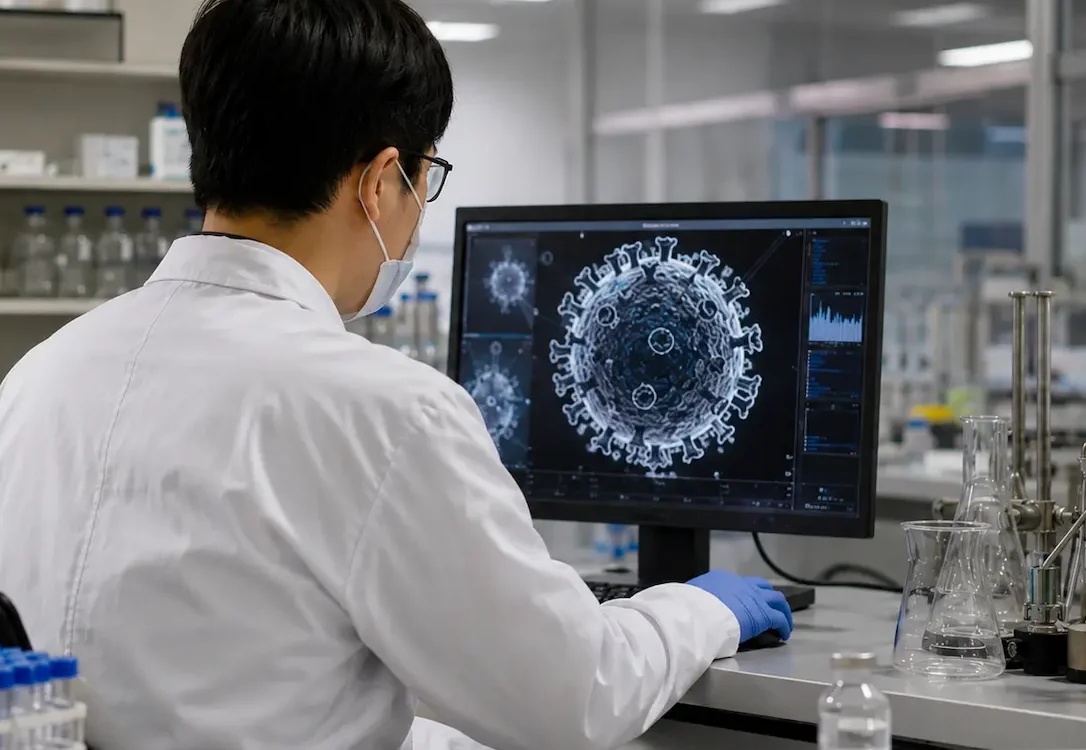
South Korea Tests Future Pandemic Response Through Landmark Simulation Exercise
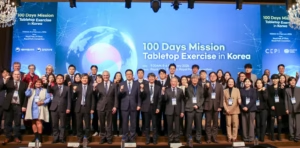
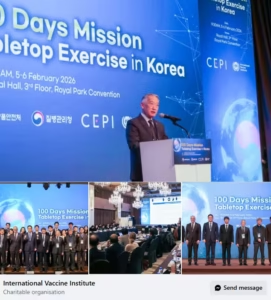
February , 2026 : South Korea has launched a landmark fictional pandemic simulation exercise in Seoul to test how the country could respond to a future outbreak and rapidly develop vaccines against a new health threat.
The exercise is being held by the Korean Government, the Coalition for Epidemic Preparedness Innovations, known as CEPI, and the International Vaccine Institute, or IVI. It brings together key public health, regulatory, scientific and vaccine development organizations to explore how South Korea can strengthen its readiness for future epidemic and pandemic risks.
The two-day tabletop exercise is the first of its kind to be held in Korea and the wider region. It includes participation from South Korea’s Ministry of Food and Drug Safety, known as MFDS, and the Korea Disease Control and Prevention Agency, known as KDCA.
According to a joint announcement from CEPI and the International Vaccine Institute, the exercise is being held with the Korean Government to test how the country could rapidly develop and assess vaccines during a future pandemic threat.
A Fictional Virus Scenario to Test Real-World Readiness
The simulation is based on a fictional scenario in which a previously unknown and deadly virus begins spreading quickly and infecting people. Participants are asked to consider how national agencies, researchers, manufacturers and regulators would work together in such a situation.
The aim is not to respond to a real outbreak, but to test whether the systems needed for a rapid pandemic response are strong enough before the next emergency happens.
The exercise focuses on the full vaccine response chain, including threat detection, research and development, clinical testing, manufacturing, regulatory approval and vaccine delivery. By working through these steps in a simulated crisis, South Korea hopes to identify strengths, gaps and possible bottlenecks in its current preparedness system.
Building on Lessons From COVID-19
The exercise draws on lessons learned during the COVID-19 pandemic and the years that followed. COVID-19 showed that countries with strong scientific capacity, clear regulatory pathways, manufacturing capability and public health coordination were better placed to respond quickly.
South Korea’s exercise is designed to make future response systems faster, more practical and more connected. It also aims to improve coordination between government agencies, vaccine developers, researchers and international partners.
According to the source material, the wider objective is to increase pandemic preparedness at a country level while also strengthening regional and global resilience.
Focus on the 100 Days Mission
A major part of the exercise is linked to the 100 Days Mission, a global effort supported by CEPI and international partners.
The 100 Days Mission aims to reduce the time needed to develop safe, effective and accessible vaccines against new pandemic threats to around 100 days. This target is designed to make the world better prepared to respond quickly when a new disease emerges.
CEPI says acting much faster than during the early COVID-19 response could help contain a future pandemic before it spreads widely, potentially saving lives and reducing economic damage.
South Korea has endorsed the 100 Days Mission and is working with CEPI and other partners to support vaccine development and pandemic preparedness.
CEPI said the exercise supports the 100 Days Mission, a global goal to reduce the time needed to develop safe and effective vaccines against new pandemic threats to around 100 days.
Korea’s Growing Role in Global Health Security
South Korea is increasingly being recognized as an important player in vaccines, biotechnology and pandemic readiness. The country has strong public health institutions, an advanced regulatory environment and a growing vaccine and biotech sector.
The Republic of Korea is also a key investor and partner of CEPI. CEPI supports 28 Korean partners working to advance the 100 Days Mission and strengthen pandemic preparedness. Korean organizations are also part of CEPI’s global networks, including laboratory, manufacturing and vaccine technology networks.
This makes the simulation exercise important not only for South Korea, but also for wider regional and global health security.
Key Points
-
South Korea is holding a fictional pandemic simulation exercise in Seoul.
-
The exercise involves the Korean Government, CEPI and IVI.
-
MFDS and KDCA are key participating public health and regulatory agencies.
-
The simulation tests how Korea would respond to a new and fast-spreading virus.
-
It focuses on vaccine development, clinical testing, manufacturing, regulation and delivery.
-
The exercise supports the global 100 Days Mission for faster vaccine development.
-
The aim is to identify preparedness gaps before a real public health emergency occurs.
-
South Korea is positioning itself as a stronger contributor to global health security.
Why This Is Important
Pandemic preparedness is no longer only a health issue. It is also connected to national security, economic stability, public trust and international cooperation.
The COVID-19 pandemic showed how quickly a local outbreak can become a global crisis. It also showed that delays in vaccine development, regulation, manufacturing and distribution can cost lives and create serious economic damage.
Exercises like South Korea’s pandemic simulation are important because they allow countries to test their systems before they are under real pressure. A plan may look strong on paper, but a simulation can reveal practical problems, such as slow decision-making, unclear responsibilities, supply chain weaknesses or delays in regulatory approval.
For South Korea, the exercise can help improve coordination between government agencies, public health experts, vaccine developers and international organizations. It can also support faster decision-making during a future emergency.
What Other Countries Can Learn
Other countries can learn several lessons from South Korea’s approach.
First, pandemic readiness should be tested before a crisis begins. Waiting until an outbreak is already spreading can make the response slower and more expensive.
Second, vaccine preparedness requires more than science alone. It needs strong regulation, manufacturing capacity, clinical trial readiness, public communication and international cooperation.
Third, tabletop exercises can help countries find gaps in their systems without waiting for a real emergency. These exercises are especially useful because they bring different agencies and experts into the same room.
Fourth, regional cooperation matters. A future outbreak may not respect borders, so national preparedness must also connect with global health systems.
Finally, countries with strong health systems can support others by sharing knowledge, manufacturing capacity, research networks and emergency planning experience.
A Practical Step Toward Faster Pandemic Response
South Korea’s pandemic simulation is a practical example of how countries can move from pandemic lessons to pandemic readiness.
Many governments have spoken about preparing for the next outbreak, but real preparedness requires testing systems, identifying weaknesses and improving coordination before a crisis begins. South Korea’s exercise is important because it brings together science, regulation, manufacturing and public health under one preparedness framework.
The focus on the 100 Days Mission is also significant. If countries can develop and deliver vaccines much faster during a future outbreak, the global impact of a pandemic could be reduced. Faster vaccine development will not solve every problem, but it could give governments more time, reduce pressure on hospitals and help protect vulnerable populations.
For other countries, the message is clear: pandemic preparedness should not be treated as a temporary lesson from COVID-19. It should become a permanent part of national planning.
South Korea’s exercise shows that outbreak readiness is not only about reacting to a crisis. It is about building the systems, partnerships and confidence needed before the next threat appears.
Editorial Note: This article is intended for informational and educational purposes only. It provides analytical insights based on publicly available information and does not constitute financial, legal, or political advice. Readers are encouraged to consult official sources and expert advisors for verified guidance.
Innovative “Superglue” Cancer Therapy Brings New Hope for Patients