

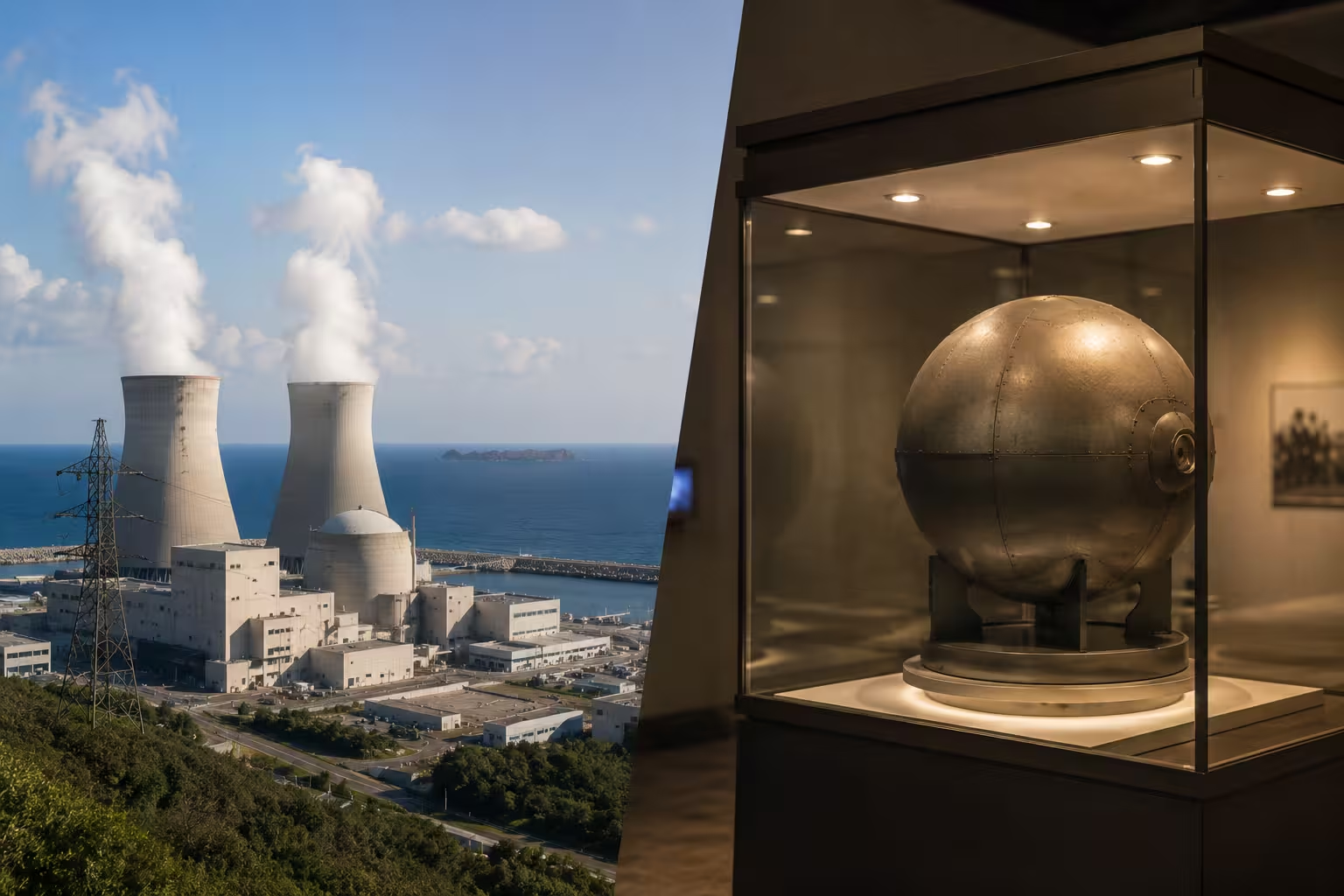
Nuclear Energy vs Nuclear Weapons: Understanding the Science Behind Both
August , 2026 : Many people hear the word “nuclear” and immediately think of nuclear weapons. However, a nuclear power plant and a nuclear bomb are designed for completely different purposes. Although both involve nuclear reactions, one is built to generate electricity under carefully controlled conditions, while the other is designed to release enormous amounts of energy in a fraction of a second.
Understanding this distinction helps explain why international organizations such as the International Atomic Energy Agency (IAEA) promote the safe, secure and peaceful use of nuclear technology around the world.
What Is a Nuclear Power Plant?
A nuclear power plant is a facility that generates electricity using the heat produced by controlled nuclear fission.
Inside a nuclear reactor, uranium fuel atoms are carefully split in a controlled process that releases heat. This heat converts water into steam, which spins large turbines connected to electrical generators. The generators then produce electricity that is supplied to homes, businesses and industries.
Unlike fossil fuel power stations, nuclear power plants do not burn coal, oil or natural gas to generate electricity. Instead, they rely on controlled nuclear reactions and multiple engineered safety systems to manage the process.
What Is a Nuclear Weapon?
A nuclear bomb is a weapon designed to release an enormous amount of energy almost instantly through an uncontrolled nuclear reaction.
Instead of producing electricity, its purpose is to create a powerful explosion accompanied by intense heat, blast effects and radiation.
Unlike a nuclear power plant, which operates continuously under controlled conditions, a nuclear weapon is designed for military use and releases its energy in a fraction of a second.
Nuclear Power Plant vs Nuclear Bomb
| Feature | Nuclear Power Plant | Nuclear Bomb |
| Purpose | Generate electricity | Military weapon |
| Nuclear reaction | Controlled | Uncontrolled |
| Energy release | Gradual and managed | Almost instantaneous |
| Main result | Electricity for homes and businesses | Blast, heat and radiation |
| Operation | Continuous under strict safety controls | Single-use explosive device |
| Regulation | Civilian nuclear authorities | National defence and military authorities |
Are Nuclear Power Plants and Nuclear Weapons Related?
The two technologies share the scientific principle of nuclear reactions, but they are designed for entirely different purposes.
Commercial nuclear power plants are built to generate electricity safely and efficiently. Nuclear weapons are developed as military devices using specialized materials, technologies and engineering that differ from those used in civilian electricity generation.
Operating a commercial nuclear power plant does not automatically mean a country can produce nuclear weapons.
Can a Nuclear Power Plant Explode Like a Nuclear Weapon?
No. A commercial nuclear reactor cannot produce the type of nuclear explosion associated with a nuclear weapon. Although severe reactor accidents can involve overheating, steam explosions, hydrogen explosions or the release of radioactive material, these events are fundamentally different from the rapid, uncontrolled nuclear detonation of a bomb. Modern nuclear power plants are designed with multiple layers of safety systems intended to control the nuclear reaction and protect people and the environment.
Why Is the IAEA Involved?
The International Atomic Energy Agency (IAEA) is the United Nations’ organization responsible for promoting the safe, secure and peaceful use of nuclear technology.
Its work includes:
- Developing international nuclear safety standards.
- Supporting countries in the peaceful use of nuclear science.
- Providing technical expertise and training.
- Applying international safeguards under agreements with participating states to verify that declared civilian nuclear material is not diverted from peaceful uses.
- Conducting scientific reviews and technical missions when requested.
The IAEA also supports the use of nuclear technology in medicine, agriculture, food safety, water resource management and scientific research.
Why Is the IAEA Monitoring Fukushima?
The Fukushima Daiichi Nuclear Power Station is a civilian nuclear power plant undergoing long-term decommissioning following the 2011 accident. Japan invited the IAEA to conduct an independent technical review of its ALPS-treated water programme to increase transparency and public confidence. The IAEA’s role includes independently sampling treated water, reviewing scientific data, verifying laboratory results and assessing whether the programme remains consistent with international safety standards.
The agency does not operate the plant or make Japan’s operational decisions. Instead, it provides independent scientific oversight and publishes its findings.
Common Misconceptions
- Does every nuclear power plant make nuclear weapons?
No. Civilian nuclear power plants are designed to generate electricity and operate under national regulations and, where applicable, international safeguards. - Is nuclear energy the same as nuclear weapons?
No. Nuclear energy refers to the peaceful use of nuclear reactions for purposes such as electricity generation, medicine, agriculture and research. Nuclear weapons are military devices. - Does the IAEA control nuclear weapons?
No. The IAEA is not a military organization and does not control nuclear weapons. It promotes the peaceful use of nuclear technology and applies safeguards under international agreements with participating countries. - Why do both contain the word “nuclear”?
Both involve energy released from atomic nuclei. However, the technology, purpose and operation of a nuclear power plant and a nuclear weapon are fundamentally different.
Why Understanding the Difference Matters
The word “nuclear” is often associated with conflict or disasters, but nuclear technology has many peaceful applications beyond electricity generation.
Today, nuclear science is used to produce electricity, diagnose and treat diseases, improve food safety, support agriculture, manage water resources and advance scientific research. At the same time, international cooperation and oversight help promote the safe, secure and peaceful use of these technologies.
Understanding the difference between civilian nuclear energy and nuclear weapons helps readers better interpret discussions about nuclear power, international safety standards and organizations such as the IAEA.
Key Takeaways
-
A nuclear power plant generates electricity using controlled nuclear fission.
-
A nuclear bomb is a military weapon designed to release energy almost instantly.
-
Although both involve nuclear reactions, they have completely different purposes.
-
Commercial nuclear power plants cannot explode like nuclear weapons.
-
The IAEA promotes the safe, secure and peaceful use of nuclear technology and provides independent technical oversight in areas such as nuclear safety and safeguards.
Editorial Note: This article is intended for informational and educational purposes only. It provides a general overview of nuclear energy, nuclear weapons and international nuclear oversight based on publicly available information. It does not provide technical guidance on the design, development or use of nuclear weapons. Readers are encouraged to consult the IAEA and relevant national authorities for official information.
IAEA Confirms Latest Fukushima Water Release Meets International Safety Standards
What Is ALPS-Treated Water? Understanding Nuclear Wastewater Treatment and International Oversight