

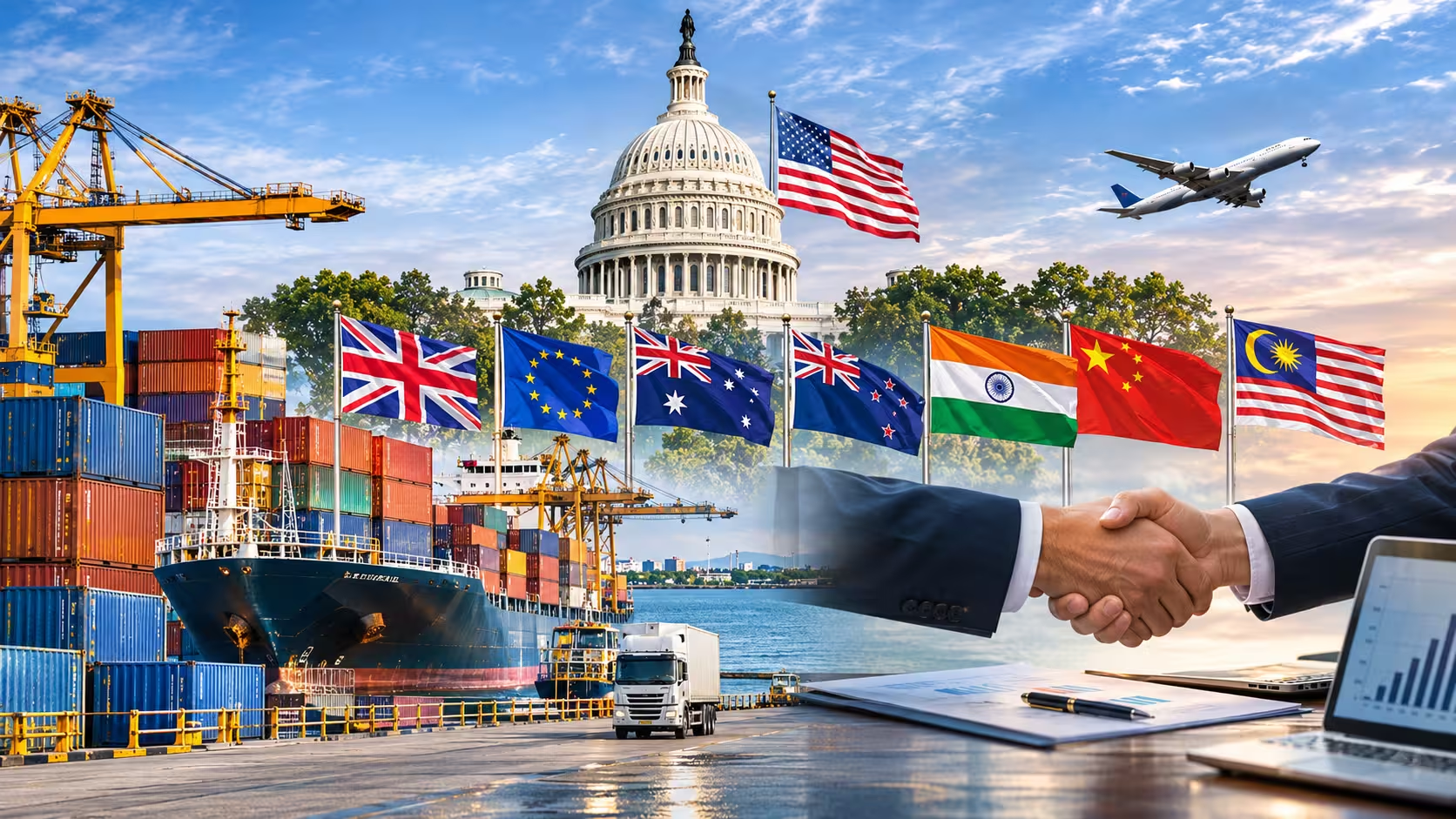
US midterm elections 2026 global impact
10 November 2026 : The United States held its midterm elections on 3 November 2026, producing a significant change in the political balance of Congress.
According to the Associated Press, the Democratic Party secured control of both the House of Representatives and the Senate. The results will reshape congressional politics during the remaining two years of President Donald Trump’s current term.
While the elections did not change the US presidency, they altered the political composition of the federal legislature, which plays an important role in approving government spending, passing laws and overseeing executive decisions.
From Europe to the Indo-Pacific, the changing balance of power in Washington could influence trade, defence, diplomatic relationships and economic cooperation.
The consequences could extend beyond American domestic politics. Countries with strong economic, defence and diplomatic relationships with the United States will be watching how the newly elected Congress approaches international trade, security partnerships and foreign policy.
However, the outcome does not automatically change existing international agreements or presidential decisions. Its practical significance will depend on future legislation, congressional negotiations and executive actions.
United Kingdom: Trade, Defence and the Special Relationship
The United Kingdom maintains extensive economic, diplomatic and security ties with the United States.
The new congressional balance could influence discussions around trade legislation, tariffs, defence cooperation and support for NATO.
Trade remains an important consideration. In May 2025, the UK and US announced an Economic Prosperity Deal intended to strengthen bilateral economic relations. Further details and tariff-related developments are available through the UK government’s official UK-US economic deal information.
Defence cooperation is another area of shared interest. The two countries work together through NATO and the AUKUS partnership with Australia.
In May 2026, the AUKUS partners announced a project involving advanced technologies for uncrewed underwater vehicles. Details are available in the UK government’s AUKUS Pillar II fact sheet.
The midterm results could influence future congressional decisions about defence funding and international security cooperation.
Nevertheless, the relationship between London and Washington will continue to involve both the US Congress and the Trump administration.
European Union: NATO, Ukraine and Trade Relations
For European countries, the US midterm elections have implications for transatlantic security and economic cooperation.
The European Union and the United States maintain one of the world’s largest trade and investment relationships.
According to the Council of the European Union, bilateral trade in goods and services reached approximately €1.77 trillion in 2025.
Trade relations have also been shaped by negotiations over tariffs and market access. In May 2026, the Council and European Parliament reached a provisional agreement on measures implementing elements of the EU–US trade framework.
Readers can examine the details through the European Council’s official announcement on EU-US tariff arrangements.
Beyond trade, European governments remain concerned with NATO cooperation, assistance to Ukraine and broader regional security.
A Democratic-controlled Congress could exercise greater oversight of foreign policy and influence future funding decisions. However, differing priorities between Congress and the White House could also complicate negotiations.
For European governments, the central question is how American domestic political changes will affect long-term commitments to transatlantic security and economic stability.
Australia: Indo-Pacific Security and Economic Cooperation
Australia maintains a broad strategic relationship with the United States, covering defence, intelligence, investment, technology and trade.
The Australian Department of Foreign Affairs and Trade describes the United States as a major economic partner and a central part of Australia’s security relationships.
One important area is AUKUS, the security partnership involving Australia, the United Kingdom and the United States.
The partnership includes cooperation on advanced defence technologies and Australia’s acquisition of conventionally armed, nuclear-powered submarines.
Congressional decisions involving defence budgets, technology cooperation and military production could influence the implementation of these programmes.
For Australia, the election may also be relevant to future discussions about supply chains, critical minerals, regional security and relations between the United States and China.
However, the midterm results do not independently terminate or amend the existing AUKUS arrangements.
New Zealand: Trade, Regional Stability and the Pacific
New Zealand has an established economic and diplomatic relationship with the United States.
According to the New Zealand Ministry of Foreign Affairs and Trade (MFAT), cooperation between the two countries covers business, trade, defence, technology, education and regional affairs.
American trade policy is particularly relevant to New Zealand exporters.
In July 2026, MFAT reported that the United States would apply an additional 12.5% tariff to most New Zealand exports from 24 July, with certain exemptions.
The measure and its implications were outlined in an official MFAT market report on US tariffs.
Changes in congressional control could influence future trade legislation and oversight of tariff policies. However, the election itself does not automatically remove or modify existing duties.
New Zealand also has strategic interests in Pacific security and regional cooperation.
During the New Zealand-United States Strategic Dialogue in February 2026, officials reaffirmed their interest in Indo-Pacific cooperation and supporting Pacific Island countries.
For New Zealand, the key areas to monitor include trade policy, access to American markets, regional security and the direction of US engagement with Pacific nations.
India: Technology, Trade and Strategic Partnerships
India and the United States maintain an extensive relationship involving technology, defence, investment, education and economic cooperation.
India’s Ministry of External Affairs describes the relationship as a comprehensive global strategic partnership encompassing a wide range of sectors.
Readers can explore the background through the Indian Ministry of External Affairs’ bilateral relations portal.
The US midterm results could influence congressional discussions about technology cooperation, international trade, defence partnerships and immigration legislation.
For Indian businesses and professionals, American policies relating to technology investment, skilled-worker immigration and access to US markets remain important considerations.
The two countries also cooperate on Indo-Pacific issues, including through the Quadrilateral Security Dialogue, known as the Quad, alongside Australia and Japan.
An official US Department of State fact sheet on US-India relations provides historical background on the partnership, although it predates the current administration.
The significance of the 2026 congressional changes for India will depend on future decisions by US lawmakers, the White House and relevant government agencies.
China: Tariffs, Technology and Strategic Competition
Relations between China and the United States remain influential in international trade, manufacturing, technology and global supply chains.
According to the Office of the United States Trade Representative (USTR), two-way US trade in goods and services with China totalled approximately US$494.6 billion in 2025.
Trade relations have been affected by tariffs, market-access disputes, technology restrictions and broader strategic differences.
The new Congress could influence legislative debates concerning advanced technology, export controls, investment restrictions and economic security.
Congressional committees may also examine US-China relations more closely through hearings and investigations.
Readers seeking background on earlier trade negotiations can examine the US-China Phase One Trade Agreement, published by the USTR.
However, important trade and diplomatic powers remain with the US president and executive agencies.
For China, developments in congressional legislation and executive trade decisions will both be relevant to future economic relations.
Malaysia: Electronics, Trade and Regional Diplomacy
Malaysia maintains significant economic links with the United States, particularly in manufacturing, electronics, technology and investment.
According to the Office of the United States Trade Representative, bilateral trade in goods and services between the two countries reached approximately US$94.7 billion in 2025.
Malaysia’s role in global electronics and semiconductor supply chains makes American technology and trade policies particularly relevant to its economy.
Congressional decisions involving tariffs, technology-related restrictions and industrial policy could affect businesses operating across international supply chains.
As a member of the Association of Southeast Asian Nations (ASEAN), Malaysia also has an interest in American engagement with Southeast Asia and the broader Indo-Pacific region.
Future US policy developments could affect trade negotiations, investment conditions and regional cooperation.
Nevertheless, any specific impact will depend on legislation, executive decisions and changing international economic conditions.
What Should the World Watch After the US Midterm Elections?
The outcome of the 2026 midterm elections has changed the balance of legislative power in Washington, but President Donald Trump remains in office.
For international governments, businesses and organisations, several areas deserve continued attention:
- International trade: Changes to tariffs, trade legislation and market-access arrangements.
- Defence and security: Congressional funding decisions affecting NATO, AUKUS and other international partnerships.
- Technology: Policies concerning semiconductors, artificial intelligence, advanced manufacturing and export restrictions.
- Immigration: Legislative debates affecting international students, professionals and skilled workers.
- Foreign policy: Congressional oversight, diplomatic priorities and international assistance.
- Economic conditions: Budget negotiations, federal spending and policies affecting international markets.
A Democratic-controlled Congress may increase legislative scrutiny of the Trump administration and influence decisions requiring congressional approval.
At the same time, the president will retain significant authority over foreign affairs, diplomacy and executive actions.
The practical international consequences will become clearer as the new Congress begins its work in January 2027.
The 2026 US midterm elections demonstrate how changes in American domestic politics can have implications beyond national borders.
For the United Kingdom and Europe, attention will centre on trade and security cooperation. Australia and New Zealand will follow developments involving regional stability and economic relations. India, China and Malaysia will monitor developments affecting technology, international trade and strategic partnerships.
However, an election result alone does not determine future foreign policy.
The relationship between the White House, Congress and international partners will remain central to understanding how American policy develops between 2027 and the next presidential election in 2028.
Editorial Note: This article is published by Poligen360 for informational and educational purposes. The international implications discussed are assessments of possible policy areas affected by changes in congressional control, not predictions of specific government decisions. Election results are based on reporting available as of 10 November 2026. External links direct readers to official government and institutional resources, with historical material identified where relevant. Poligen360 maintains an independent and non-partisan editorial approach.
US Midterm Elections 2026 Explained: What They Are, Who Won and Why They Matter