

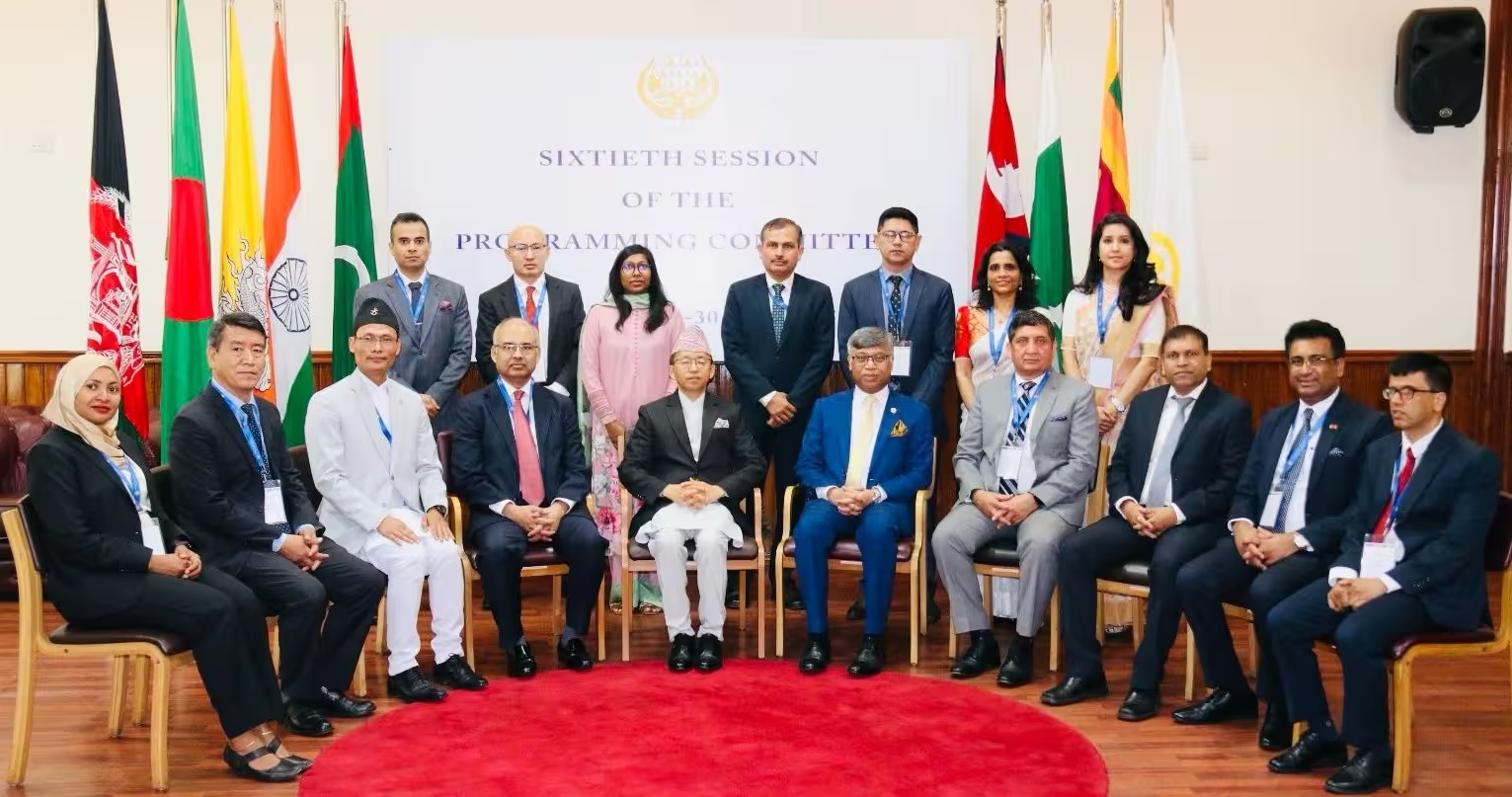
KATHMANDU May 2025 – The SAARC Secretariat recently hosted the 60th Session of SAARC Programming Committee, a three-day high-level gathering aimed at steering the future of South Asian cooperation. Chaired by Nepal, the meeting brought together Joint Secretaries and Directors General from the foreign ministries of Bangladesh, Bhutan, India, Maldives, Pakistan, Sri Lanka, and the host nation.
Call for Revitalization and High-Level Engagement
The session was officially opened by H.E. Mr. Amrit Bahadur Rai, Foreign Secretary of Nepal and Chair of the SAARC Standing Committee. In his keynote address, Foreign Secretary Rai stressed the critical need to reactivate SAARC’s core mechanisms. He reaffirmed Nepal’s dedication to the SAARC Charter and called for the convening of the 19th SAARC Summit to restore regional momentum.
In his welcoming remarks, H.E. Md. Golam Sarwar, Secretary-General of SAARC, described the Programming Committee as the “Engine Room” of the organization. He urged member states to address modern regional and global hurdles through unified action and constructive engagement. Secretary-General Sarwar emphasized that regional cooperation must move beyond dialogue to co-create a sustainable future for the people of South Asia.
Strategic Deliberations and Budget Approvals
During the three-day summit, the committee focused on several pivotal administrative and developmental pillars:
- Budgetary Oversight: Reviewing and approving the 2025 budgets and operational programs for the SAARC Secretariat, its Specialized Bodies, and Regional Centres.
- Implementation Tracking: Assessing the progress of previous mandates and decisions.
- Thematic Progress: Evaluating advancements in key sectors including food security, trade, energy, health, and climate change.
- Social Development: Addressing strategies for poverty alleviation and educational improvements across the region.
The committee also worked toward finalizing the SAARC Calendar of Activities for 2025 and discussed the scheduling of upcoming high-level meetings. The session concluded with a shared vision of fostering deeper integration and ensuring the long-term stability of the South Asian regional process.
Source : SAARC
Editorial Note: This article is intended for informational and educational purposes only. It provides analytical insights based on publicly available information and does not constitute financial, legal, or political advice. Readers are encouraged to consult official sources and expert advisors for verified guidance.
Building a Sustainable Asia‑Pacific: APEC’s Return to Korea Marks a Turning Point