

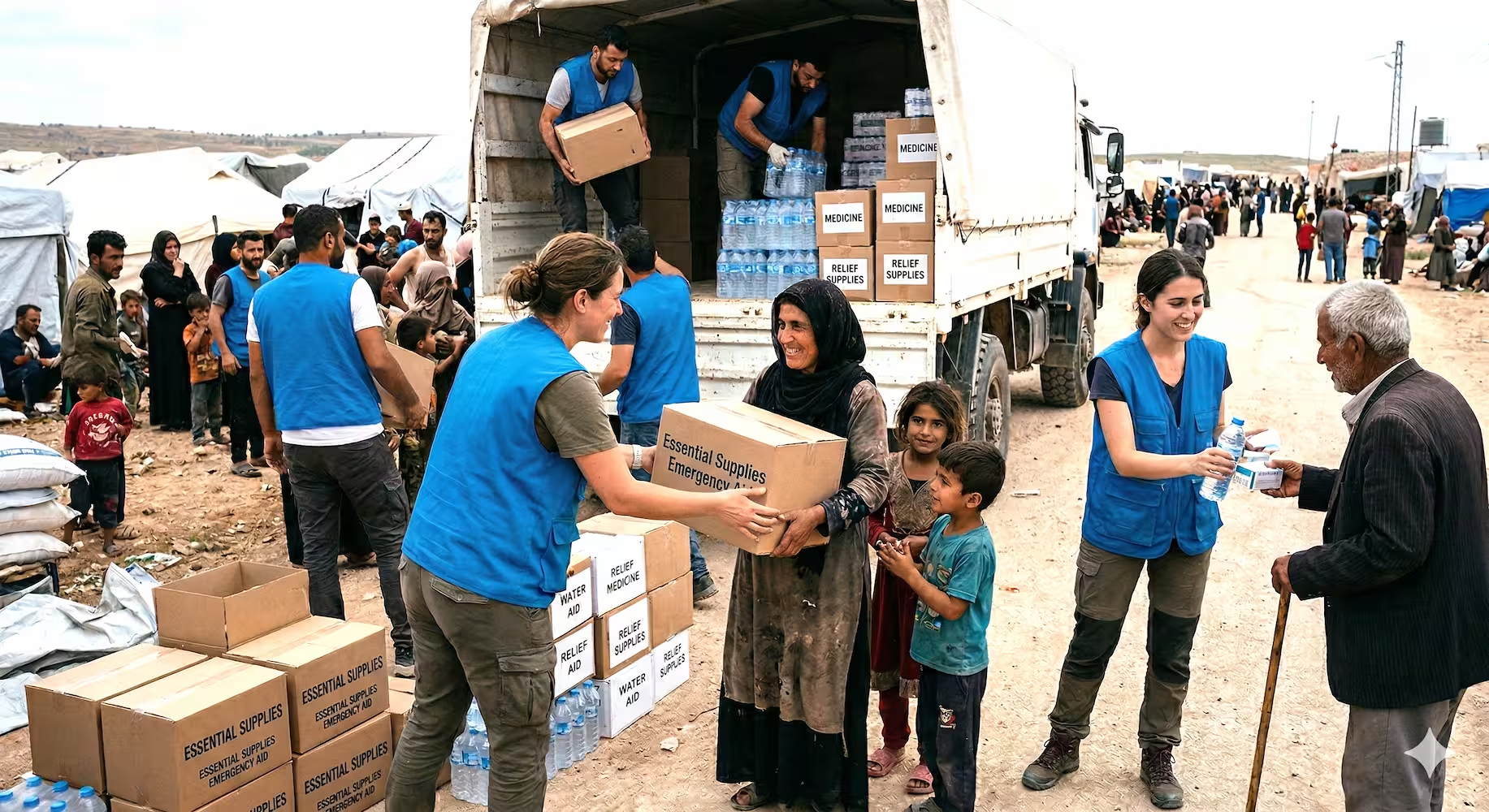
United Nations (UN) Secretary‑General António Guterres has welcomed a new commitment from the United States, which has pledged an initial $2 billion to support the UN’s emergency humanitarian operations worldwide.
According to a statement released by the Secretary‑General’s office, the funding will significantly strengthen the UN’s ability to reach people facing life‑threatening crises, from conflict zones to regions hit by natural disasters.
UN officials say the contribution will help expand relief efforts, deliver essential supplies, and support communities most at risk.
Guterres emphasized that every contribution matters as humanitarian needs continue to rise globally.
He urged other international donors to increase their support, warning that the scale of today’s emergencies requires collective action and sustained financial backing.
The new US commitment is expected to play a crucial role in helping the UN respond more quickly and effectively to urgent situations around the world.
Why This Matters
The new US commitment is significant not only for its financial scale, but also for what it signals at a time of mounting global humanitarian strain. As conflicts, climate-related disasters, displacement, and food insecurity continue to place pressure on international relief systems, major early funding commitments can strengthen the United Nations’ capacity to respond with greater speed, reach, and operational flexibility.
UN officials say the contribution will help expand relief efforts, deliver essential supplies, and support communities most at risk. In broader terms, this reflects the central role of humanitarian financing in turning diplomatic concern into practical action.
Emergency funding helps sustain food delivery, medical support, shelter provision, logistics, and protection services in situations where delayed assistance can deepen instability and human suffering.
Secretary-General António Guterres’s emphasis that every contribution matters also carries wider political significance. It underlines a persistent challenge facing the multilateral system: humanitarian needs are increasing faster than available resources.
From an international affairs perspective, the pledge also serves as an expression of support for multilateral crisis management at a moment when global institutions are being tested by overlapping emergencies. Financial backing of this scale can be read not only as humanitarian assistance, but also as a reaffirmation of the UN’s coordinating role in responding to crises that no single country can manage alone.
Secretary-General António Guterres’s statement that every contribution matters carries importance beyond the immediate humanitarian appeal. Politically, it reflects a deeper structural problem within the multilateral system: the gap between rising global humanitarian needs and the financial resources available to address them continues to widen. In recent years, the international system has faced overlapping pressures from armed conflict, climate-related disasters, mass displacement, food insecurity, and public health vulnerabilities. As these crises accumulate, the demand for emergency assistance has expanded faster than donor funding.
In that context, large contributions from major powers such as the United States are highly significant because they can strengthen the UN’s short-term operational capacity, improve planning, and help relief agencies respond more quickly to urgent needs. However, Guterres’s message also suggests that humanitarian action cannot depend on a small number of major donors alone. A system that relies too heavily on a limited group of states becomes more vulnerable to political change, budget pressures, and shifting foreign policy priorities.
This is where the idea of broader burden-sharing becomes politically important. For the multilateral humanitarian system to remain credible and effective over time, support must come from a wider range of countries, institutions, and partners. Broader participation helps spread responsibility more evenly, reduces overdependence on a few governments, and reinforces the principle that humanitarian protection is a shared international obligation rather than a selective act of generosity.
In that sense, Guterres’s remark can be read as both a call for funding and a diplomatic message about the health of multilateral cooperation itself. It highlights the fact that humanitarian effectiveness depends not only on emergency pledges from powerful states, but also on sustained and collective international backing that gives the system greater resilience and legitimacy.
While large contributions from major powers can reinforce immediate response capacity, long-term effectiveness still depends on broader burden-sharing across the international community.
Looking ahead to 2026, the importance of such commitments is likely to remain high. Humanitarian pressures are expected to persist across multiple theatres, and donor reliability will remain a key factor in determining how effectively relief agencies can respond. In that context, the new US pledge carries both operational and diplomatic weight, supporting immediate emergency action while reinforcing the broader principle of collective international responsibility.
IMF Approves USD 206 Million in Emergency Aid for Sri Lanka After Cyclone Ditwah
The Role of International Organizations in Crisis Management
Editorial Note
Published by PoliGen News under the Poligen360 platform. Information is based on publicly available sources and presented for informational purposes to help readers understand global developments clearly and responsibly.