

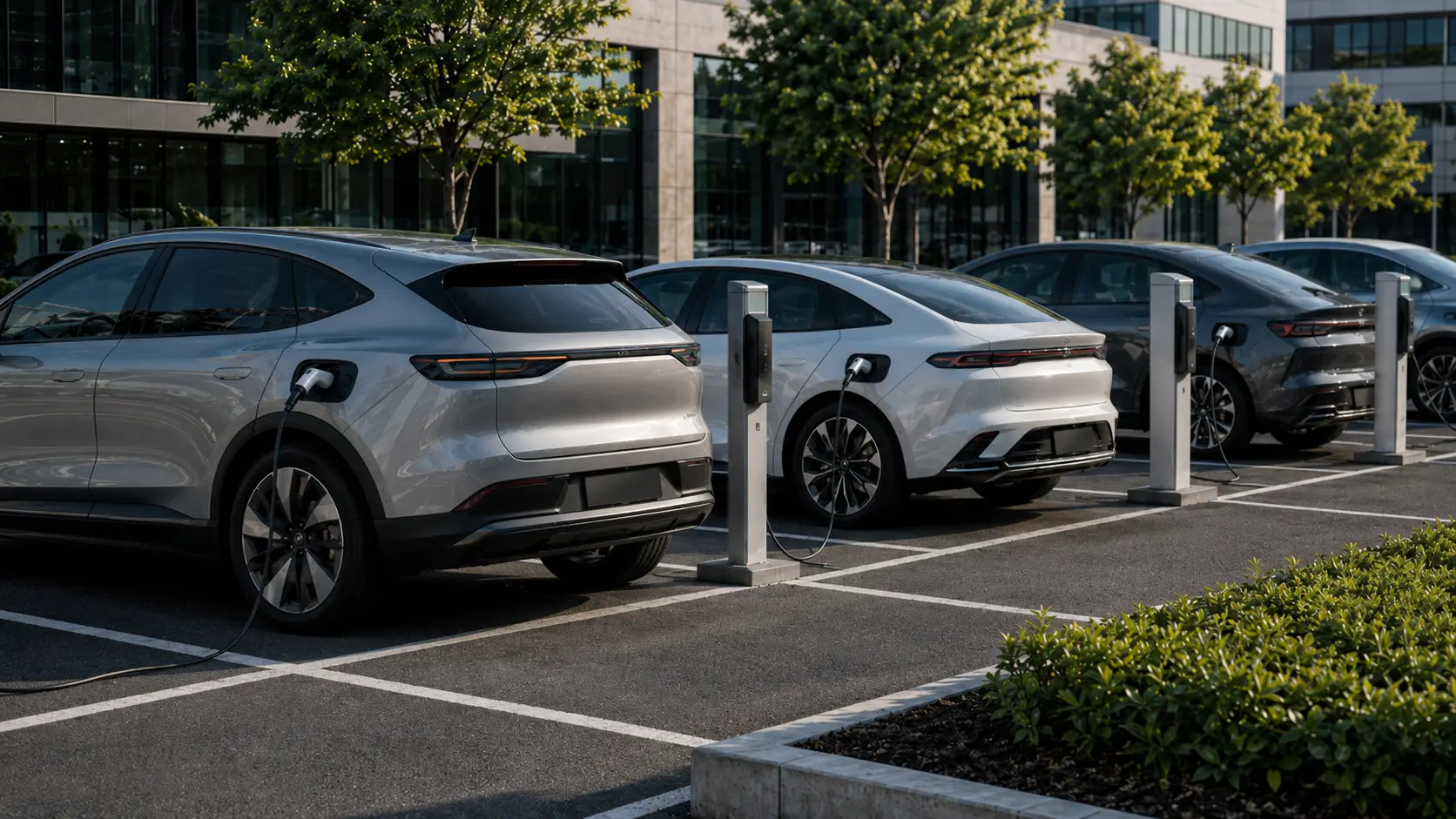
Global EV Market Moves Forward With Rising Emerging Market Demand
The global electric vehicle market reached a major milestone in 2025, with one in every four cars sold worldwide being electric, according to the International Council on Clean Transportation.
The figures are part of the ICCT’s latest Global Electric Vehicle Market Monitor for Light-duty Vehicles, which shows that more than 20 million electric vehicles were sold globally last year.
The report points to continued growth across major markets, with China remaining at the Centre of the global EV transition. In 2025, electric vehicles made up 52% of light-duty vehicle sales in China. The country also accounted for 62% of global light-duty electric vehicle sales and 71% of global EV production.
Ilma Fadhil, ICCT researcher and lead author of the semi-annual report, said the data showed that the EV transition continued to expand strongly across most markets, despite a challenging year.
Europe also continued to move forward. Battery electric vehicles represented 18% of all new car sales in Europe in 2025, rising from 14% in 2024, even as regulatory flexibility was introduced.
A major part of the latest growth came from emerging markets, where electric vehicle adoption accelerated quickly and, in some cases, moved ahead of more established markets.
Global EV Market Reaches 25% Share as Emerging Markets Gain Momentum
The 11 emerging markets analyzed by the ICCT sold around one million electric cars in 2025, doubling sales in just one year.
Vietnam recorded one of the strongest results, reaching a 37% EV sales share. This was 10 percentage points higher than Europe’s 27% share. Thailand, Türkiye, Indonesia and Colombia also recorded EV uptake above the United States, which stood at 9%.
Several Southeast Asian markets saw particularly sharp growth. Indonesia, Malaysia and the Philippines all more than doubled their electric vehicle sales year over year.
According to the ICCT, the rapid rise in Southeast Asia was supported by increased domestic manufacturing, greater access to affordable electric models and consistent policy support.
Fadhil said the growth in emerging markets showed how policy certainty can support market success. She also noted that uncertainty in other markets can slow the transition and create risks for economic competitiveness.
The United States showed a different trend. According to the ICCT, policy weakening contributed to market stagnation. The US share of global EV production declined from 7% in 2024 to 5% in 2025, as automakers pulled investments and delayed production plans.
The ICCT said this shift could affect the long-term competitive position of US manufacturers.
However, even as the overall US market share declined slightly by 1%, some automakers increased their own electric vehicle sales share, including General Motors, Stellantis and Volkswagen Group.
The report also found that electric vehicles are becoming larger as manufacturers expand model availability. The SUV and MPV segment increased its share in every major market.
In India, larger models accounted for 80% of total electric light-duty vehicle purchases. India also recorded the strongest increase in EV model availability, rising from 33 models to 47 in one year.
The ICCT’s findings show that the global electric vehicle market is no longer being driven only by established regions. While China remains the dominant force, emerging markets are becoming an increasingly important part of the global EV transition.
-
Why is China leading the global electric vehicle market so strongly? China’s lead comes from scale, strong manufacturing capacity and improving affordability. The International Energy Agency says China remains the largest global hub for electric car manufacturing and trade, capturing nearly 75% of global electric car production and around 40% of global electric car trade in 2025.
- What factors helped emerging markets double their EV sales in 2025? Emerging markets grew quickly because EVs became more affordable, model availability improved and policy support strengthened in several regions. The IEA says Southeast Asia’s annual electric car sales more than doubled in 2025, reaching a sales share of nearly 20%, led by Viet Nam, Indonesia and Thailand.
-
Why did Vietnam’s EV market share rise higher than Europe’s? Vietnam’s rapid rise was supported by strong domestic EV growth and wider Southeast Asian momentum. The Asian Development Bank noted that Viet Nam doubled its EV sales share from 2024 to reach close to 40% in 2025, overtaking the United Kingdom and the European Union.
- How could policy uncertainty affect EV growth in the United States? Policy uncertainty can make both consumers and automakers more cautious. In the United States, Argonne National Laboratory reported that around 1.5 million plug-in electric vehicles were sold in 2025, a 4% decrease from 2024. Policy changes also affected the market environment, with the IRS stating that the New Clean Vehicle Credit was available only for vehicles acquired on or before September 30, 2025.
-
Why are electric SUVs and MPVs becoming more popular across major markets? Larger electric vehicles are becoming more common because global car demand has already shifted strongly toward SUVs, and automakers are extending electric options into the segments buyers prefer. The Global Fuel Economy Initiative says the growing market share and size of SUVs are major factors shaping the vehicle market, even as electrification expands.
Key Points
- One in four cars sold globally in 2025 was electric.
- More than 20 million electric vehicles were sold worldwide in 2025.
- China remained the leading EV market, with electric vehicles making up 52% of light-duty vehicle sales.
- China accounted for 62% of global light-duty electric vehicle sales and 71% of global EV production.
- Europe’s battery electric vehicle share rose to 18% in 2025, up from 14% in 2024.
- The 11 emerging markets analyzed by the ICCT sold around one million electric cars in 2025.
- Vietnam reached a 37% EV sales share, surpassing Europe’s 27% share.
- Thailand, Türkiye, Indonesia and Colombia recorded EV uptake higher than the United States.
- Indonesia, Malaysia and the Philippines more than doubled EV sales year over year.
- The United States’ share of global EV production fell from 7% in 2024 to 5% in 2025.
- Electric vehicles are becoming larger, with SUV and MPV models increasing their share across major markets.
- India saw EV model availability rise from 33 to 47 models.
Editorial Note: This article is intended for informational and educational purposes only. It provides analytical insights based on publicly available information and does not constitute financial, legal, or political advice. Readers are encouraged to consult official sources and expert advisors for verified guidance.
IAEA Data: Majority of Radioactive Material Thefts Occur During Transport
The Road to Asia’s Future 2050: Productivity, People, and Trade
ADB and Singapore Strengthen Southeast Asia Clean Energy Cooperation