

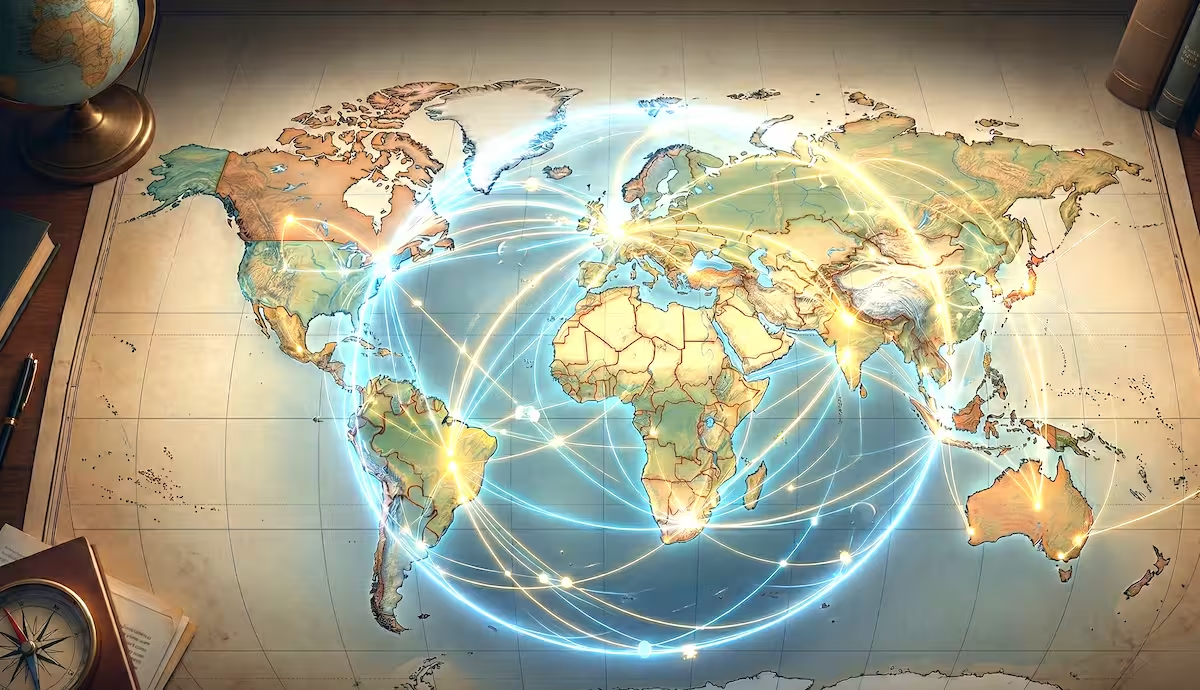
Introduction: The Rise of Middle Powers in Global Diplomacy
The rise of middle powers in global diplomacy has become one of the defining developments of 21st-century international relations. As global power becomes more distributed, countries that are neither superpowers nor small states are increasingly shaping negotiations on trade, climate policy, regional security, and institutional reform. In a geopolitical environment marked by strategic rivalry among major powers, middle states are leveraging economic strength, diplomatic networks, and regional influence to expand their voice within global governance structures.
Unlike traditional great powers, middle powers do not seek systemic dominance. Instead, they often pursue strategic autonomy, coalition-building, and pragmatic engagement across multiple blocs. In a multipolar world, their influence is growing not through confrontation, but through coordination and flexibility.
Defining a Middle Power in International Relations
The concept of a “middle power” emerged during the Cold War to describe states that possessed:
- Moderate economic capacity
- Regional influence
- Diplomatic credibility
- Participation in multilateral institutions
Middle powers typically support international law, multilateral diplomacy, and institutional cooperation. They often act as mediators, coalition-builders, or bridge states between competing blocs.
Historically, countries such as Canada and Australia were frequently described as traditional middle powers. However, the 21st century has expanded the list to include emerging economies with growing diplomatic reach.
Multipolarity and Strategic Space
The rise of middle powers in global diplomacy is closely tied to the broader shift toward multipolarity.
As discussed in our analysis of global alliances shifting in the 21st century, power is no longer concentrated within a single dominant bloc. Instead, multiple centers of influence interact within global institutions and regional frameworks.
This structural change creates strategic space for middle states to:
- Balance relations between major powers
- Avoid rigid alignment
- Advance issue-based cooperation
Multipolar systems inherently increase the relevance of states capable of acting as diplomatic intermediaries.
Strategic Autonomy and Balanced Diplomacy
One hallmark of contemporary middle powers is their pursuit of strategic autonomy.
Rather than aligning exclusively with one superpower, many states seek to maintain constructive relationships across geopolitical divides.
For example:
- India engages economically with Western economies while maintaining dialogue with emerging blocs.
- Brazil participates in multilateral economic forums while pursuing independent regional leadership.
- Indonesia has promoted balanced engagement within Indo-Pacific diplomacy.
This balancing approach allows middle powers to increase their negotiating leverage while reducing vulnerability to great-power competition.
Economic Diplomacy and Development Partnerships
Economic capacity is a central driver behind the rise of middle powers in global diplomacy.
Many middle states possess:
- Expanding GDP growth
- Strategic natural resources
- Critical supply chain roles
- Regional trade networks
They increasingly use economic diplomacy to:
- Broker trade agreements
- Facilitate infrastructure development
- Promote regional integration
- Strengthen energy cooperation
Infrastructure financing, development partnerships, and digital economy initiatives provide middle powers with practical influence beyond traditional military metrics.
Role in Global Governance Reform
Calls for reform within global institutions have intensified over the past two decades.
In particular, debates surrounding reform of the United Nations Security Council frequently involve middle powers advocating for broader representation.
As explored in our examination of the changing role of the United Nations in modern conflicts, institutional legitimacy increasingly depends on reflecting contemporary geopolitical realities.
Middle powers often argue that:
- Representation should match economic weight
- Regional voices deserve greater inclusion
- Multilateral decision-making requires modernization
Their advocacy positions them as reform-oriented actors rather than revisionist challengers.
Mediation and Conflict Resolution
Middle powers frequently assume mediation roles in regional or international disputes.
Their credibility often derives from:
- Perceived neutrality
- Non-threatening military posture
- Diplomatic pragmatism
For example:
- Türkiye has periodically facilitated dialogue in regional conflicts.
- Norway has historically supported peace negotiations in various global contexts.
Mediation diplomacy strengthens their reputation as stabilizing actors within global governance.
Climate Diplomacy and Issue-Based Leadership
Another dimension of the rise of middle powers in global diplomacy lies in issue-based leadership.
On climate policy, sustainable development, and global health, middle states often:
- Lead coalition-building efforts
- Advocate compromise positions
- Promote cross-regional agreements
Within climate negotiations under the United Nations framework, middle powers frequently act as bridge-builders between industrialized and developing countries.
Their ability to operate across political divides enhances their diplomatic value.
Security Partnerships Without Bloc Politics
While middle powers do not typically dominate military alliances, they increasingly participate in:
- Regional security dialogues
- Maritime cooperation agreements
- Joint military exercises
- Peacekeeping contributions
Unlike rigid Cold War blocs, these partnerships are flexible and issue-specific.
As noted in our analysis of the New Cold War between USA and China, middle states often avoid binary alignment, instead maintaining diversified security relationships.
This flexibility reinforces their autonomy.
Constraints and Limitations
Despite growing influence, middle powers face structural constraints:
Limited Military Projection
They generally lack the capacity for sustained global military operations.
Economic Exposure
Many remain dependent on export markets tied to major powers.
Domestic Political Volatility
Internal political instability can reduce diplomatic consistency.
Regional Rivalries
Neighborhood disputes may limit global ambitions.
Their influence therefore remains conditional rather than absolute.
Case Studies: Emerging Middle Power Dynamics
Several countries illustrate contemporary middle-power trends:
South Africa
Acts as a regional voice in African development and multilateral forums.
Mexico
Balances trade integration with regional diplomacy in Latin America.
Saudi Arabia
Expands diplomatic engagement beyond traditional security alignments.
Each demonstrates varying approaches to strategic diversification.
Economic Groupings and Collective Influence
Middle powers increasingly operate through economic coalitions such as BRICS.
As discussed in our analysis of BRICS reshaping the global economic order, such platforms provide:
- Alternative development finance
- Trade coordination
- Diplomatic coordination
Collective engagement amplifies middle-power leverage within global institutions.
Future Outlook: Bridge States in a Competitive World
The rise of middle powers in global diplomacy is unlikely to reverse.
As geopolitical rivalry intensifies, great powers may seek middle-state partnerships to build coalitions.
Possible future developments include:
- Greater involvement in mediation initiatives
- Expanded representation in reformed institutions
- Increased influence in digital governance
- Enhanced regional integration leadership
Middle powers may not dominate the system, but they increasingly shape its direction.
Frequently Asked Questions
What defines a middle power?
A middle power is a state with moderate economic strength, regional influence, and active participation in multilateral diplomacy, but without superpower dominance.
Why are middle powers becoming more influential?
Multipolarity and distributed economic growth create space for states to act as mediators and coalition-builders between major powers.
Can middle powers reform global institutions?
While they cannot act alone, collective advocacy by middle powers can influence debates on institutional reform and representation.
Expanding Influence Without Dominance
The rise of middle powers in global diplomacy reflects a broader redistribution of influence within the international system. Rather than seeking hegemony, these states operate through coalition-building, strategic autonomy, and multilateral engagement.
In a world shaped by multipolar competition, middle powers increasingly serve as stabilizers, negotiators, and institutional reform advocates. Their role may not be defined by dominance, but by connectivity and adaptability within an evolving global order.
Editorial Note: This article is intended for informational and educational purposes only. It provides analytical insights based on publicly available information and does not constitute financial, legal, or political advice. Readers are encouraged to consult official sources and expert advisors for verified guidance.
Next In Geopolitics
How BRICS Is Reshaping the Global Economic Order in a Multipolar Era