

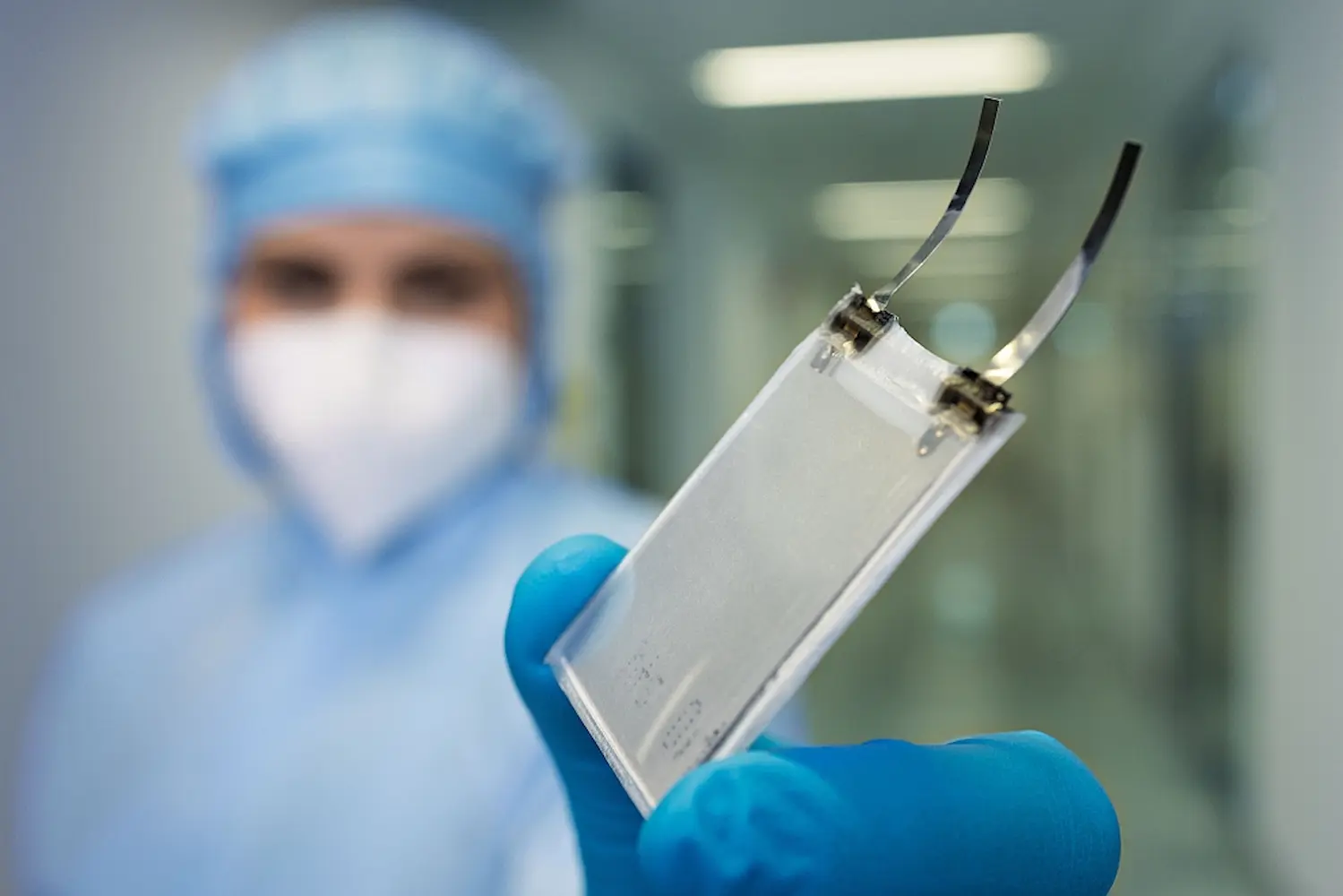
April 25 , 2026 – Nickel-zinc batteries for data centers are emerging as a potential shift in how backup power is managed in modern AI-driven infrastructure. A new development supported by Fraunhofer IZM and startup Zn2H2 Inc. introduces a cost-effective approach to manufacturing high-power nickel-zinc (NiZn) batteries designed for short-duration energy delivery. Built to supply power within seconds to a few minutes, these systems aim to support critical operations where even brief disruptions can put data and services at risk.
Addressing Power Risks in Expanding Data Centers
The rapid expansion of artificial intelligence is driving the construction of increasingly large data centers. In such environments, even brief power interruptions can disrupt services and lead to potential data loss.
To manage this risk, facilities rely on uninterruptible power supply (UPS) systems that bridge the gap between a power outage and the activation of backup generators. However, if UPS systems underperform or fail, essential systems can be affected.
Current UPS setups typically depend on lithium-ion batteries. While widely used, these batteries come with limitations, including higher weight, cost, and safety concerns such as fire risk.
A Shift Toward Nickel-Zinc Technology
The NiZn battery concept itself is not new, but its adoption has been limited due to complex manufacturing and lower charging cycle performance. The collaboration between Zn2H2 and Fraunhofer IZM aims to overcome these barriers.
Zn2H2 has developed a new production approach where nickel material is directly applied to a thin steel surface. This enables the creation of larger electrodes that can be structured similarly to cylindrical lithium-ion batteries. Combined with a high-conductivity electrolyte, the design supports faster discharge and reliable recharging.
Performance and Testing Results
Testing carried out at Fraunhofer IZM laboratories showed strong results. The batteries completed over 20,000 charge cycles and demonstrated high discharge capability, with power output exceeding 10,000 W/kg.
These characteristics make the batteries suitable for applications where rapid energy delivery is essential, including hyperscale data centers and vehicle starter systems, particularly in cold conditions.
Key Advantages Over Conventional Systems
According to the developers, NiZn batteries offer several benefits compared to lithium-ion alternatives:
- Faster energy delivery over short durations
- Lower overall weight
- Reduced manufacturing costs
- Improved material availability
- Enhanced safety profile
The batteries can deliver energy densities between 40-50 Wh/kg at high power levels and up to 170 Wh/kg at lower power output.
Collaboration Driving Innovation
The project highlights how combining startup innovation with established research expertise can accelerate technological progress. Zn2H2, part of the Start-a-Factory program since 2022, continues to work closely with researchers to refine its zinc-based energy solutions.Zn2H2 Inc. – https://zn2h2.com/
Nickel-Zinc Batteries Explained: Key Questions Around the Zn2H2 Breakthrough
The collaboration between Zn2H2 Inc. and Fraunhofer IZM has renewed attention on nickel-zinc (NiZn) batteries, particularly for high-power, short-duration applications such as AI data centers. While initial results point to potential advantages in performance and cost, industry observers and operators are now focusing on practical questions around durability, safety, and real-world deployment.
One of the most discussed aspects is battery lifespan. Early testing referenced by the developers indicates NiZn batteries have reached more than 20,000 charge cycles under controlled conditions. This compares to the typical range of 1,000 to 3,000 cycles often associated with conventional lithium-ion systems.
However, it remains to be seen how these results translate into long-term performance in operational environments, where usage patterns and conditions vary significantly.
Safety is another area of interest, particularly for installations in dense urban settings. NiZn batteries use an aqueous, or water-based, electrolyte, which is generally considered less prone to combustion compared to lithium-based chemistries. This design reduces the likelihood of thermal runaway events, although full system safety still depends on overall engineering, integration, and operational controls.
From an infrastructure perspective, questions remain about compatibility with existing uninterruptible power supply (UPS) systems. NiZn cells typically operate at around 1.65 volts per cell, which differs from lithium-ion configurations. As a result, while integration is technically feasible, it may not always involve a direct replacement and could require adjustments in system design or battery management.
Environmental considerations are also shaping interest in the technology. Nickel and zinc are relatively abundant materials and are generally easier to recycle than some elements used in lithium-ion batteries, such as cobalt. This positions NiZn as a potentially more sustainable option, particularly for companies seeking to align with broader environmental and supply chain goals.
Performance across temperature ranges is another factor under evaluation. NiZn chemistry is known to function effectively in lower temperatures, which supports applications such as engine starting systems. At the same time, it may offer improved thermal stability compared to certain lithium-based systems, though performance in high-temperature environments will depend on system configuration and cooling design.
Despite being a well-known chemistry for more than a century, nickel-zinc batteries have historically faced limitations, including shorter cycle life and manufacturing complexity. The recent development focuses on updated production methods, including a direct coating process for nickel electrodes, which aims to address earlier technical constraints and improve scalability.
Recharge speed is also a key consideration, particularly for backup power systems. NiZn batteries are reported to have relatively low internal resistance, allowing them to handle higher charging currents. This could enable faster recovery after discharge events, an important feature in environments where power interruptions may occur in close succession.
In comparison to legacy technologies such as lead-acid batteries, NiZn systems are generally expected to offer higher power density and reduced weight. This could translate into space and efficiency benefits within data center environments, although actual gains would depend on deployment scale and system design.
Supply chain resilience is another factor influencing interest. Zinc is widely available and mined across multiple regions, including Australia and North America, which may reduce reliance on more concentrated supply chains associated with lithium and certain battery metals. This broader availability could support more stable sourcing over time.
Looking ahead, the current focus remains on large-scale applications such as hyperscale data centers. Wider adoption across smaller commercial or enterprise systems will likely depend on manufacturing scale, cost competitiveness, and further validation under real-world conditions.
Overall, the work between Zn2H2 and Fraunhofer IZM reflects a broader trend in energy storage innovation, where established chemistries are being revisited with modern engineering approaches. While further testing and deployment will determine long-term viability, nickel-zinc batteries are increasingly being viewed as a technology to watch in high-power, short-duration energy applications.
Zn2H2 Inc. – https://zn2h2.com/
Editorial Note: This article is intended for informational and educational purposes only. It provides analytical insights based on publicly available information and does not constitute financial, legal, or political advice. Readers are encouraged to consult official sources and expert advisors for verified guidance.
Danish Scientists Turn Plastic Trash into Climate-Fighting Tech
Singapore Sets Global Benchmark with New Data Centre Efficiency Standard