

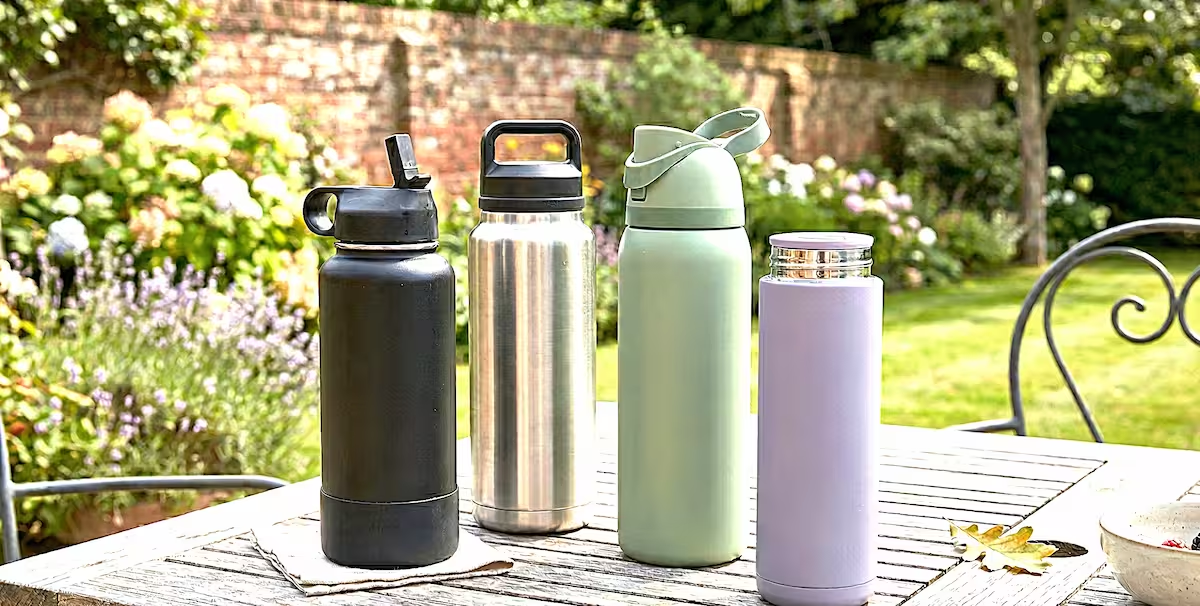
Walk through any airport terminal, modern corporate office, or boutique gym, and you will see them: insulated, vividly colored cylinders resting on desks, hooked onto backpacks, and clutched alongside smartphones. The reusable water bottles are no longer just a container for liquids. It has become a highly visible consumer object a daily companion that signals far more than just a desire to stay hydrated.
By December 2025, the humble water bottle has completed a remarkable evolution: from a basic hydration tool to a highly visible marker of identity, class, and wellness.
But as these bottles shift from practical utility to must-have accessories, a crucial question arises: Does the rapid commercialization of a “green” product actually help the environment, or does it simply mask a new form of overconsumption?
The Trend: From Utility to Visible Consumer Object
Over the past decade, the reusable water bottles has experienced a massive cultural and economic elevation. This growth isn’t just driven by people replacing lost bottles; it is fueled by the transformation of the bottle into a lifestyle product.
Brands have successfully merged hydration with the “Everyday Carry” (EDC) aesthetic, releasing seasonal colorways, limited-edition collaborations, and distinct silhouettes that turn a basic vessel into a collectible item.
This trend is playing out against a backdrop of staggering single-use consumption. A comprehensive bottled water report by UNU-INWEH highlights the explosive growth of the bottled water industry and its severe resource impacts. T
he report notes that the world currently generates around 600 billion plastic bottles annually amounting to approximately 25 million tonnes of plastic waste deepening our global dependence on single-use plastics.
The Status Symbol Angle: Identity, Design, and Belonging
Today, the bottle you carry serves as a visible marker of identity and social belonging. A high-end, $50 stainless steel bottle signals disposable income, an awareness of wellness trends, and an outward commitment to environmentalism.
Different environments demand different aesthetics:
- The Boardroom: Minimalist, muted bottles project a polished, eco-conscious corporate identity.
- The Gym: Rugged, high-capacity jugs align with hardcore fitness and supplement culture.
- The Campus: Sticker-covered bottles act as portable billboards for personal beliefs and social affiliations.
The result is a growing consumer habit of purchasing multiple bottles to match different bags, outfits, or daily activities.
However, buying a premium brand does not automatically equate to making a greener choice; it simply means participating in a highly designed segment of consumer culture.
The Sustainability Reality Check: The Data on Plastics
The environmental promise of a refillable bottle relies entirely on a single behavioral metric: actual, repeated reuse.
Buying a fleet of reusable bottles to cycle through as fashion accessories fundamentally weakens their sustainability. To understand why, we have to look at the broader crisis. The UNEP provides crucial context on the sheer scale of global plastic pollution, estimating that 19-23 million tonnes of plastic waste leak into aquatic ecosystems each year.
To combat this, we cannot simply produce more goods, even if they are reusable. The OECD’s Global Plastics Outlook makes it clear that without intervention, global plastics production and waste will increase by 70% by 2040.
The OECD stresses that policy direction must address the entire lifecycle production, waste, and recycling.
Material and Life-Cycle Facts
To understand the true environmental impact of your status bottle, we have to look at the “break-even point” the number of times a reusable bottle must be used to offset the carbon footprint and resource extraction of its production compared to a single-use plastic bottle. The material dictates the math:
- Stainless Steel: Offers the highest durability but requires significant energy for mining, smelting, and manufacturing. A heavy thermal cup typically needs to be used around 66 times to break even with a single-use alternative.
- Aluminium: Lighter and generally less energy-intensive to produce than steel, but it must be internally lined to prevent chemical leaching, which can complicate end-of-life recycling.
- Plastic (Reusable): Has a lower upfront manufacturing footprint, breaking even in roughly 20 to 25 uses. However, it suffers from a shorter lifespan and raises concerns over microplastic shedding.
- Glass: Offers excellent recyclability and no flavor transfer, but its heavier weight significantly increases shipping emissions.
If a consumer purchases a heavy-duty reusable bottle but leaves it in a cupboard after a month, the environmental cost of that bottle far exceeds that of a disposable one.
Global Policy Responses: Forcing the Shift
While consumer trends fluctuate, international governments are implementing strict regulations to force the market away from single-use plastics, creating an environment where reusable alternatives are a necessity, not just a luxury.
- The European Standard: The European Commission has established hard policy facts through its Single-Use Plastics Directive. This includes a strict 77% separate collection target for plastic bottles by 2025 (increasing to 90% by 2029), alongside a mandate that PET beverage bottles contain at least 25% recycled plastic.
- Regional Action: We are seeing aggressive domestic policies follow suit. For example, the New Zealand Ministry for the Environment has rolled out a comprehensive, multi-stage plastic phase-out. By legally restricting the sale of hard-to-recycle and single-use items, these policies are actively reshaping consumer waste behavior and retail supply chains.
The Business & Economic Ripple Effect
The shift from single-use plastics to durable status symbols is not just an environmental story; it is a major economic pivot.
As global policies tighten, the cost of doing business with single-use plastics is rising due to extended producer responsibility (EPR) taxes and outright bans.
For retail businesses, importers, and supply chain managers, the reusable bottle boom represents a lucrative category of physical goods with high profit margins.
However, businesses looking to import or manufacture these products must navigate increasingly complex regulations regarding material sourcing, ethical supply chains, and end-of-life recyclability.
The companies that will thrive in the late 2020s are those that can bridge the gap between consumer desire for a premium “status” aesthetic and the incoming wave of strict, government-mandated circular economy laws.
Conclusion
The commercial success of reusable water bottles is not inherently a victory for the planet. The environmental benefit depends entirely on consumer restraint and infrastructure trust.
If the trend normalizes the rejection of single-use plastics, it is a net positive. But if it simply shifts overconsumption from disposable plastic to heavy metals, the environmental math fails.
Ultimately, the refillable bottle is most sustainable when it stops being a trend purchase and becomes a long-term habit.
Editorial Note: This article is intended for informational and educational purposes only. It provides analytical insights based on publicly available information and does not constitute financial, legal, or political advice. Readers are encouraged to consult official sources and expert advisors for verified guidance.
Southeast Asia Charts Bold Course to End Plastic Pollution by 2050
Danish Scientists Turn Plastic Trash into Climate-Fighting Tech