

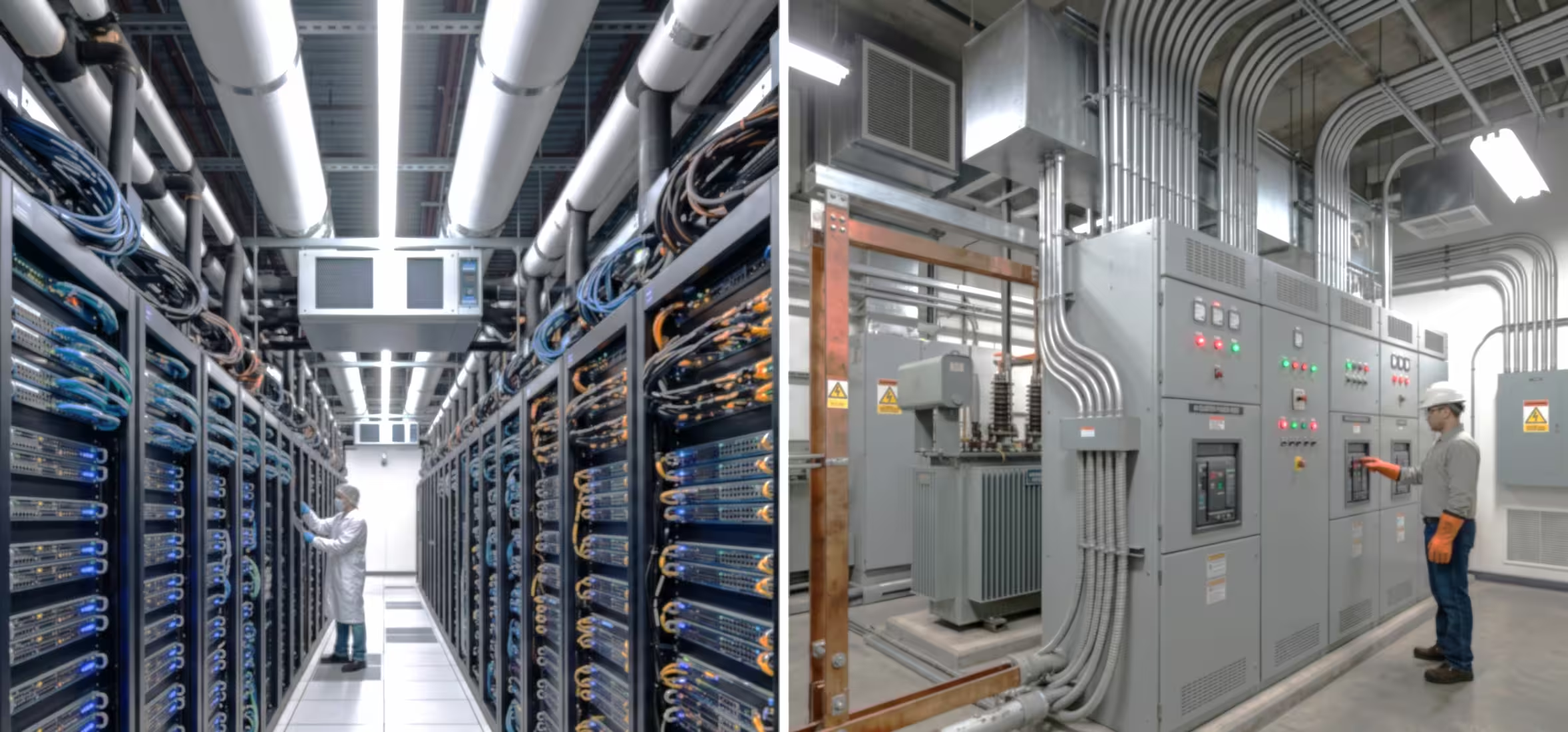
As digital demand surges, data centers have become the backbone of modern infrastructure powering everything from cloud services to AI. But behind the scenes, they’re also massive energy consumers.
IT energy efficiency refers to how effectively computing equipment like servers, storage, and networking gear uses electricity to perform tasks. In most data center’s, IT hardware consumes around 60% of total energy, with the rest going to cooling and support systems.
With AI models growing larger and more complex, energy use is skyrocketing. These systems require thousands of chips and vast memory, generating intense heat and straining power grids. Without smarter energy management, data center’s risk becoming unsustainable.
Improving IT efficiency means:
- Using high-performance, low-power chips
- Optimizing workloads to reduce idle time
- Adopting intelligent cooling systems
The goal? Lower costs, reduced carbon footprint, and a future-ready digital ecosystem.
Read more about | AI’s Ballooning Energy Consumption Puts Spotlight On Data Center Efficiency
Scaling Responsibly in the Age of Intelligence
While the foundational goals of efficiency better chips and smarter cooling remain critical, the sheer scale of the challenge has shifted from a corporate “best practice” to a matter of national and global energy security. Recent data from the International Energy Agency (IEA) reveals a startling trajectory: global electricity consumption from data centers, which stood at approximately 415 Terawatt-hours (TWh) in 2024, is projected to potentially double by 2030, reaching up to 945 TWh. This surge is almost entirely driven by the “AI explosion,” where a single ChatGPT query can consume nearly ten times the electricity of a traditional Google search.
The Grid Under Pressure
The strain on infrastructure is no longer theoretical. In 2024 and 2025, regions with high concentrations of digital infrastructure, such as Ireland and Singapore, faced critical crossroads. In Ireland, data centers now account for 22% of total national electricity consumption, leading to intensified debates over grid stability and the prioritization of power for citizens versus servers.
According to the United Nations Environment Programme (UNEP), the “triple planetary crisis”climate change, biodiversity loss, and pollution is being exacerbated by this digital hunger. UNEP experts highlight that in some regions, wholesale electricity prices have risen by over 200% in areas surrounding massive data hubs, effectively placing a “digital tax” on local communities.
Regulatory Teeth: From Guidelines to Mandates
Governments are moving beyond mere encouragement. The European Union has taken a decisive lead with the Energy Efficiency Directive (EED). As of 2025, data center operators in the EU with an IT power demand of 500kW or more are legally mandated to report their energy performance, water usage, and waste heat recovery levels to a central European database.
Furthermore, by July 2026, new facilities in the EU will be required to meet strict “waste heat reuse” targets. This means that instead of venting the heat generated by AI training into the atmosphere, data centers must redirect that energy to heat local homes or industrial processes. This circular energy economy is becoming a prerequisite for building permits globally.
The Shift to “Energy-First” Architecture
In the United States, the Department of Energy (DOE) and recent executive actions have pivoted toward streamlining “clean” data center infrastructure. The focus is shifting toward “Energy-First” architecture, which includes:
- AI for AI: Using machine learning to predict peak loads and adjust cooling in real-time, often reducing cooling energy consumption by up to 40%.
- The Rise of Liquid Cooling: Traditional air-conditioning is becoming obsolete for AI. Direct-to-chip liquid cooling is now being adopted to handle the 40-60kW power density of modern GPU racks nearly four times the density of traditional servers.
- On-Site Power Generation: To bypass aging grids, major providers are increasingly investing in small modular reactors (SMRs) and massive on-site battery storage systems to ensure they are “grid-neutral” during peak hours.
A Shared Responsibility
The path forward requires a transparency that the industry has historically resisted. The IEA’s 2026 Electricity Report emphasizes that “there is no AI without energy.” If the digital ecosystem is to remain a tool for progress rather than a burden on the planet, efficiency must be treated as a core performance metric, equal in importance to processing speed or model accuracy.
As we look toward 2030, the benchmark for success will not be how large our models are, but how little they cost the Earth. The transition from “growth at all costs” to “growth within limits” is the defining challenge of the silicon age.
Editorial Note: This article is intended for informational and educational purposes only. It provides analytical insights based on publicly available information and does not constitute financial, legal, or political advice. Readers are encouraged to consult official sources and expert advisors for verified guidance.
Singapore Sets Global Benchmark with New Data Centre Efficiency Standard
AI’s Thirst: Understanding Water Usage in Artificial Intelligence