

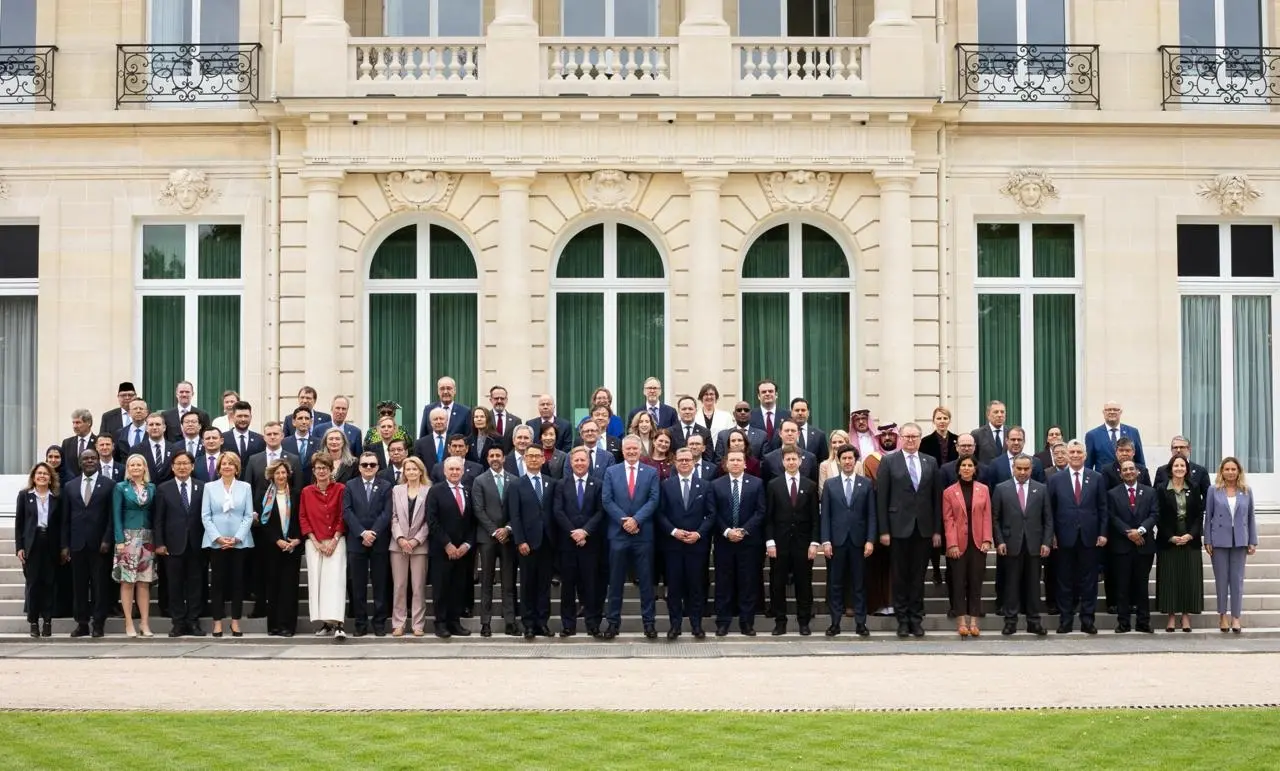
OECD Ministerial Council Meeting 2026 Concludes in Paris
June , 2026 – Ministers have concluded the 2026 OECD Council Meeting at Ministerial Level, held on 3 and 4 June at the OECD headquarters in Paris.
Finland chaired the two-day meeting, while New Zealand and the Republic of Korea served as Vice-Chairs. Discussions were held under the theme, “Getting Industrial Policies Right for Open Markets, Growth and Prosperity.”
The meeting brought together ministers responsible for finance, the economy, foreign affairs, trade and other policy areas from OECD member and partner countries. Representatives of international organizations also participated.
Leaders Open the 2026 Ministerial Meeting
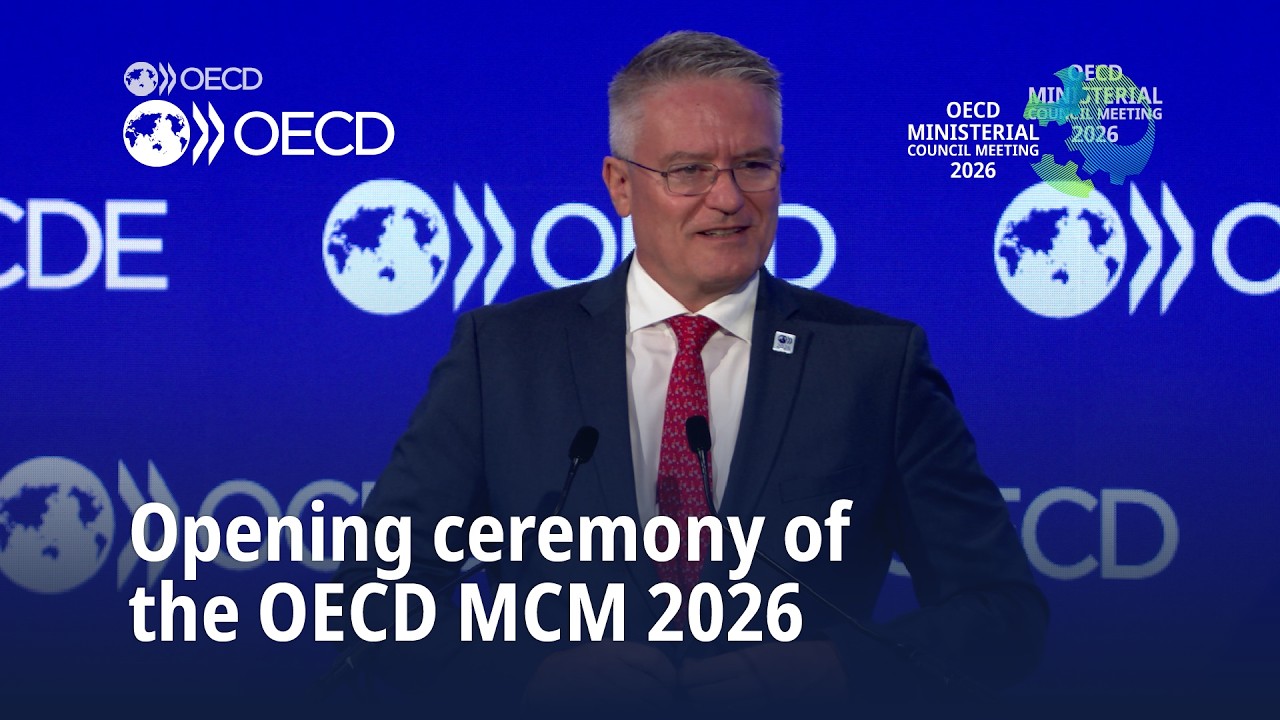
The meeting was opened by OECD Secretary-General Mathias Cormann, Finnish Prime Minister Petteri Orpo, Republic of Korea Second Vice Minister of Finance and Economy Chang Huh, New Zealand Minister for Trade and Investment Todd McClay, and Ukraine’s Deputy Prime Minister for European and Euro-Atlantic Integration Taras Kachka.
The discussions took place as governments consider how industrial policies can support economic resilience, productivity, competitiveness and technological development while maintaining open and competitive markets.
Ministers examined how industrial strategies and effective competition could contribute to long-term economic growth and improved living standards.
The meeting also addressed fiscal responsibility, regulation, investment, skills development, digital and emerging technologies, and the relationship between industrial policies and open and fair trade.
New Zealand Trade and Investment Minister Todd McClay highlighted the country’s participation as a Vice-Chair of the 2026 OECD Ministerial Council Meeting. During the first day, McClay held seven bilateral meetings and delivered three interventions across the meeting’s sessions.
He said effective industrial policy should create the conditions needed for innovation, competition and resilience, enabling businesses and markets to prosper. McClay also cautioned that industrial policy should not be used to distort global competition, divide markets or weaken the international trading system.
New Zealand’s participation reinforced its support for open markets, fair competition and rules-based global trade as foundations for shared prosperity.
OECD Recommendation on Quantum Technologies Welcomed
During the meeting, the Ministerial Council welcomed a new OECD Recommendation of the Council on Quantum Technologies.
Ministers also noted the implementation plan for the OECD Strategic Framework for Latin America and the Caribbean, along with progress towards strengthening the organization’s partnership with Africa.
The Council reviewed the OECD Secretary-General’s Strategic Orientations for 2027–2030 and a report covering the organization’s Corporate Reform and Management Excellence Agenda.
Other documents considered included the Secretary-General’s report on OECD global relations and the annual update on OECD standard-setting activities.
Industrial Policy and Economic Reports Presented
A number of OECD publications were released ahead of the meeting to support ministerial discussions.
These included the latest OECD Economic Outlook and the OECD MAGIC Database of Industrial Subsidies.
Ministers also noted reports and publications examining industrial strategies, regulation, taxation, business activity and economic participation.
The materials included a report on quantifying industrial strategies, the OECD Steel Outlook 2026 and the OECD Industrial Policy Handbook.
The publication Smart Regulations, Strong Business: Enabling Growth and Societal Protection in a Fast-Changing World was also presented, together with a report on corporate income taxation and business dynamism and the OECD Dashboard on Gender Gaps.
Key Points
-
Finland chaired the 2026 OECD Ministerial Council Meeting, with New Zealand and South Korea as Vice-Chairs.
-
The meeting took place on 3–4 June 2026 in Paris.
-
The main theme was “Getting Industrial Policies Right for Open Markets, Growth and Prosperity.”
-
Ministers discussed how industrial policy can improve resilience, productivity, competitiveness and economic security.
-
A major focus was balancing industrial support with open markets, fair trade, competition and fiscal responsibility.
-
The OECD welcomed a new Recommendation on Quantum Technologies.
-
Ministers reviewed progress on stronger OECD partnerships with Africa and Latin America and the Caribbean.
-
Important reports covered industrial subsidies, steel, regulation, corporate taxation, gender gaps and economic growth.
-
Artificial intelligence featured prominently through new work on responsible AI, AI policy tools and workforce capability indicators.
-
New Zealand’s role is especially relevant because Trade and Investment Minister Todd McClay helped open the meeting.
Artificial Intelligence Tools and Guidance Discussed
Artificial intelligence was another area covered during the Ministerial Council Meeting. Relevant OECD outputs included due diligence guidance for responsible artificial intelligence, a pilot version of the AI Policy Toolkit and a report mapping OECD AI Capability Indicators to occupations. These resources are intended to support policymakers as digital and emerging technologies increasingly influence industries, employment and economic development. Supporting documents covering the meeting’s outcomes and principal issues will be made available through the OECD Ministerial Council Meeting platform. Additional information about OECD recommendations
Editorial Note: This article is intended for informational and educational purposes only. It provides analytical insights based on publicly available information and does not constitute financial, legal, or political advice. Readers are encouraged to consult official sources and expert advisors for verified guidance.
Mexico’s Economic Resilience: OECD Projects Growth Recovery Amid Structural Reform Push
Beyond the Cold War: How Mark Rutte is Mapping a Stronger, European-Led NATO from Munich