

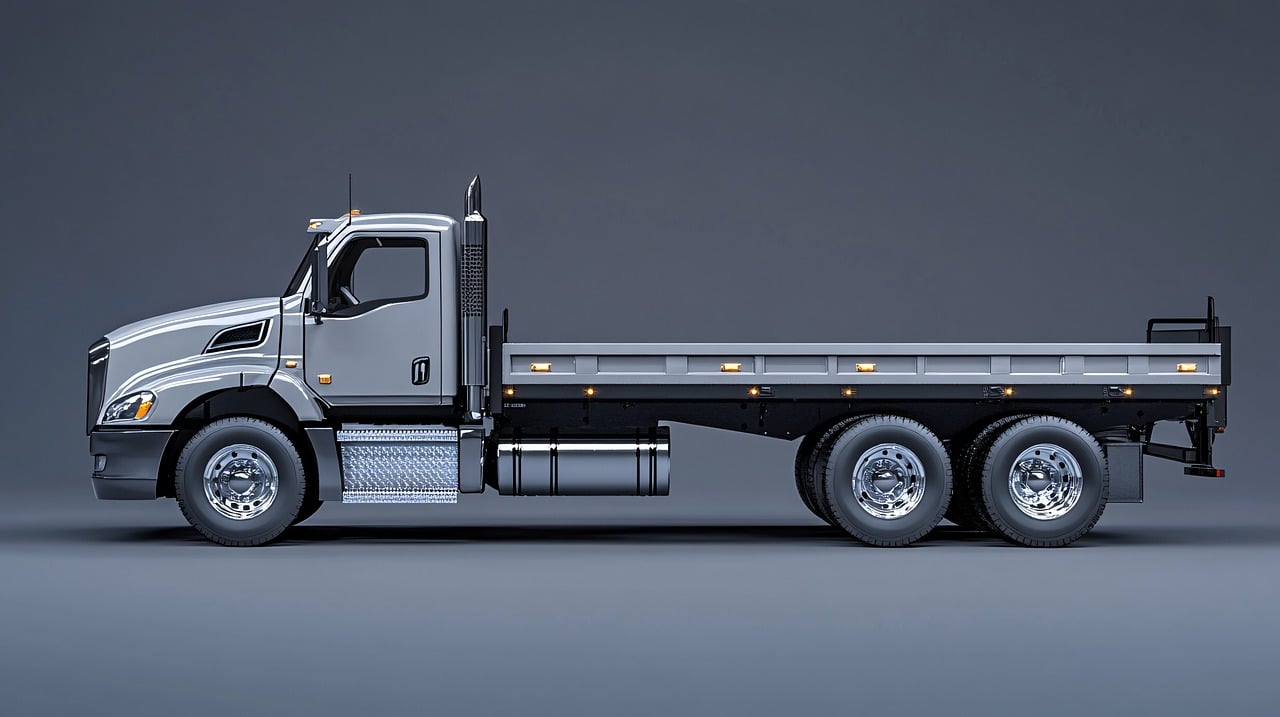
Government Launches Fund to Drive Adoption of Low Emission Heavy Vehicles (LEHVF)
In a bold step towards a sustainable future, the government has unveiled the Low Emissions Heavy Vehicles Fund (LEHVF). This initiative, announced by Energy Minister Simeon Brown and Climate Change Minister Simon Watts, aims to foster innovation and reduce the financial burden of adopting clean technologies in the heavy vehicle sector.
“Boosting economic growth and productivity is a key part of the Government’s plan to rebuild the economy,” said Minister Brown.
“The LEHVF will offset upfront costs for businesses, enabling them to increase productivity with vehicles that are cheaper to operate.”
As part of Budget 2024, the government has allocated $27.75 million to subsidize the purchase prices of low and zero-emission heavy vehicles. This funding is designed to address the primary barriers to adoption: high upfront costs and the uncertainty surrounding total cost of ownership.
To tackle these challenges, the LEHVF will cover up to 25% of the cost of new zero and low-emission heavy vehicles, as well as up to 25% of the cost to convert existing high-emission vehicles to low-emission technology.
“By offsetting up to a quarter of these vehicles’ purchase price, the Government is encouraging businesses to trial these new technologies,” Minister Watts explained. “This will not only reduce day-to-day operating costs but also ultimately save money for consumers at the checkout.”
This initiative marks a significant investment in the future of sustainable transport, aiming to make low-emission heavy vehicles a viable option for businesses across the country.
The Economic and Environmental Catalyst
The introduction of the LEHVF is more than a simple subsidy; it is a strategic intervention in New Zealand’s supply chain resilience. For decades, the heavy transport sector has been tethered to the volatility of global fossil fuel markets.
By de-risking the transition to electric and hydrogen-powered fleets, the government is effectively “future-proofing” the logistics industry. When transport operators lower their energy overheads through cheaper domestic electricity or renewable fuels, the inflationary pressure on every-day goods from milk to timber begins to ease.
This creates a trickle-down economic benefit that strengthens the purchasing power of every New Zealander.
Beyond the balance sheet, the importance of this fund lies in its role as a technological bridge. The heavy vehicle sector is responsible for a disproportionate share of transport emissions, yet it is often the hardest to decarbonize due to the immense power requirements of freight. By funding up to 25% of conversion costs, the LEHVF recognizes that the “greenest” vehicle is often the one already on the road, provided it can be retrofitted with modern, clean technology.
This pragmatic approach prevents the premature scrapping of assets while accelerating the adoption of zero-emission drivetrains.
Furthermore, this initiative signals a shift toward a “high-tech, low-carbon” infrastructure. As businesses trial these heavy vehicles, they generate critical data on charging requirements and maintenance cycles, providing the private sector with the confidence needed for mass-scale adoption.
In doing so, New Zealand is not just meeting climate targets; it is positioning itself as a regional leader in sustainable logistics, ensuring that our trade remains competitive in a global market that increasingly demands “green” credentials for exported products. Ultimately, the LEHVF is the spark required to turn environmental necessity into a tangible economic advantage.
Editorial Note: This article is intended for informational and educational purposes only. It provides analytical insights based on publicly available information and does not constitute financial, legal, or political advice. Readers are encouraged to consult official sources and expert advisors for verified guidance.