

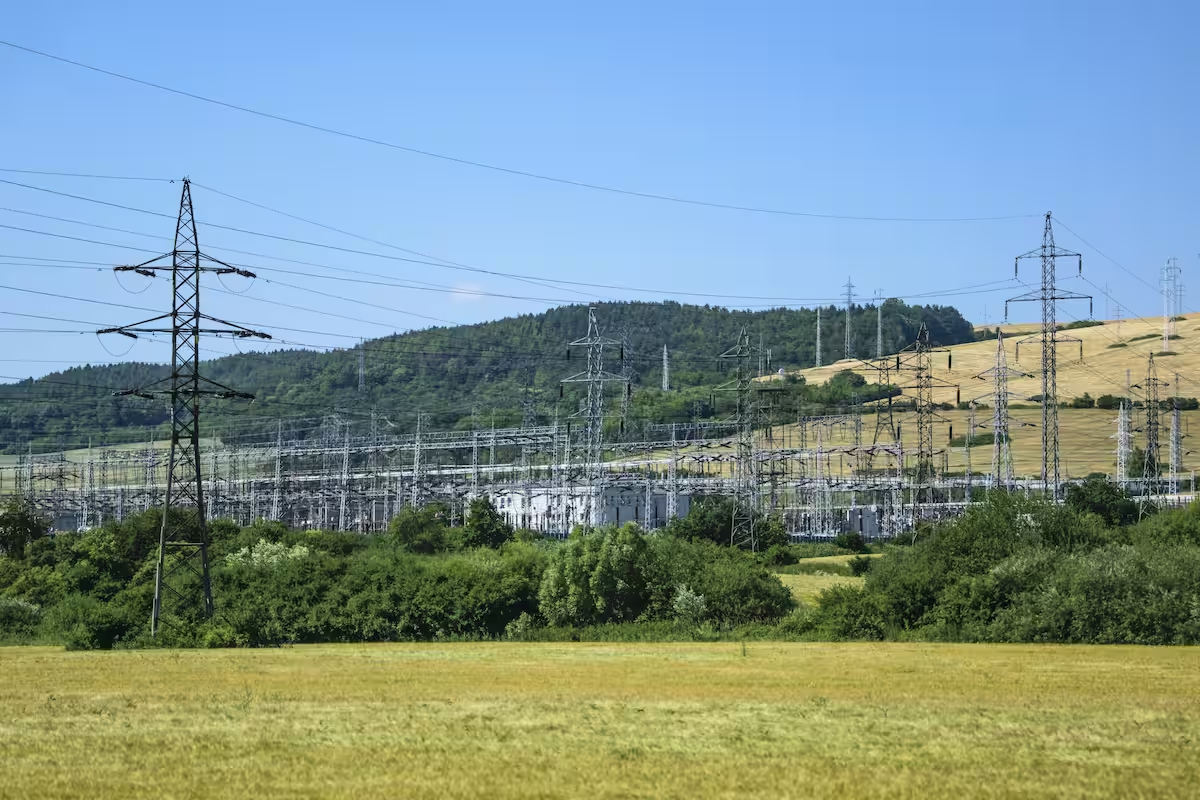
According to the newly released Re-Energise 26 report, co-authored by Energy Resources Aotearoa and the Electricity Engineers’ Association (EEA), the nation faces a sobering reality. While New Zealand has seen record-breaking renewable generation this year, the report warns that without “the right people, in the right roles,” we risk stalling the growth needed to secure our energy future.Addressing the critical shortage of specialized engineers and technical expertise is now the primary hurdle for the sector. Only by bridging this immense workforce gap can the nation realistically deliver the infrastructure required to power NZ’s energy future and meet its 2050 climate goals.
New Zealand’s shift toward a high-tech, electrified future has hit a critical bottleneck, and it isn’t the technology it’s the talent.
The Numbers Behind the Shortage
The report, which utilized data and analytical insights from the Ministry of Business, Innovation and Employment (MBIE), identifies a current workforce of over 13,800 full-time employees and 4,000 contractors. However, the “pipeline” is showing signs of strain. As we move through 2026, several key factors are creating a perfect storm:
Note: This isn’t just an estimate as detailed in the workforce stocktake on page 22 of Re-Energise 26 Report, the report’s findings are grounded in a massive industry survey. Data was gathered from 54 major organizations, representing a combined workforce of over 13,800 full-time employees and 4,000 specialist contractors.”
- The Retirement Wave: A significant portion of the current workforce is nearing retirement, with roughly 25% over the age of 55.
- Supervision Bottlenecks: A lack of senior mentors is slowing down the training of new apprentices, creating a “mentoring gap.”
- Regional Risks: In a recent Beehive press release, Social Development and Employment Minister Hon Louise Upston highlighted the danger in regions with declining industries, where skilled workers might be lost before new energy opportunities arise.
A Unified “Industry Skills Action Plan”
Minister Upston emphasized that the Government is moving away from “siloed” initiatives. The Re-Energise 26 findings call for an Industry Skills Action Plan built on four pillars: Attract, Develop, Collaborate, and Retain.
The goal is to make energy careers visible to a more diverse group of New Zealanders and to ensure that training pathways are “future-proofed.” This means shifting from traditional models to flexible, digital-native-friendly learning that appeals to the next generation of technicians and engineers.
What Happens Next?
The conversation doesn’t end with a PDF. Industry leaders are already preparing for the Energy Workforce Summit in May 2026, where the focus will shift from identifying problems to assigning specific delivery leads for these goals.
As the Minister put it, the focus is now on “fixing the basics and building the future.” For New Zealand to remain competitive and resilient, investing in the people behind the power is no longer optional it is the mission.
New Zealand’s Diverse Energy Landscape: A Commitment to Sustainability
Revolutionizing Energy: The Potential of Supercritical Geothermal Technology
Editorial Note: This article is intended for informational and educational purposes only. It provides analytical insights based on publicly available information and does not constitute financial, legal, or political advice. Readers are encouraged to consult official sources and expert advisors for verified guidance.