

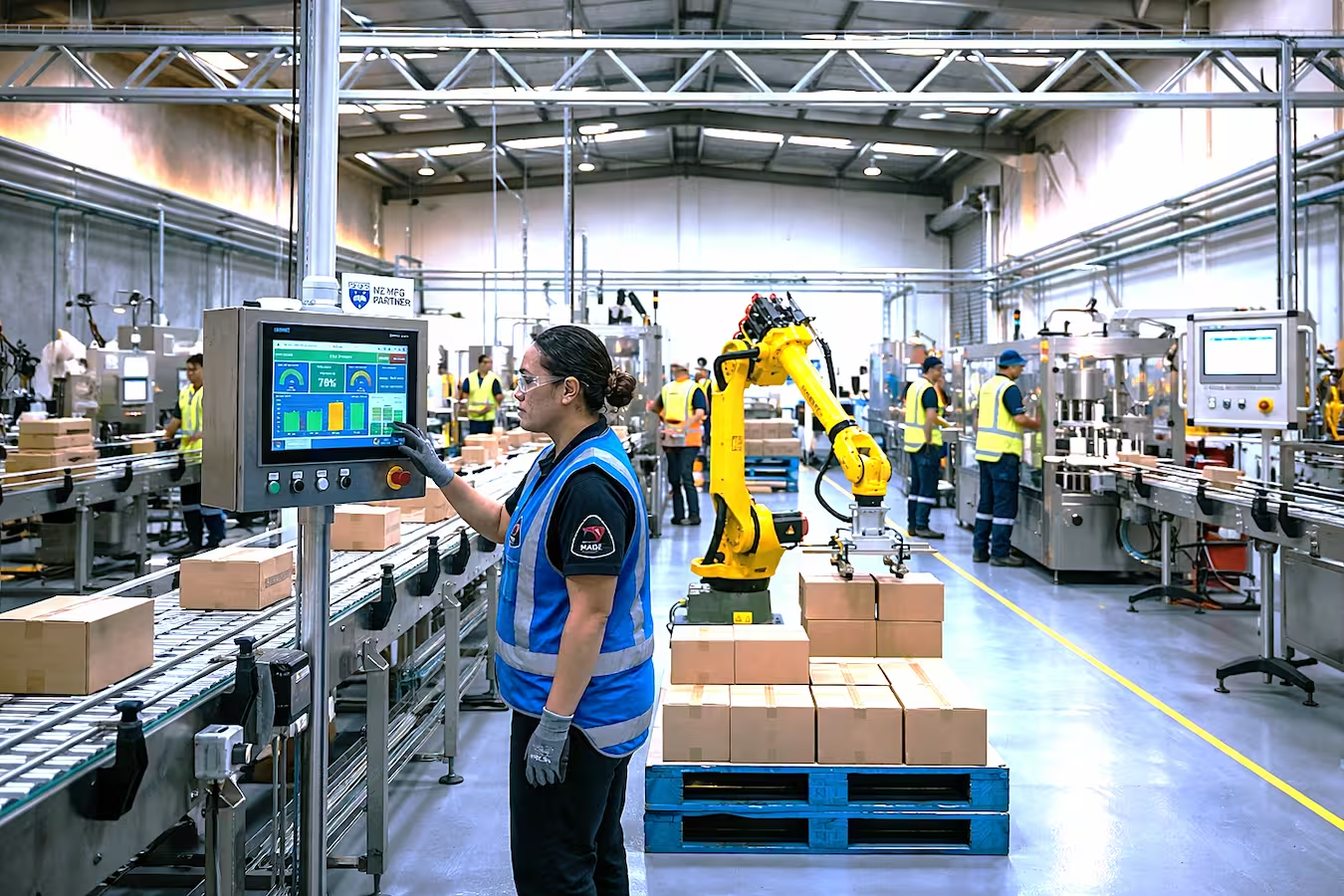
February , 2026 : The New Zealand Government has announced a strategic three-year funding package to expand the Digital Manufacturing Light New Zealand (DM Light) programme, aiming to bridge the “digital divide” for small and medium-sized manufacturers.
Announced by Small Business and Manufacturing Minister Chris Penk, the initiative is designed to help local factories compete with overseas rivals who are already reaping the benefits of AI, robotics, and cloud computing.
Smart Solutions on a “Shoestring”
Unlike traditional tech upgrades that require massive capital investment, the DM Light programme developed by the University of Auckland focuses on low-cost, off-the-shelf technologies.
The initiative is adapted from the successful “Digital Manufacturing on a Shoestring” model developed by the Institute for Manufacturing (IfM) at the University of Cambridge. It helps businesses integrate:
- Open-source software to track machine performance.
- Low-cost sensors to identify production bottlenecks.
- Real-time data tools to replace manual, paper-based processes.
“New Zealand manufacturers need these tools to sharpen their competitive edge, but many are held back by cost or lack of in-house expertise,” says Minister Penk. “This is about working smarter, not just harder.”
Regional Rollout and Economic Impact
Starting 1 April 2026, the government will provide up to $475,000 per year to facilitate the expansion. The rollout targets the “manufacturing heartland” of New Zealand, focusing on Auckland, Waikato, Northland, and the Bay of Plenty. These regions represent approximately 55% of the nation’s manufacturing sector.
The drive for digitalization is also a national economic play. Research suggests that faster digital adoption among SMEs could lift New Zealand’s GDP by a staggering $8.6 billion.
How it Works for Businesses
Participating manufacturers receive a tailored assessment of their needs, hands-on installation assistance, and staff training. This ensures that the digital skills remain within the business for long-term sustainability.
Note : Contact: Manufacturers can inquire by emailing dmlight@auckland.ac.nz.
- Read More: For a deep dive into the data, view the official Digital Manufacturing Light Insights Paper (provided via the official Beehive release).
Why Automation is a “Must-Have” for New Zealand
The expansion of the DM Light programme comes at a critical time for the New Zealand economy. Local manufacturers are currently facing a “perfect storm” of challenges that digital tools are uniquely equipped to solve.
- Beating the Labor Shortage
New Zealand’s manufacturing sector has seen a steady decline in filled jobs, with Stats NZ reporting a 1.6% drop (over 3,800 positions) in the last year alone.
- The Solution: Automation doesn’t just replace workers; it augments them. By using “cobots” (collaborative robots) for repetitive or dangerous tasks, businesses can reassign their limited staff to higher-value roles, reducing burnout and the impact of the shrinking labor pool.
- Offsetting High Shipping and Logistics Costs
Being at the bottom of the world, New Zealand businesses face some of the highest international freight costs globally. To remain competitive, local factories must find savings elsewhere on the factory floor.
- The Solution: According to NZIER research, digital tools create a “single source of truth” in the supply chain. By using real-time data to identify machine downtime or material waste, manufacturers can lower their “per-unit” cost, making their exports more attractive even after shipping fees are added.
- The “Productivity Gap”
Historically, New Zealand’s productivity has lagged behind other advanced economies. The Xero/NZIER report highlights that for every $1.00 an SME spends on digital tools, they see a return of $2.40 to $3.10 in productivity gains.
- The Solution: DM Light’s focus on “off-the-shelf” tech means businesses don’t need years to see a return. They can fix a specific bottleneck (like manual inventory counting) in weeks, leading to immediate cash flow improvements.
Editorial Note: This article is intended for informational and educational purposes only. It provides analytical insights based on publicly available information and does not constitute financial, legal, or political advice. Readers are encouraged to consult official sources and expert advisors for verified guidance.
New Zealand’s Innovative Approach to Manufacturing Workforce Development