

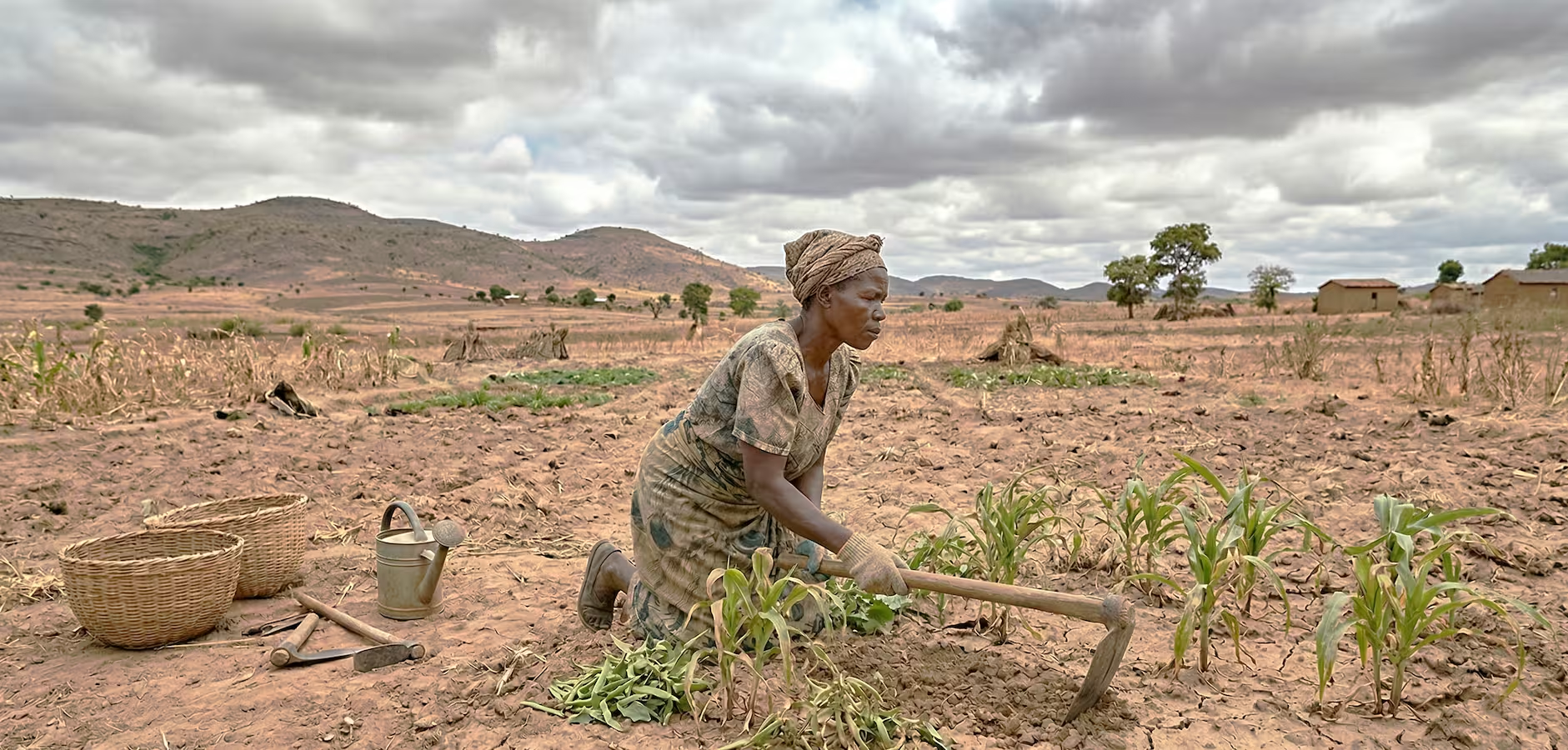
Introduction: Climate Change and Global Food Security
The relationship between climate change and global food security is becoming one of the defining policy challenges of the 21st century. Rising temperatures, shifting precipitation patterns, extreme weather events, and environmental degradation are reshaping agricultural productivity worldwide. As global populations continue to grow, ensuring stable food supply systems amid climate uncertainty has become a central concern for governments, farmers, multilateral institutions, and financial markets.
Food security is no longer purely an agricultural issue it intersects with trade systems, energy markets, water availability, geopolitical stability, and economic development. In a globally interconnected economy, disruptions in one region can rapidly influence prices and availability elsewhere.
Understanding climate change and global food security requires examining environmental shifts, technological adaptation, policy frameworks, and international coordination.
Defining Global Food Security
Global food security exists when:
- Food is available
- Access is affordable
- Supply chains are stable
- Nutrition standards are maintained
Organizations such as the Food and Agriculture Organization define food security as consistent physical and economic access to sufficient, safe, and nutritious food.
Climate stress threatens all four pillars simultaneously.
Temperature Rise and Agricultural Productivity
Rising global temperatures affect crop yields in several ways:
- Heat stress reduces productivity
- Shorter growing seasons alter planting cycles
- Increased evaporation impacts soil moisture
- Pest patterns shift geographically
Some regions may experience temporary productivity gains, but many agricultural zones face long-term yield volatility.
The Intergovernmental Panel on Climate Change has identified agriculture as highly sensitive to climate variability.
Extreme Weather and Supply Volatility
Climate change increases the frequency of:
- Droughts
- Floods
- Hurricanes
- Wildfires
These events disrupt planting, harvesting, storage, and transportation.
As explored in global supply chains after COVID and conflicts, modern food systems rely on tightly integrated logistics networks. Climate-driven disruption adds further strain to these networks.
Volatility in one major exporter can influence global grain prices within weeks.
Water Scarcity and Irrigation Challenges
Agriculture consumes approximately 70% of global freshwater withdrawals.
Rising temperatures and changing rainfall patterns intensify water scarcity in many regions.
Countries such as India and Brazil face regional water management pressures that directly affect agricultural stability.
Water governance is increasingly central to climate adaptation policy.
Trade, Energy, and Food Prices
Energy markets influence food production costs through:
- Fertilizer manufacturing
- Transportation fuel
- Irrigation systems
As discussed in global inflation changing everyday life, food price volatility often contributes to broader inflationary pressure.
Climate disruption amplifies these economic feedback loops.
Technology and Climate Adaptation
Technological innovation plays a critical role in addressing climate change and global food security.
Emerging tools include:
- Climate-resistant crop varieties
- Precision agriculture systems
- Satellite monitoring
- AI-driven yield forecasting
As seen in artificial intelligence changing global employment, digital systems increasingly influence agricultural productivity and resource efficiency.
Technology supports adaptation but requires investment and infrastructure.
Geopolitical Implications
Food insecurity can trigger:
- Social unrest
- Migration pressure
- Political instability
Climate stress may therefore influence geopolitical stability, especially in vulnerable regions.
International cooperation through institutions such as the World Bank supports climate resilience funding initiatives.
Food security intersects with global governance.
Climate Finance and Policy Frameworks
Governments are developing:
- Carbon pricing systems
- Sustainable agriculture subsidies
- Climate adaptation funds
- Emissions reduction targets
Balancing climate mitigation with food production remains complex.
Overly restrictive policies may raise costs; insufficient adaptation may increase risk exposure.
The Role of Emerging Economies
Emerging economies often face disproportionate climate vulnerability while contributing less historically to global emissions.
Agricultural adaptation capacity depends on:
- Infrastructure investment
- Access to climate finance
- Technology transfer
- Trade stability
Multipolar economic coordination will shape future resilience strategies.
Future Outlook: Resilient Food Systems
The future of climate change and global food security will likely involve:
- Diversified crop systems
- Regionalized supply chains
- Digital monitoring networks
- Sustainable irrigation models
- Climate-resilient investment frameworks
Global coordination remains essential.
The challenge is not simply producing more food, but ensuring resilient and equitable distribution under environmental stress.
Frequently Asked Questions
How does climate change affect food production?
Rising temperatures, shifting rainfall patterns, and extreme weather events can reduce crop yields, disrupt planting cycles, and increase production volatility.
Which regions are most vulnerable to climate-related food insecurity?
Regions with high dependence on rain-fed agriculture and limited adaptive infrastructure face greater vulnerability.
Can technology solve food security challenges?
Technology can improve efficiency and resilience, but effective adaptation also requires policy coordination and investment.
Feeding a Changing Planet
Climate change and global food security represent interconnected challenges that extend beyond agriculture into economics, trade, migration, and governance. As environmental conditions evolve, food systems must adapt through innovation, policy reform, and international cooperation.
Ensuring stable and equitable food access in a warming world will require long-term strategic planning, balanced regulatory frameworks, and sustained investment in resilience.
Editorial Note: This article is intended for informational and educational purposes only. It provides analytical insights based on publicly available information and does not constitute financial, legal, or political advice. Readers are encouraged to consult official sources and expert advisors for verified guidance.
The Global Energy Transition: From Fossil Fuels to Renewables