

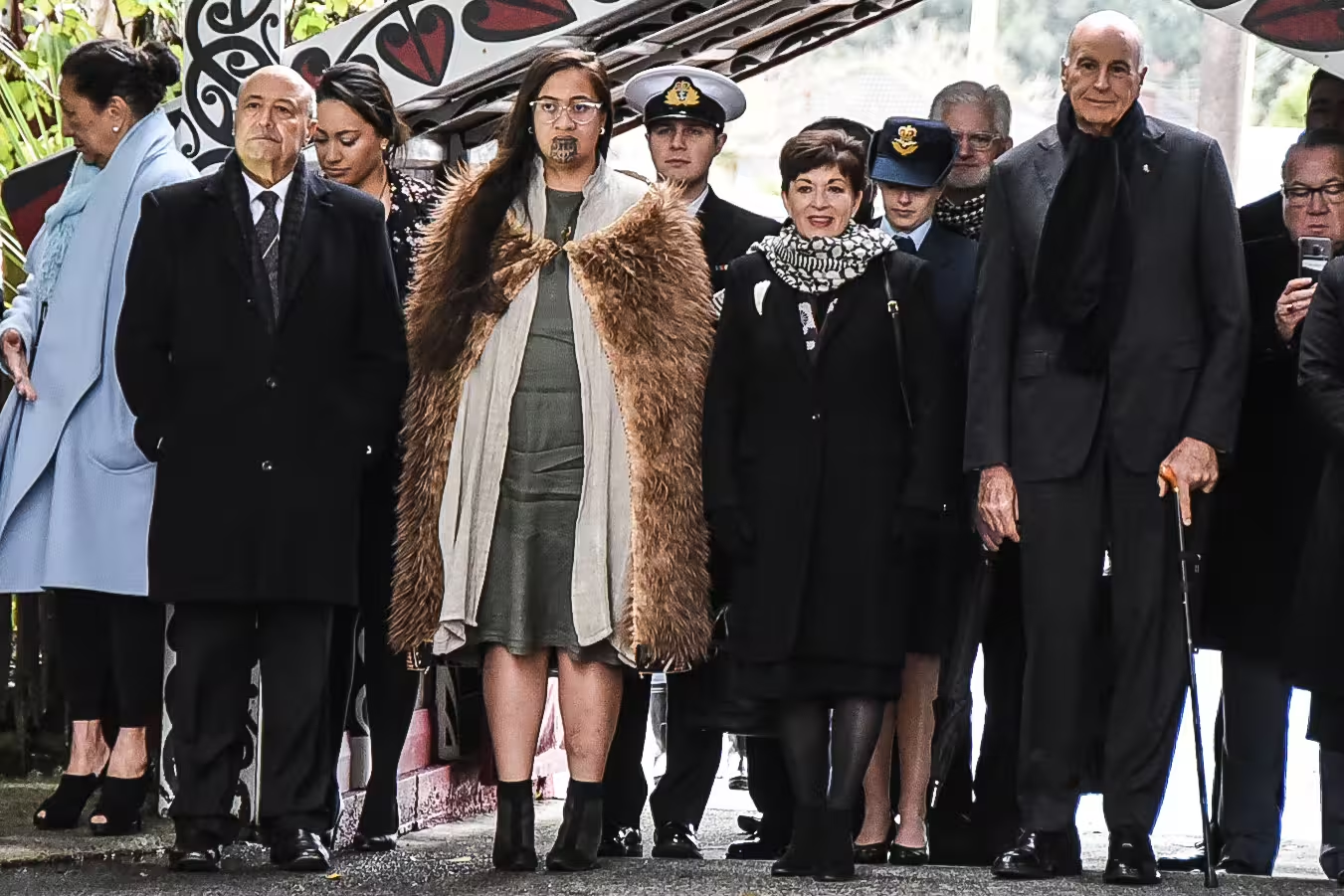
News | A New Era Begins: The Coronation of Queen Ngā Wai hono i te pō
Ngā Wai hono i te pō, meaning “a connector of peoples,” was raised in the Waikato region, deeply rooted in Māori culture. With a master’s degree in Māori cultural studies and a passion for kapa haka, she embodies the spirit of her ancestors.
Her leadership comes at a pivotal time, offering hope and unity to the Māori community.
Update | September 15 , 2024
On September 5, 2024 a historic transition took place at Tūrangawaewae Marae as Ngā Wai hono i te pō was crowned the new Māori Queen. At just 27 years old, she ascends to the throne as the eighth monarch and only the second woman to lead the Kīngitanga movement, succeeding her father, the late King Tūheitia Pōtatau Te Wherowhero VII.
The Path of a Scholar and Leader
Raised in the heart of the Waikato region, the Queen’s journey to the throne was paved with academic and cultural rigor. She attended the University of Waikato as a Sir Edmund Hillary Scholar, a prestigious program reserved for individuals who demonstrate a high level of academic achievement alongside leadership and excellence in creative arts.
She holds both a Bachelor of Arts and a Master of Arts in Tikanga Māori, focusing her studies on the preservation of traditional knowledge. Her passion for her heritage is perhaps most visible in her commitment to Kapa Haka; a long-standing member of the Ngā Pou o Taniwharau group, she has often described the art form as the “embodiment of Māoritanga.”
The Sacred Selection: The Tekau-mā-rua
While the role of the Māori monarch has stayed within the same lineage since 1858, it is not strictly hereditary. According to official Kīngitanga history, the successor is chosen by the Tekau-mā-rua (The Council of Twelve). Following a period of mourning and deliberation during King Tūheitia’s tangihanga, these tribal leaders from across Aotearoa confirmed Ngā Wai hono i te pō as the rightful successor.
A Ceremony Steeped in Tradition
The coronation was a profound blend of ancient ritual and modern hope. The ceremony, known as Te Whakawahinga, involved:
- Anointment: Archbishop Don Tamihere anointed the Queen with sacred oils, a rite used to bestow spiritual essence and prestige.
- The Sacred Bible: She was blessed with the original 1858 Bible used during the coronation of the first Māori King, Pōtatau Te Wherowhero, symbolizing the continuity of the movement.
- The Farewell: Following the enthronement, the Queen joined thousands in a waka procession along the Waikato River to Taupiri Mountain, where her father was laid to rest alongside his ancestors.
Leadership for a New Generation
The name “Ngā Wai hono i te pō” translates to “the joining of the waters at night,” a name bestowed to commemorate the symbolic union of the Waikato and Whanganui rivers.
Her leadership arrives at a pivotal moment. In her first major public address following her year of mourning, she emphasized a vision of economic self-sufficiency and cultural resilience. She challenged the community to “walk a new path,” moving from a stance of protest to one of diplomatic and economic empowerment.
As a leader who balances the ancient wisdom of her ancestors with a modern academic background, Queen Ngā Wai hono i te pō stands as a powerful symbol of unity, offering a “new dawn” for the Māori people and the nation of Aotearoa New Zealand.
Editorial Note: This article is intended for informational and educational purposes only. It provides analytical insights based on publicly available information and does not constitute financial, legal, or political advice. Readers are encouraged to consult official sources and expert advisors for verified guidance.
Peaceful Passing of Kīngi Tuheitia Pootatau Te Wherowhero VII