

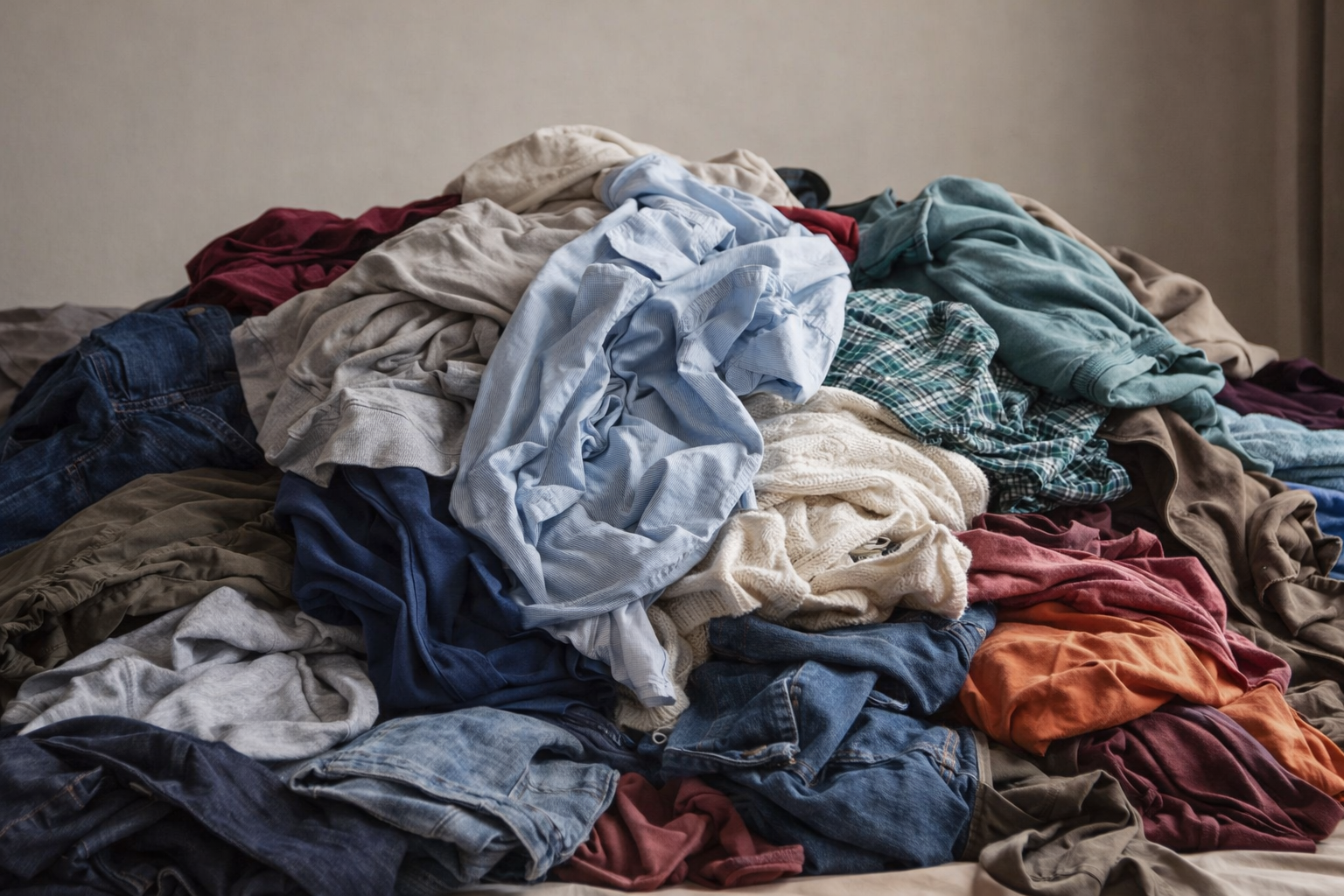
February 12th, 2026 – The European Commission has introduced new rules to stop companies from destroying unsold clothing, accessories, and footwear. The move, adopted on February 9 under the Ecodesign for Sustainable Products Regulation (ESPR), aims to cut textile waste and push the fashion industry toward more sustainable practices.
Across Europe, 4-9% of new textiles are destroyed each year, generating around 5.6 million tonnes of CO₂. The new rules require companies to report how many unsold products they discard and ban the destruction of most unsold fashion items.
Two supporting acts clarify how the rules will work. Limited exceptions will be allowed for safety or severe damage, and a standard reporting format will be introduced in 2027. Instead of discarding stock, businesses are encouraged to focus on resale, refurbishment, donation, or reuse.
Large companies must comply with the destruction ban from 19 July 2026, while medium‑sized firms will follow in 2030. Disclosure rules already apply to large companies and will extend to medium‑sized businesses in the same year.
EU officials say the measures will help the textile sector shift toward circularity, reduce waste, and strengthen competitiveness. With millions of euros’ worth of unsold goods destroyed annually in countries like France and Germany, the Commission sees this as a crucial step in reducing the environmental footprint of the fashion industry.
The ESPR is part of a broader EU effort to ensure products are more durable, repairable, and recyclable and to keep valuable materials in use rather than in landfills.
Why the EU’s New Textile Rules Change Everything
The fashion industry’s “open secret” the routine destruction of millions of tonnes of perfectly good, unsold clothing is officially being outlawed. By adopting these definitive measures under the Ecodesign for Sustainable Products Regulation (ESPR), the EU is forcing a historic pivot from voluntary sustainability to hard-line operational enforcement.
Why This is an Watershed Moment
This isn’t just another reporting requirement; it is a structural dismantling of the “disposable” fashion business model. For years, it was often cheaper for brands to incinerate excess stock than to manage the logistics of resale or protect “brand exclusivity.” By 19 July 2026, large companies will lose that “convenient” exit strategy.
- Transparency as a Weapon: Starting in 2027, companies must use a standardized format to disclose exactly how much they discard and why. This moves waste from a hidden logistical cost to a public reputational and financial liability. No brand wants to top a “most wasteful” leaderboard.
- A Cure for Overproduction: When you cannot “burn” a mistake, you stop making it. These rules force brands to adopt advanced AI forecasting and leaner supply chains. If a brand fails to sell an item, they must now prioritize resale, refurbishment, or donation turning a liability back into a resource.
- The Rise of Circularity: By closing the “destruction loophole,” the EU is jumpstarting the secondary market. We can expect a surge in brand-owned resale platforms and massive investment in fiber-to-fiber recycling technologies, which currently account for less than 1% of textile production.
What Can Be Achieved
The ultimate goal of the ESPR is to ensure products are more durable, repairable, and recyclable. By making destruction the most expensive and legally complex option, the EU is incentivizing a “design for longevity” mindset.
As Commissioner Jessika Roswall noted, these measures empower the textile sector to boost competitiveness while reducing dependencies on raw materials. This isn’t just about saving the planet; it’s about securing the future of European manufacturing by keeping high-value materials within our borders.
Editorial Note: This article is intended for informational and educational purposes only. It provides analytical insights based on publicly available information and does not constitute financial, legal, or political advice. Readers are encouraged to consult official sources and expert advisors for verified guidance.
Beyond the Cold War: How Mark Rutte is Mapping a Stronger, European-Led NATO from Munich
New WHO Report Warns Poor Waste Management Is Fueling a Global Health Crisis