

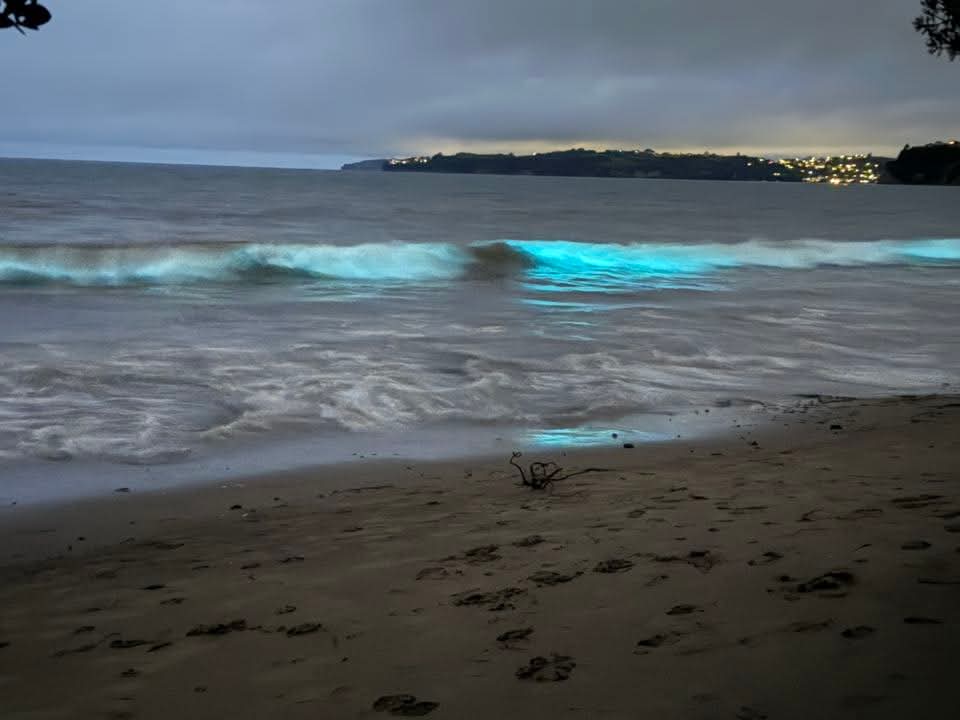
On certain nights along New Zealand’s coast, the sea comes alive with a magical blue glow. This natural light show, known as bioluminescence, is caused by tiny marine organisms lighting up the water.
What Causes the Glow?
The glow is produced by dinoflagellates, a type of microscopic plankton. When disturbed—by waves, swimmers, or boats—they emit light through a chemical reaction involving:
- Luciferin – the light-producing molecule
- Luciferase – the enzyme that triggers the reaction
- Oxygen – the final ingredient that makes the glow happen
This reaction creates cold light, meaning it doesn’t give off heat. It’s used by the organisms to defend themselves or communicate.
What Are Algae and Their Role?
Dinoflagellates belong to a larger group of organisms known as algae. Algae are simple, plant-like organisms that live in water and perform photosynthesis. They range from tiny phytoplankton to large seaweeds.
- Algae are essential to marine ecosystems, producing oxygen and serving as the base of the food chain.
- Some algae, like dinoflagellates, have the unique ability to produce light, making them the stars of bioluminescent displays.
- Algal blooms—rapid growth of algae—can increase the chances of seeing bioluminescence, especially after warm weather or nutrient-rich rain runoff.
When Can You See Bioluminescence?
Bioluminescence is most visible during summer nights, especially between November and March. Here’s a quick guide:
| Season | Visibility | Why |
|---|---|---|
| Summer | High | Warm water boosts plankton growth |
| Winter | Low | Cold water and rough seas reduce activity |
| Rainy Season | Mixed | Rain stirs nutrients but can cloud the water |
Best time of night: Between 9 PM and midnight, especially on dark, clear nights with little moonlight.
Where to See It in New Zealand
- Stanmore Bay (Auckland)
- Hibiscus Coast
These spots are known for glowing waters during the right conditions. Some local kayak tours even offer night trips to see the phenomenon up close.
How to Spot It
- Check local tour operators for updates
- Follow social media for recent sightings
- Use marine bloom trackers to monitor plankton levels
Tips for Capturing the Glow
- Use a tripod and long exposure settings
- Avoid using flash
- Let the natural light shine through your lens
Source: – Social Nature Movement: Introduction to Bioluminescence | NZ Journal of Marine & Freshwater Research: Dinoflagellates in NZ
Auckland’s Shores Lit Up: Bioluminescence Dazzles Crowds on November Nights
More around the world:
