

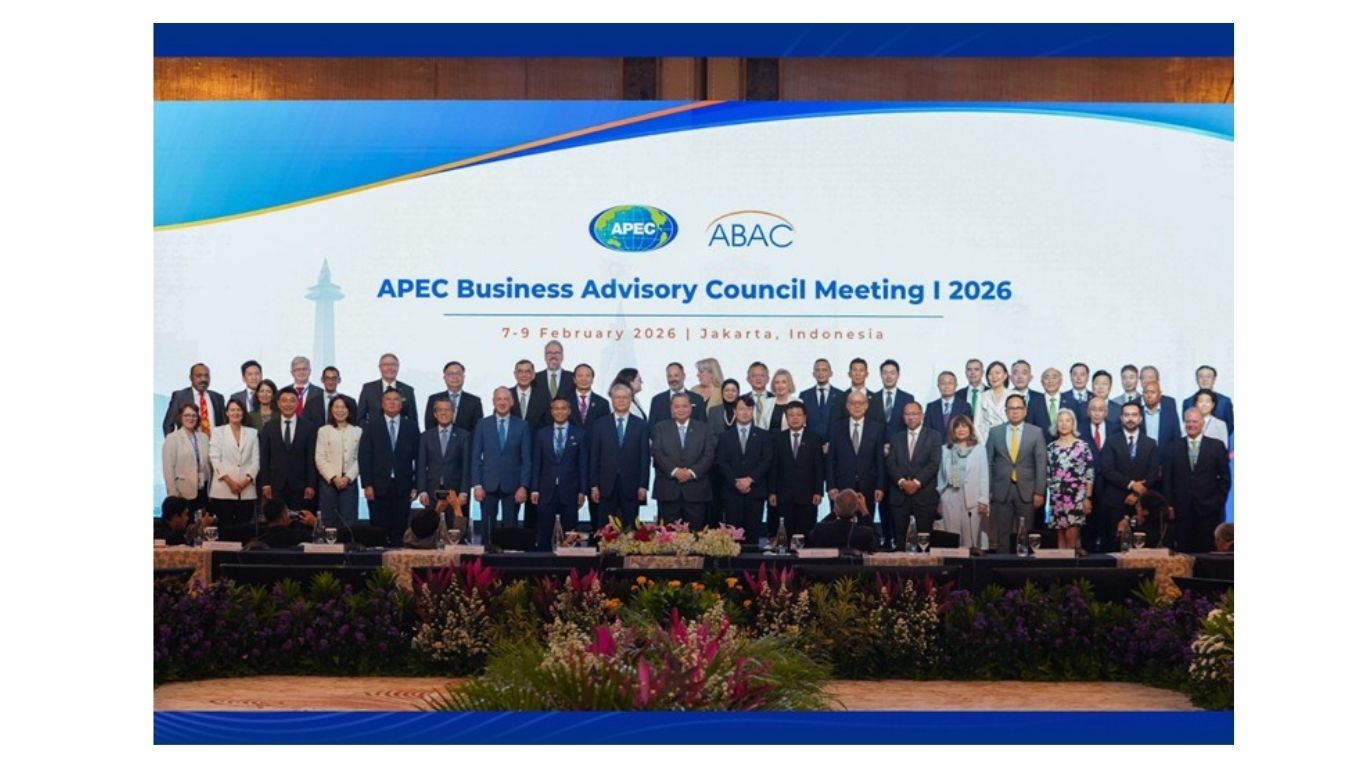
JAKARTA, Indonesia – As the global economy faces a crossroads of technological disruption and shifting trade alliances, the APEC Business Advisory Council (ABAC) has officially fired the starting gun on its 2026 agenda. Meeting in Jakarta this week, the council unveiled a high-stakes roadmap designed to insulate the Asia-Pacific from fragmentation while doubling down on the “AI revolution.”
Under the new 2026 theme, “Openness, Connectivity, Synergy,” business leaders from 21 member economies are signaling that the era of passive trade is over. The focus has shifted to active, digital-first integration.
A New Triple-Threat Strategy
The 2026 program is built on three core pillars that seek to bridge the gap between policy and the private sector:
-
Openness (The Foundation): ABAC is pushing for a “reboot” of the global rules-based trading system. With a specific eye on the World Trade Organization (WTO), the council aims to eliminate non-tariff barriers that currently stifle small businesses. A major highlight is the call for a permanent moratorium on e-commerce duties, ensuring that the digital storefronts of the future remain tax-free.
-
Connectivity (The Infrastructure): Moving beyond just roads and bridges, the 2026 plan focuses on “Institutional Connectivity.” This means harmonizing regulations so that talent, data, and technology can flow across borders as easily as physical goods.
-
Synergy (The Innovation): This is where the council gets futuristic. ABAC is prioritizing “AI Applied (AI+)”a push to inject Artificial Intelligence into traditional sectors like agriculture and mining. They are also assessing the region’s “quantum readiness” and the growing influence of digital currencies.
Why This Matters Now
The Jakarta meeting comes at a critical time. As China takes the helm as the APEC host for 2026, the business community is pressing for a more unified “Free Trade Area of the Asia-Pacific” (FTAAP).
“Synergy is the engine of innovation,” the council noted, emphasizing that the rapid pace of technological change is putting unprecedented strain on existing environment and infrastructure. The 2026 goal is to ensure that the “AI boom” doesn’t leave underserved communities behind.
What’s Next on the Calendar?
The Jakarta summit is only the first of four major meetings scheduled for this year. The council will move its deliberations to Mexico City in April, followed by Bangkok in July, before concluding the year with a high-level dialogue with world leaders in Shenzhen this November.
For news readers and market watchers, the message from Jakarta is clear: the Asia-Pacific is no longer just talking about trade it is building a digital and green architecture meant to survive the next decade of global volatility.
Source: Based on the official APEC Business Advisory Council (ABAC) news release from February 10, 2026.
What is the Free Trade Area of the Asia-Pacific (FTAAP)?
The FTAAP is a long-term vision to create the world’s largest single market by merging all 21 APEC member economies into one massive free-trade zone.
Think of it as the “ultimate goal” for trade in the region. If fully realized, it would cover roughly 60% of global GDP and nearly half of all world trade.
1. The “Big Picture” Goal
Instead of having hundreds of small, confusing trade deals between individual countries (often called the “spaghetti bowl” effect), the FTAAP would create one set of rules for everyone. This would make it much cheaper and faster for businesses to ship goods from, for example, Peru to Thailand or China to Mexico.
2. The Two “Pathways” to FTAAP
APEC itself doesn’t “sign” trade deals. Instead, it uses two existing mega-agreements as the building blocks (or “pathways”) to eventually create the FTAAP:
-
RCEP (Regional Comprehensive Economic Partnership): The world’s largest trade bloc, which includes China, Japan, South Korea, and ASEAN.
-
CPTPP (Comprehensive and Progressive Agreement for Trans-Pacific Partnership): A high-standard agreement that includes economies like Canada, Australia, and Vietnam.
3. Why it matters in 2026
As mentioned in the Jakarta news, ABAC is pushing for the FTAAP now more than ever because of digital trade. Business leaders want the FTAAP to include modern rules for:
-
AI Ethics: Standardizing how AI is used in business across the Pacific.
-
Paperless Trade: Moving all customs and shipping documents to a digital-only format.
-
Cybersecurity: Creating a unified shield for cross-border data flows.
New Zealand signs a trade agreement with Costa Rica, Iceland, and Switzerland
Editorial Note
Published by PoliGen News under the Poligen360 platform. Information is based on publicly available sources and presented for informational purposes to help readers understand global developments clearly and responsibly.