

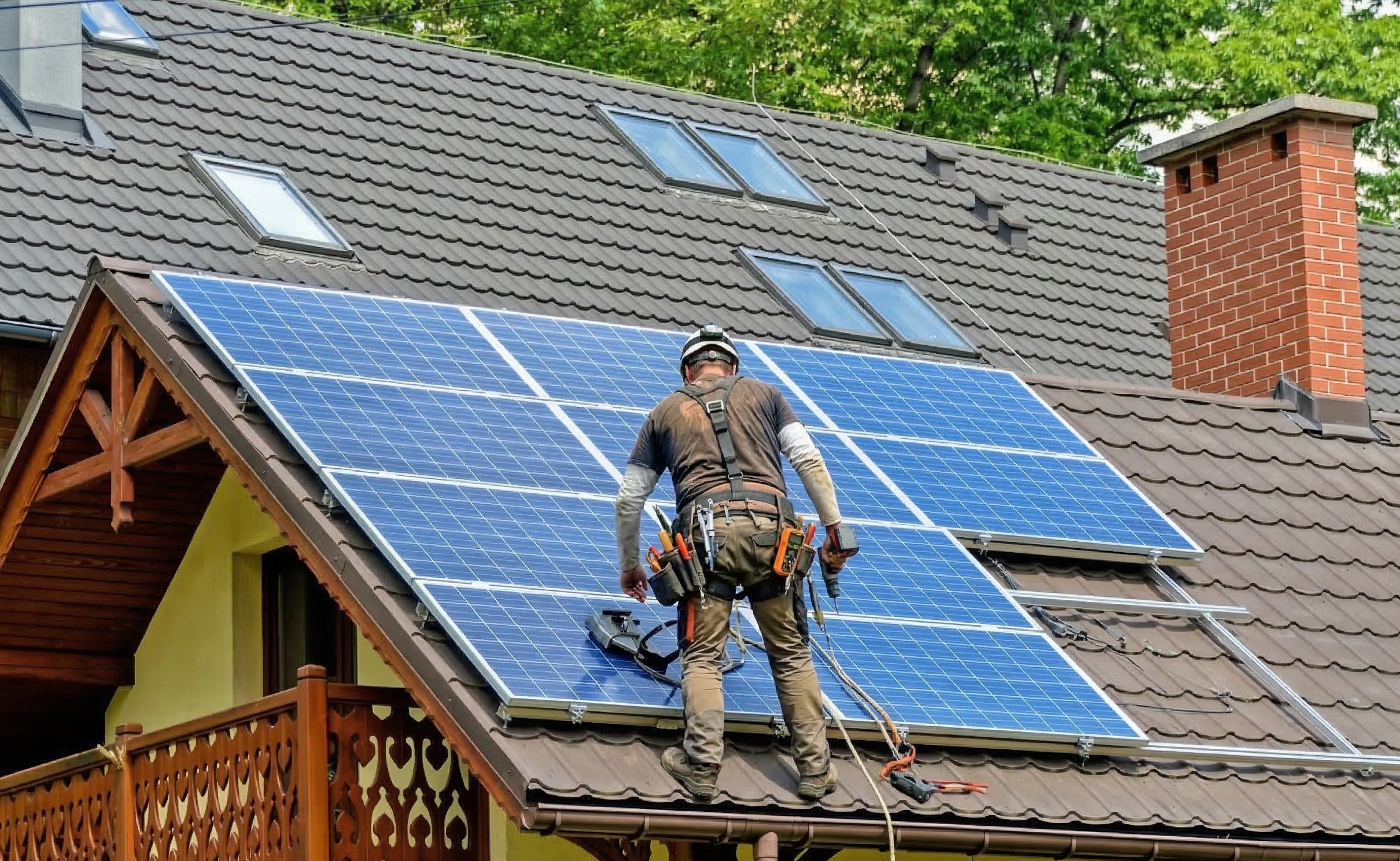
A groundbreaking EU-funded energy app is now helping neighbors cut carbon emissions and earn modest returns by investing in their own community’s power.
A quiet energy revolution is taking place on the rooftops of Madrid. The Palomeras school is now fully powered by solar energy, but the most interesting part isn’t the technology it’s who paid for it.
Through a crowdfunding initiative called AURORA, over 170 local residents from a working-class neighborhood raised nearly €150,000 to install the panels.
By allowing individuals to invest as little as €20, the project proved that clean energy transition doesn’t require massive corporate backing; it just needs community participation.
Why This Matters
This project is a blueprint for “Energy Democracy.” It addresses three major hurdles in the fight against climate change:
- Financial Accessibility: Most solar projects require high upfront costs. By using a “micro-investment” model, even those with limited savings can own a piece of the green economy.
- Practicality Over Preaching: The AURORA app acknowledges that not everyone can take the bus or live a “perfect” eco-life. It allows users to track their footprint and “compensate” by investing in local green projects that offer a financial return.
- Local Benefits: Once the initial investment is repaid, the Palomeras school is expected to see a 40% reduction in energy bills, keeping money within the community rather than sending it to fossil fuel giants.
Breaking the “Legal” Barrier
While the technology for solar power has become significantly cheaper, the AURORA project highlighted a new challenge: Red Tape. While the Madrid project was a success, similar pilots in Slovenia and Portugal faced complex legal hurdles regarding who can own and share rooftop electricity.
Researchers argue that for the EU to hit its goal of climate neutrality by 2050, policymakers must simplify the laws that currently make it difficult for neighbors to share power.
The Future of the Energy Tracker
Although the official EU funding for the pilot phase concluded in late 2025, the AURORA Energy Tracker app remains active.
The team is currently exploring how to integrate AI to provide even more personalized tips such as alerting users to specific government subsidies for electric vehicles or home renovations.
As we move toward a net-zero future, projects like AURORA show that the most powerful tool we have isn’t just a solar panel it’s the power of a neighborhood working together.
Original Source: This article was adapted from a report originally published in Horizon Magazine, the EU Research and Innovation Magazine.
Editorial Note
Published by PoliGen News under the Poligen360 platform. Information is based on publicly available sources and presented for informational purposes to help readers understand global developments clearly and responsibly.