

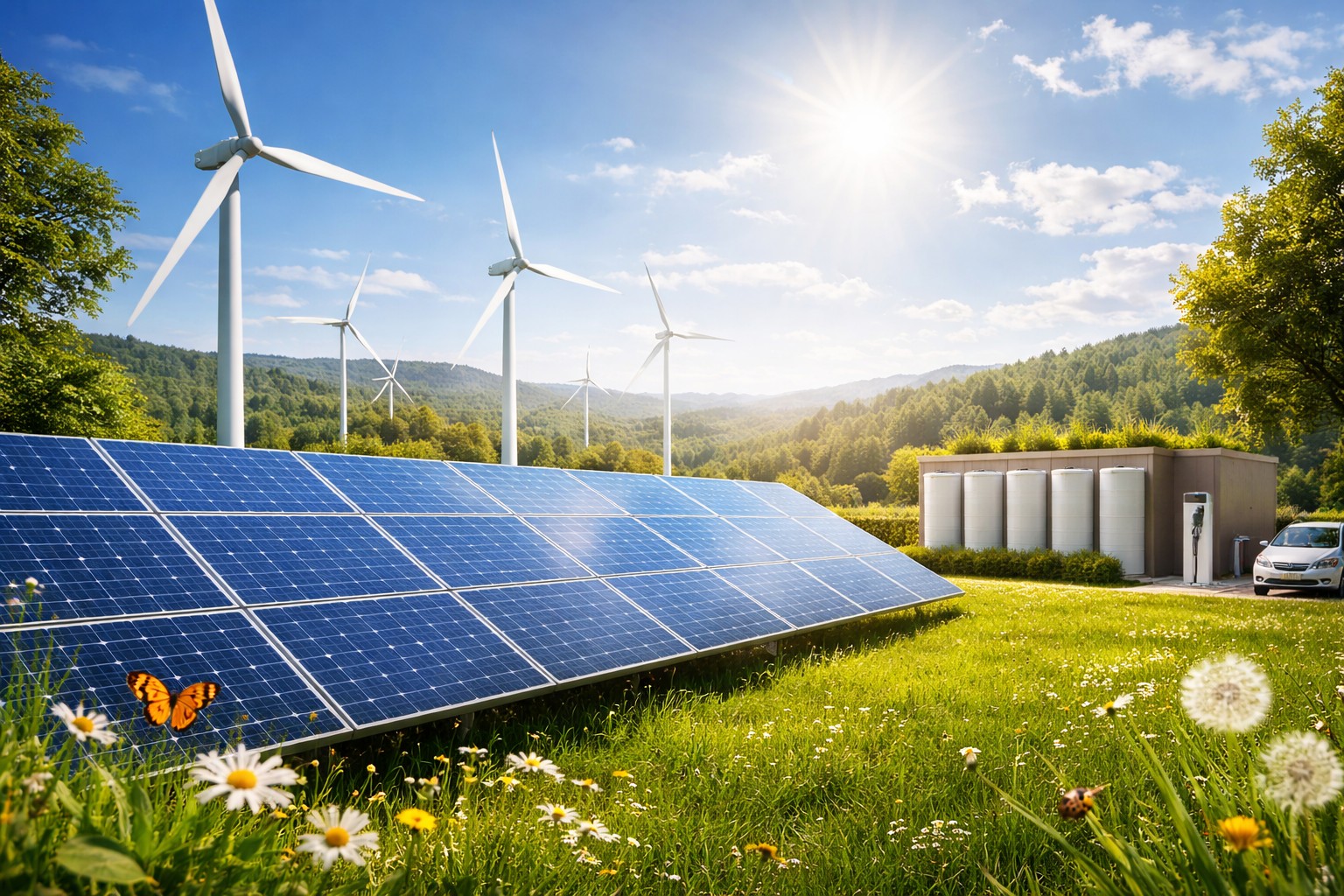
A new report from Johns Hopkins University’s Net Zero Policy Lab warns that BRICS countries now including Indonesia, Egypt, and the UAE must fast-track their clean energy transitions to meet global climate goals.
Despite rising investments in renewables, internal policy gaps and continued reliance on coal threaten progress.
Indonesia, a key player, has made strides in green manufacturing and signed a $10 billion deal with Singapore for solar and battery production. Yet, its 2024 energy plan still leans heavily on coal, raising concerns about long-term sustainability.
The report urges BRICS to lead with inclusive policies, industrial cooperation, and stronger biofuel strategies to avoid economic and environmental setbacks.
Source | BRICS
Understanding the Framework: What are the “Global Climate Goals”?
When international bodies and institutions like Johns Hopkins University refer to “global climate goals,” they are primarily referencing a set of legally binding and scientifically driven targets established under the Paris Agreement (2015) and refined during subsequent COP summits. For the BRICS nations now an expanded and formidable economic bloc these goals are no longer elective; they are the benchmarks for international trade, credit ratings, and diplomatic standing in 2025 and 2026.
- The 1.5°C Temperature Limit
The primary “North Star” of global climate policy is limiting the increase in the global average temperature to 1.5°C above pre-industrial levels. Science indicates that crossing this threshold would trigger irreversible “tipping points,” such as the collapse of major ice sheets or the die-off of coral reefs. For BRICS nations, which include some of the world’s largest emitters, “accelerating the green shift” is the only path to keeping this goal viable. By August 2025, the focus has shifted from long-term 2050 visions to immediate 2030 targets, requiring a 43% reduction in global emissions this decade.
- Tripling Renewable Capacity by 2030
A concrete goal established at COP28 and solidified throughout 2024 is the commitment to triple global renewable energy capacity to at least 11,000 GW by 2030. For a nation like Indonesia, this goal is the driver behind the $10 billion solar and battery deal with Singapore.
However, the “global goal” also mandates a simultaneous phasedown of unabated coal. This is where the pressure mounts: global goals require that new renewable energy replaces fossil fuels rather than merely adding to a coal-heavy grid.
- The Global Methane Pledge
While carbon dioxide is the long-term enemy, methane is the short-term priority. The Global Methane Pledge aims to reduce methane emissions by at least 30% from 2020 levels by 2030. Because methane is over 80 times more potent than CO2 in its first 20 years, meeting this goal is seen as the “fastest” way to cool the planet.
For BRICS members involved in heavy oil, gas, and agricultural production (like Egypt and the UAE), this involves rigorous leak detection and waste management protocols.
- Climate Finance and the “NCQG”
A less-discussed but vital climate goal is the New Collective Quantified Goal (NCQG) on finance. This goal mandates that wealthy nations and multilateral banks move beyond the historic $100 billion annual floor to provide trillions in “blended finance.” This is intended to help emerging economies, like those in the expanded BRICS, de-risk their green investments.
The goal is to ensure that the transition is “just,” meaning it provides economic security for workers in legacy energy sectors.
- National Determined Contributions (NDCs) 3.0
As we approach 2026, the most immediate “goal” for any nation is the submission of their NDCs 3.0. These are the domestic action plans required every five years under the Paris Agreement. The 2025–2026 cycle is considered the “last chance” for nations to align their internal laws with the 1.5°C trajectory.
When reports warn that BRICS nations must “fast-track,” they are specifically referring to the need for these NDCs to be more ambitious, transparent, and enforceable.
Editorial Disclaimer: This article is provided for informational purposes only and does not constitute professional advice. We carefully research our topics to ensure the information presented is accurate and helpful for readers.