

Introduction: Big Tech in Modern Democracy
The influence of Big Tech in modern democracy has become one of the most debated political and economic questions of the digital era. Technology platforms now shape how citizens access information, communicate with institutions, participate in elections, and engage in public discourse. Unlike traditional media organizations, digital platforms operate at global scale, enabling rapid information exchange while simultaneously raising concerns about misinformation, political manipulation, market concentration, and regulatory accountability.
As digital infrastructure becomes central to civic participation, governments and policymakers must assess how to balance innovation, free expression, competition, and democratic integrity. The relationship between technology corporations and democratic governance is increasingly complex, intersecting with cybersecurity, artificial intelligence, digital finance, and geopolitical rivalry.
Understanding Big Tech in modern democracy requires examining regulatory frameworks, information ecosystems, data governance, and the evolving architecture of digital public spaces.
Defining “Big Tech”
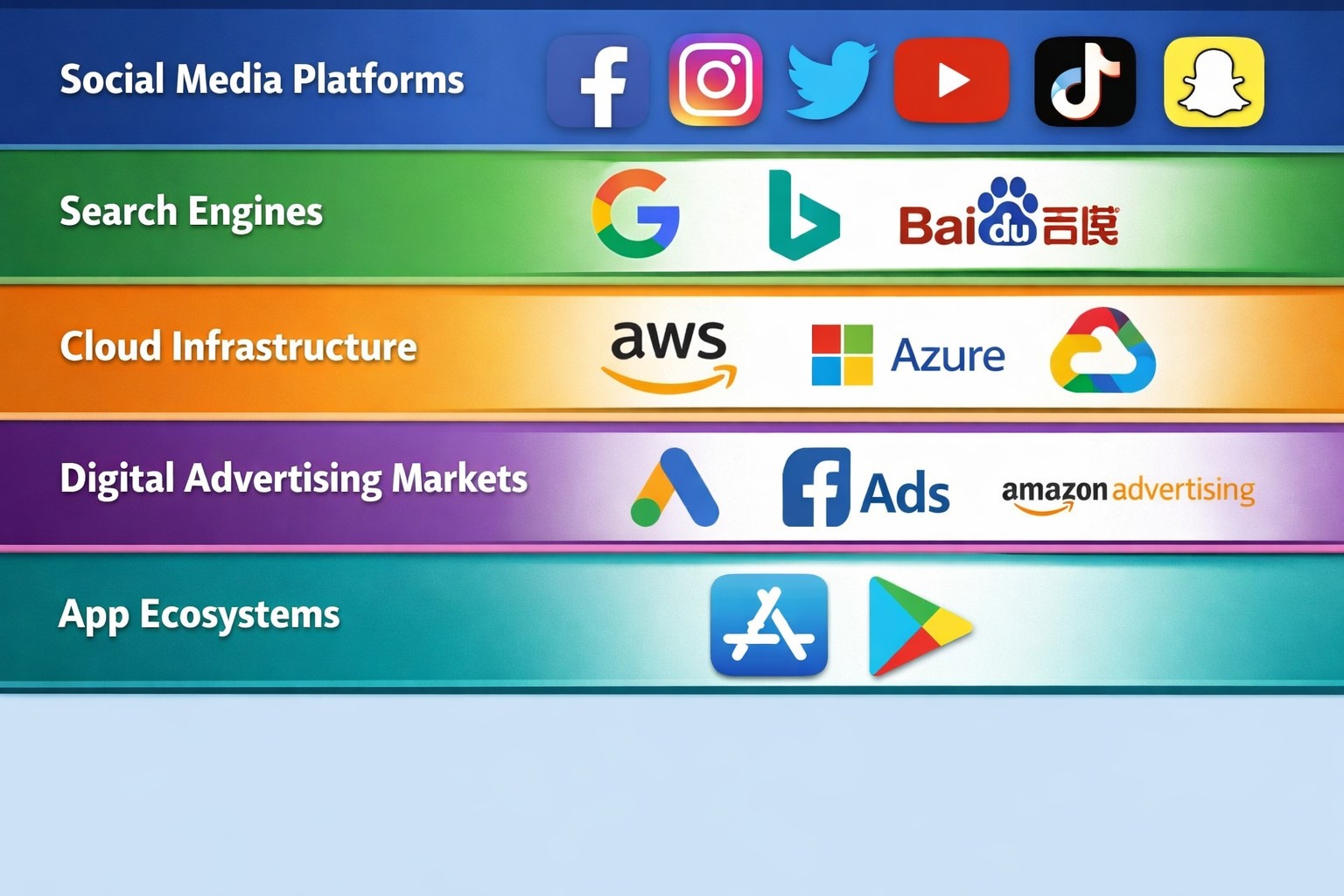
“Big Tech” generally refers to large technology corporations that control significant portions of:
- Social media platforms
- Search engines
- Cloud infrastructure
- Digital advertising markets
- App ecosystems
These companies influence:
- Public communication channels
- Political messaging
- News distribution
- Data monetization
While headquartered primarily in the United States and China, their platforms operate globally.
Their scale gives them structural influence over democratic processes.
Information Flow and Political Discourse
Digital platforms have transformed political communication.
Citizens now receive news, commentary, and campaign messaging through algorithmically curated feeds.
This shift has enabled:
- Direct communication between politicians and voters
- Grassroots mobilization
- Rapid information dissemination
However, it has also amplified:
- Misinformation
- Disinformation campaigns
- Echo chambers
- Algorithmic bias
As discussed in the future of cybersecurity in a digital world, digital infrastructure vulnerabilities can intersect with political interference risks.
The digital public sphere is both empowering and destabilizing.
Algorithmic Influence and Transparency
Algorithms determine what content users see.
Questions central to Big Tech in modern democracy include:
- How are algorithms designed?
- Who audits them?
- Are they politically neutral?
- How do they handle misinformation?
Governments are increasingly examining algorithmic transparency requirements.
As explored in governments regulating artificial intelligence, AI governance intersects directly with content moderation and recommendation systems.
Transparency and accountability mechanisms remain evolving.
Election Integrity and Platform Responsibility
Social media platforms have become central arenas for election campaigning.
Concerns include:
- Targeted political advertising
- Foreign influence operations
- Bot-driven misinformation
- Voter suppression narratives
Institutions such as the European Union have implemented digital governance rules requiring platform accountability in election contexts.
Balancing freedom of expression with election integrity remains a complex policy challenge.
Market Power and Competition Policy
Big Tech in modern democracy also intersects with antitrust law.
Large technology firms control substantial digital advertising revenue and app marketplace infrastructure.
Regulatory concerns include:
- Market dominance
- Barriers to entry for startups
- Data monopolization
- Self-preferencing practices
Competition authorities in multiple jurisdictions are evaluating how digital concentration affects economic and political pluralism.
Data Governance and Privacy
Digital platforms collect vast amounts of personal data.
Democratic governance must address:
- Data consent standards
- User privacy rights
- Cross-border data flows
- Surveillance risks
Data governance frameworks increasingly shape international digital policy.
Privacy regulation reflects broader debates about citizen rights in digital societies.
Big Tech and Geopolitical Rivalry
Technology companies operate within geopolitical contexts.
Competition between major powers influences:
- Platform access restrictions
- Data localization laws
- App store bans
- Cross-border technology partnerships
As discussed in technology and global power leadership, digital ecosystems are intertwined with strategic competition.
Technology platforms may serve both economic and geopolitical functions.
Content Moderation and Freedom of Expression
Content moderation policies determine what speech is permitted or restricted.
Democratic societies debate:
- Hate speech regulation
- Political content labeling
- Platform liability
- Government influence over moderation decisions
Too little moderation may enable harmful content; too much may restrict legitimate political expression.
The balance is politically sensitive and varies across jurisdictions.
Economic Impact and Labor Structures
Big Tech firms influence labor markets through:
- Gig economy platforms
- Remote work tools
- Digital advertising ecosystems
As explored in artificial intelligence changing global employment, technology-driven labor transformation intersects with democratic policy priorities.
Platform economies reshape both employment and political engagement.
Emerging Regulatory Models
Governments worldwide are considering:
- Digital services legislation
- Platform accountability standards
- Algorithmic audit requirements
- Data portability rules
International coordination remains limited.
Fragmented regulatory approaches may lead to divergent digital ecosystems.
Future Outlook: Platform Governance in Democratic Systems
The future of Big Tech in modern democracy will likely involve:
- Stronger regulatory oversight
- Increased algorithmic transparency
- Enhanced cybersecurity coordination
- Continued debate over free speech
Digital platforms are unlikely to disappear from democratic processes. Instead, governance frameworks will evolve alongside technological innovation.
The challenge will be maintaining open digital spaces while protecting democratic integrity.
Frequently Asked Questions
Why is Big Tech important in modern democracy?
Big Tech platforms influence how citizens access information, engage in political discourse, and participate in elections, making them central to democratic processes.
Should governments regulate social media platforms?
Many governments argue that regulation is necessary to address misinformation, market dominance, and data privacy concerns, though approaches vary by country.
Can Big Tech threaten democratic institutions?
Digital platforms can amplify misinformation and political manipulation if not properly governed, but they also enable civic participation and public engagement.
Democracy in the Digital Age
The role of Big Tech in modern democracy reflects the broader transformation of political participation in a digitally connected world. Technology platforms now shape public discourse, electoral communication, economic competition, and global governance.
As digital systems continue to evolve, democratic societies face the challenge of ensuring transparency, accountability, and open participation without undermining innovation. The relationship between technology and democracy will likely remain one of the defining issues of the digital century.
Editorial Note: This article is intended for informational and educational purposes only. It provides analytical insights based on publicly available information and does not constitute financial, legal, or political advice. Readers are encouraged to consult official sources and expert advisors for verified guidance.
Schneider Electric Earns Global Sustainability Crown for 2025